|
Friday, November 6, 2026
RLRH: Does beer slow you down?


A warning about the coming AI "White Swan"
| Unsubscribe |
Dear Reader,
Marc Chaikin just issued a shocking new prediction about AI.
And we encourage anyone with money in the markets to pay very close attention.
Why? Chaikin is one of Wall Street's most respected investment minds.
His former clients have included billionaires like Steve Cohen, owner of the New York Mets...
D.E. Shaw, founder of one of the world's leading money-management firms...
And George Soros, founder of the Quantum Fund with Jim Rogers...
He pioneered computerized trading on Wall Street.
His Chaikin Money Flow indicator is built into every Bloomberg trading terminal on Earth.
He used his 20-factor Power Gauge system to predict:
- The Covid Crash of 2020
- The Stealth Bear of 2022
- The "Liberation Day" Plunge of 2025
- And countless other events going back 50-plus years
His system flashed bullish on Micron before it soared 970% in one year...
Celestica before it soared 6,600%...
And Nvidia before it skyrocketed more than 50,000%...
But he's calling his new prediction the biggest and most important of his career.
According to Chaikin, a $248 trillion "White Swan" event is about to disrupt AI.
It involves a radical new breakthrough in AI data centers.
This new technology uses 99% less electricity.
It uses 99% less water.
It uses 99% less space than current data centers.
Yet it's more than 1 trillion times more powerful when it comes to generating major scientific breakthroughs.
"If our research is correct, This will shorten discovery timelines from years to days or even hours," says the veteran analyst.
That means breakthroughs that would take 5 years with current AI tech will come in just 5 days – accelerating timelines by 360-fold.
One former IBM executive calls this new tech: "A scientific instrument for the ages.
And it could secure America's AI dominance over China for generations.
Which is why the White House is spending billions to expedite the launch right now.
Even better?
The company behind this breakthrough recently flashed "bullish" in Chaikin's system.
Now he says it could be the best AI investment for at least the next 5 years.
Chaikin reveals all the details for free here, in his brand-new presentation.
He even reveals the name and ticker of the company behind the coming breakthrough about halfway through the video.
But fair warning: This is very timely information.
Chaikin says he reserves the right to take it offline at any moment.
So don't wait. Click the link above to check it out while you still can.
Sincerely,
Vic Lederman
Publisher, Chaikin Analytics
P.S. We recommend checking out Marc's presentation right now. Drop whatever you're doing. When this company's new AI tech launches, his research shows it'll render all current AI tech virtually obsolete – instantly. How? By accelerating AI breakthrough times 360X. (Breakthroughs that were supposed to come in 5 years could come in 5 days.) The time to invest is now, he says. And he reveals the full story – and stock ticker – here, for free. Don't delay. This launch will happen before the end of this year.
This ad is sent on behalf of Chaikin Analytics, 201 King Of Prussia Rd., Suite 650, Radnor, PA 19087. If you would like to optout from receiving offers from Chaikin Analytics please click here.
More Reading from MarketBeat Media
Enphase Energy's Solar Slump Raises a Question About Its AI Data Center Ambitions
Submitted by Jeffrey Neal Johnson. First Published: 10/29/2026.

Key Points
- Enphase Energy's third-quarter earnings reflected weakening residential solar demand and prompted plans to reduce distributor inventory.
- The company expects battery storage, solar leasing, and bidirectional electric vehicle charging to support future growth.
- Enphase Energy's AI data center technology remains in development, with customer pilots planned for 2027 and initial commercial shipments expected in 2028.
- Special Report: The Last Energy Revolution Starts Now
Enphase Energy (NASDAQ: ENPH) is navigating a difficult transition. Following a challenging third-quarter earnings report, shares have fallen toward the mid-$20 range, nearing a 52-week low. Wall Street's immediate reaction reflects a clear reality: The core residential solar market is contracting under macroeconomic pressure.
Beneath the headline earnings miss is a calculated strategy to absorb near-term cyclical pressure, reduce channel inventory and reposition operations for a broader energy infrastructure opportunity. Enphase Energy is working to expand beyond residential rooftops and address the substantial power demands of artificial intelligence (AI) data centers and next-generation storage solutions. For investors willing to look past the current turbulence, the underlying developments suggest a more diversified energy technology business could be taking shape despite the share-price decline.
Shedding Excess Load in Residential Solar
The best investor alive just called this market out (Ad)
Warren Buffett told CNBC's Becky Quick it's tough to find values when everybody is preferring gambling, a blunt line aimed at the broader market, not just meme stocks.
Weiss Ratings runs 1.2 billion calculations a day across all 15,000 publicly traded U.S. stocks, plus crypto and ETFs. The system flagged Nvidia as a Buy back in 2011, before its nearly 30,000% run, and warned on banks ahead of the 2008 crisis.
Three bonus reports now name stocks to buy, stocks to avoid, and crypto picks worth watching.
Click here to see the three bonus reports nowThe primary catalyst for the recent valuation compression is weakening U.S. residential solar demand. Third-quarter revenue came in at about $293.3 million, missing consensus estimates and reflecting an approximate 28% year-over-year decline.
The underlying metrics reveal the extent of the slowdown. U.S. sell-through fell roughly 35% from the previous year, driven largely by higher interest rates and the expiration of the Section 25D residential clean energy tax credit. These dual headwinds have changed the economics of borrowing for homeowners looking to finance solar systems, extending the time needed to recoup their investment and slowing installations.
A closer look at third-quarter revenue shows that $85 million came from safe harbor revenue. These sales involve inventory that customers expect to install over more than a year, rather than reflecting ongoing organic demand. This suggests the core run rate is softer than the headline number implies. Management's fourth-quarter guidance reflects this reality, with projected revenue of $225 million to $255 million, below initial analyst expectations.
Within this softer outlook, management is making a deliberate choice. Enphase Energy plans to ship roughly $20 million less than expected sell-through in the fourth quarter. Rather than pushing product into a saturated market, the strategy aims to reduce inventory in distributor networks ahead of a seasonally soft first quarter. Lower channel inventory can prepare the market for newer, higher-margin products and reflects a disciplined approach to inventory management amid weaker demand.
Powering Through the Transition
While clearing the channel makes long-term fundamental sense, Enphase Energy needs intermediate growth drivers to stabilize revenue over the next several quarters. Management has outlined several product cycles and financial initiatives designed to bridge this gap.
First, Enphase is supporting the expansion of Propel, a prepaid lease offering from SolSource Solutions. When traditional solar loans carry high interest rates, third-party ownership models and prepaid leases can offer consumers a practical alternative. This financing model reduces reliance on traditional solar loans and uses tax credits available to third-party system owners, potentially supporting a recovery in the U.S. residential market.
Second, the planned rollout of the IQ Battery G5 and bidirectional electric vehicle chargers in early 2027 could provide new revenue streams. The G5 battery targets international storage markets, including Europe and Australia, where high utility rates and volatile grid conditions are making residential energy independence increasingly attractive.
From a balance sheet perspective, navigating a cyclical trough requires robust liquidity. Enphase recorded a modest free cash flow burn of around $11 million in the third quarter due to working capital timing, but management expects free cash flow to return to positive territory in the fourth quarter. This reversal is largely driven by an anticipated $108 million tax refund tied to 2024 Production Tax Credits (PTCs). Designed to reward domestic manufacturing, these credits provide additional liquidity to support ongoing research and development during a period of lean revenue without diluting shareholders.
High-Voltage Horizons
As traditional residential markets stall, the most compelling future opportunity centers on a pivot toward AI data center power infrastructure. This initiative leverages existing microinverter intellectual property and applies it to industrial-scale power challenges.
Enphase Energy recently demonstrated its IQ Solid-State Transformer technology, converting 13.8 kilovolts of alternating current directly to 800 volts of direct current. This single-stage conversion architecture is designed to eliminate multiple stages of conventional power conversion, reduce energy losses and deliver more usable power directly to compute racks.
To support this initiative, Enphase Energy announced a technology collaboration with Infineon Technologies (OTCMKTS: IFNNY). By integrating 900-volt gallium nitride bidirectional switches, the solid-state transformer architecture can maintain high-frequency switching capabilities while reducing the size, weight and cost of the power stage. Gallium nitride can support higher switching speeds and lower power losses than conventional silicon components, making it valuable in dense power environments such as AI data centers.
Management reports more than 50 customer engagements for this technology, including joint development efforts with a leading hyperscaler and a global AI computing leader. Investors evaluating this catalyst should keep the timeline in perspective. These engagements are currently described as technical collaborations and testing phases, rather than binding contracts or near-term backlog. With customer pilots planned for 2027 and initial commercial volume shipments not expected until 2028, the AI data center initiative remains in development.
Waiting for the Grid to Stabilize
The transition from a business heavily reliant on residential solar to a diversified energy infrastructure provider carries inherent execution risks. The extended timeline for data center commercialization leaves Enphase Energy exposed to the near-term residential market contraction, helping explain the recent valuation compression. The stock currently trades at a trailing price-to-earnings ratio near 25, reflecting a market that is pricing in current macro headwinds while waiting for tangible evidence of the AI pivot's financial contribution.
Patience will be required as the company navigates the current inventory reset and waits for macroeconomic conditions to improve residential borrowing economics. Investors focused on the long-term electrification trend might view this lower valuation as an opportunity to monitor Enphase Energy's progress.
Those evaluating a position may want to add the stock to a watchlist and look for consecutive quarters of stable channel inventory and successful pilot deployments of the solid-state transformer technology before initiating a position.
More Reading from MarketBeat Media
Texas Paused Data Center Hookups—2 Power Stocks Are Waiting on the Verdict
Submitted by Nathan Reiff. First Published: 10/22/2026.
Key Points
- Texas regulators are auditing data center projects on the ERCOT grid, creating uncertainty for NRG Energy and Vistra's growth prospects.
- NRG Energy has concrete contracts, including nearly 300 megawatts of retail agreements and a 1.2-gigawatt power project, giving it a clearer near-term outlook.
- Vistra lacks disclosed specific contracts but could still benefit from rising electricity demand, with more clarity expected at its early November earnings report.
- Special Report: The Last Energy Revolution Starts Now
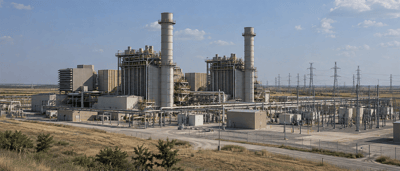
Two power companies with sizable Texas exposure are stuck in limbo while regulators review projects in the state's data center queue. NRG Energy Inc. (NYSE: NRG) and Vistra Corp. (NYSE: VST) could be major beneficiaries of surging electricity demand as AI drives investment in facilities across the state. However, an Aug. 3 directive from Governor Greg Abbott has paused development of these projects on the Electric Reliability Council of Texas (ERCOT) grid, raising questions about when that demand may translate into business for these firms.
There is a lot of potential business at stake. ERCOT is weighing more than 474 gigawatts of connection requests, about 90% of which are from data centers. For investors, the question is how much of NRG's and Vistra's growth cases depend on Texas data center power loads arriving on schedule. Despite their similarities, the companies have distinct positions and could perform differently depending on the review's outcome.
Why Texas Is Putting Data Center Growth Under Review and What It Means for Power Companies
Jon Najarian: Elon's next takeover target (Ad)
Jon Najarian, the Hall of Fame trader who called Apple, Tesla, and Nvidia, says Elon Musk may be eyeing a new target trading below $25 a share.
Musk has already secured rights to acquire up to 15% of the company, a pattern Najarian says mirrors his past moves with Maxwell Technologies, SolarCity, and Swarm.
See Jon Najarian's full breakdown before December 8.The review aims to evaluate whether proposed facilities have credible financing, sufficient protections and realistic power plans. Texas's electricity grid and water resources are already strained by mounting demand and other factors, so the outcome of this audit is far from predetermined. Developers were expected to respond to ERCOT's information request by Oct. 12, and a report is expected by Dec. 10. In the meantime, the Texas Commission on Environmental Quality (TCEQ) has temporarily shut down its electronic filing system after watchdogs said it had continued to issue permits related to data center construction after the governor's pause.
This means that companies like NRG and Vistra are primarily facing a question of how long it will take projects to move through the pipeline, rather than the more fundamental risk that electricity demand collapses or shifts materially downward.
NRG Energy's Texas Commitments Are Firm, But Timing and More Opportunities Remain Unclear
NRG's opportunity in Texas is significant. The company has previously reported nearly 300 megawatts of retail agreements to supply data centers at two Texas sites, with initial power delivery originally slated for late 2026. A 1.2-gigawatt "bring your own power project" should generate some $500 million in annual adjusted EBITDA as well.
In this way, NRG has a concrete plan for data center power in Texas that goes well beyond a developer simply requesting grid capacity. However, risks related to construction, permitting and other factors remain. If the governor's regulatory review continues to delay the relevant facilities, it could put pressure on NRG in the meantime.
Additionally, investors should keep in mind the distinction between NRG's agreed-upon power contracts and the significantly larger volume of potential demand currently in ERCOT's queue. If the audit is resolved quickly, it would likely boost investor confidence in NRG's growth potential. However, a delay into next year would push back when this pent-up demand could start contributing to NRG's results, potentially calling into question some of the analysts' optimism about the stock.
Vistra Is Lighter on Specific Details for Now
Vistra's diversified generation fleet provides exposure to the ERCOT market, but investors should not rush to assign the company a specific revenue opportunity related to Texas data centers. So far, the company's public filings establish its exposure without confirming exact figures for these contracts.
With this in mind, Vistra's potential benefit comes from its ability to supply electricity in a more competitive market, though investors will need to wait to confirm the exact scope. If electricity demand surges after the state's review, Vistra could benefit even without a disclosed contract for a particular project.
Vistra may provide more concrete updates in its upcoming earnings report, anticipated in early November. Analysts are optimistic, calling for nearly 55% year-over-year (YOY) earnings per share (EPS) growth and nearly 35% revenue growth over the same period.
Timeline and What to Watch For
Investors should monitor the ERCOT report, anticipated in early December, as a critical checkpoint for Texas data center projects. Until regulators clarify which types of projects may proceed, both NRG and Vistra face uncertainty despite their disclosed agreements, different project timelines and outstanding conditions.
A delay into 2027 may introduce broader uncertainty for these projects and could have a near-term impact on earnings forecasts and results for both companies. Still, the long-term outlook may remain bullish despite delays, as long as the projects eventually move forward.
Thank you for subscribing to The Early Bird, MarketBeat's 7:00 AM newsletter that covers stories that will impact the stock market each day.
This email is a sponsored message for Chaikin Analytics, a third-party advertiser of The Early Bird and MarketBeat.
If you need assistance with your newsletter, please email our support team, based in the United States, at contact@marketbeat.com.
If you no longer wish to receive email from The Early Bird, you can unsubscribe.
Copyright 2006-2026 MarketBeat Media, LLC. All rights reserved.
345 North Reid Place, Sixth Floor, Sioux Falls, SD 57103. USA..
Featured Link: $600,000,000,000 Surged in Last Time (From Brownstone Research)
This email is a sponsored message for Chaikin Analytics, a third-party advertiser of The Early Bird and MarketBeat.
If you need assistance with your newsletter, please email our support team, based in the United States, at contact@marketbeat.com.
If you no longer wish to receive email from The Early Bird, you can unsubscribe.
Copyright 2006-2026 MarketBeat Media, LLC. All rights reserved.
345 North Reid Place, Sixth Floor, Sioux Falls, SD 57103. USA..
A new kind of civil war is coming after election day?
| Unsubscribe |
A new kind of civil war is coming after election day?

Across America, there's been violence, protests, lawsuits, cancelled projects, and campaigns to impose statewide moratoria to stop AI's impact on cities and small towns across the nation. And Whitney Tilson believes these frustrations are only going to get worse. In fact, now that these midterms are over, he believes it's all going to come to a head. And it will have huge implications on your portfolio. He's sharing his full analysis free, here.
This ad is sent on behalf of Stansberry Research, 1125 N Charles St, Baltimore, MD 21201. If you would like to optout from receiving offers from Stansberry Research please click here.
Special Report
WD-40 Could Reward Patient Investors—Here's Why
Submitted by Thomas Hughes. First Published: 10/23/2026.

Key Points
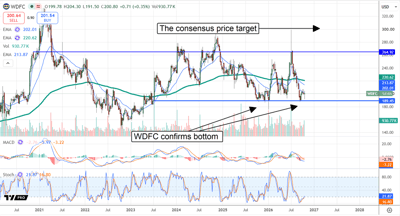
- WD-40's stock remains range-bound, with shares near support of about $190, with resistance near $265 to $300.
- Despite 8.1% revenue growth across all regions, WD-40 reported a 32% decline in operating income, net income, and GAAP EPS last quarter.
- WD-40 is accelerating stock buybacks with a new $100 million authorization, backed by over 90% institutional ownership and a consensus Moderate Buy rating.
- Special Report: The Last Energy Revolution Starts Now
WD-40 Company (NASDAQ: WDFC) isn't a headline-making company or a hypergrowth story, and its stock is likely to remain range-bound. But it also presents an attractive opportunity for investors seeking compounding returns.
Trading near the low end of its range, this dividend-paying, share-buying machine offers savvy investors clear entry and exit points.
Jon Najarian: Elon's next takeover target (Ad)
Jon Najarian, the Hall of Fame trader who called Apple, Tesla, and Nvidia, says Elon Musk may be eyeing a new target trading below $25 a share.
Musk has already secured rights to acquire up to 15% of the company, a pattern Najarian says mirrors his past moves with Maxwell Technologies, SolarCity, and Swarm.
See Jon Najarian's full breakdown before December 8.Whether through options or straightforward buy-and-sell strategies, WDFC is a good play with the potential to drive a high-double-digit total return over the next two to three years.
WD-40 Stock Offers Significant Upside as Buybacks Accelerate
The trading range dates back to the COVID-19 spike and has been confirmed several times since. The high end reflects a premium valuation, with the market pricing in quality, cash flow, and a growth trajectory. The low end, meanwhile, presents a value opportunity given the dividend's health and the buyback outlook. Support is near $190, while resistance runs from $265 to $300, representing approximately 40% to 58% upside from support.
Buybacks are a critical factor in late 2026. The company’s recent divestiture not only provided a cash injection but also aided margins, enabling it to accelerate repurchases. Highlights from the latest quarter included the exhaustion of an existing $50 million authorization and the start of a new $100 million authorization with no time limit. Repurchase activity reduced the share count by about 0.5% in fiscal 2026, with fiscal Q4 results reflecting an acceleration to about 0.7% by year-end.
WD-40 Company Reaches Inflection, Guides for Improving Profitability
WD-40 Company posted a solid quarter, with revenue up 8.1% and slightly above consensus. Growth came from all regions, led by a 13% gain in Asia-Pacific. EIMEA, which includes Europe, India, the Middle East, and Africa, grew by 10%, while the core Americas segment, which accounts for about 46% of revenue, grew by 5%.
Growth was also broad across product categories. Core WD-40 sales grew by 8%, Specialty by 18%, and other products by 10%. Home Care and Cleaning Products (HCCP), the company's harvest segment, contracted due to the divestiture of European operations but was otherwise stable.
Margin news was mixed, but it also points to a possible catalyst for share price gains. Gross margin contracted due to surging input costs, while higher SG&A compounded the pressure. SG&A increased because of spending on incentives and advertising, both of which support sales.
The takeaway is that the company is investing in growth and views fiscal Q4 as the inflection point. Guidance calls for sequential margin improvement beginning in the current fiscal quarter and continuing through the year. The full-year target is 54% to 55.5%, down year over year (YOY) but up significantly from Q4’s 52.8%.
The bad news is that operating income, net income, and GAAP earnings per share (EPS) contracted by 32%, with EPS falling short of consensus. The good news is that earnings cover the dividend, and the balance sheet is healthy enough to absorb the impact of spending and share buybacks. Looking ahead, cash flow is expected to improve sequentially, supporting balance sheet health and capital returns. Key year-end details include higher cash and assets, slightly lower borrowings, and increased equity, despite a rise in total liabilities and treasury stock. Equity increased by about 1.8%, adding to the impact of the share count reduction.
Analysts and Institutions Reflect High Confidence in WD-40’s Capital Return Flywheel
Few analysts cover WDFC; only six are tracked by MarketBeat. This is not surprising given the company’s low profile, low market cap, and already high institutional ownership. Institutions own more than 90% of the stock, a significant figure that suggests confidence in capital returns. They’ve also been accumulating shares in 2026, underpinning the stock price bottom. Analysts, meanwhile, rate WDFC a consensus Moderate Buy, maintain a 50% Buy-side bias with no Sell ratings logged, and see the stock advancing about 50% from critical support. There is only one current price target, set this summer, which aligns with the high end of the trading range.
Investors should not misread WDFC’s high payout ratio; it is not likely to be a problem. This company is an advertising machine, driving sales for a distributed network of localized producers. Those producers carry the balance sheet risk, owning the facilities and distribution networks, while WDFC benefits from an asset-light model, low overhead, and unimpaired cash flow. Despite hiccups in growth and margins, the well-entrenched brand drives sales and cash flow and can sustain long-term capital returns. The company can address earnings growth issues by pursuing more aggressive buybacks, which would help accelerate EPS growth.
One catalyst is a shift to direct distribution. This doesn't change the contract-light model; it removes the local middleman in overseas markets. The result is greater control, higher front-end margins, and faster scale.
Special Report
LyondellBasell's Dividend Looks Safer, But a New Risk Could Change That
Submitted by Jeffrey Neal Johnson. First Published: 11/1/2026.

Key Points
- LyondellBasell's reduced dividend was covered by third-quarter free cash flow by a wide margin.
- Stronger oxyfuels profitability and improved polyethylene pricing helped offset weakness in parts of the chemicals business.
- LyondellBasell has been named as a potential bidder for Shell chemical assets, but no transaction has been announced.
- Special Report: The Last Energy Revolution Starts Now
LyondellBasell Industries (NYSE: LYB) cut its quarterly dividend roughly in half in February 2026, lowering the payout from $1.37 to 69 cents per share. For income-focused investors, a reduction of this magnitude can signal underlying distress or a shift in capital priorities.
The third-quarter earnings report gives investors a look at how the reduced payout fits within the company’s current cash flow profile. The underlying chemical business shows signs of stabilization in certain segments, and the new dividend was comfortably covered by third-quarter free cash flow.
My public warning after 55 years of watching the markets (Ad)
Dr. Martin D. Weiss has publicly predicted six major American market crashes over his 55-year career, each warning issued before the crisis hit.
Now the founder of Weiss Ratings, the only conflict-free rating agency in America, says he is watching a $3 trillion problem that could trigger a chain reaction across markets and banks.
See Martin Weiss's full warning before this risk spreads furtherAn unconfirmed report that LyondellBasell Industries is exploring a large acquisition adds another source of uncertainty. Weighing solid free cash flow against the potential debt implications of a buyout offers insight into where the balance sheet could be headed over the longer term.
Assessing the Balance Sheet
Dividend sustainability depends heavily on a company’s ability to generate free cash flow. During the third quarter, operations generated $1.7 billion in operating cash flow, aided by a release of working capital.
After accounting for approximately $303 million in capital expenditures, the business generated about $1.4 billion in free cash flow. Comparing this cash generation with the current dividend obligation helps clarify the payout’s safety. At 69 cents per share, the quarterly shareholder distribution required just $224 million. The recalibrated payout now consumes a relatively small share of operating cash flow, leaving a substantial buffer for debt reduction, share repurchases and operational reinvestment.
Adding to its cash position, management announced a definitive agreement to sell the former Houston Refinery site to Valero Energy (NYSE: VLO) for approximately $320.5 million. The deal is expected to close in the fourth quarter of 2026, subject to regulatory approvals and customary conditions. If completed, it would provide additional cash while transferring ongoing site operations, environmental liabilities and pension obligations to the buyer.
Removing a non-core asset and its associated carrying costs would give the balance sheet additional flexibility. The current capital structure comfortably supports the $2.76 annualized payout, which yields around 4.18%. By reducing its dividend obligation, LyondellBasell Industries effectively created a wider margin of safety, helping insulate the payout from typical sector volatility.
Core Segments Show Signs of Stabilization
Beyond the cash flow metrics, the underlying business shows signs of cautious stabilization amid a cyclical industry environment. The Intermediates and Derivatives segment provided a notable lift during the quarter, driven largely by strength in the oxyfuels business.
Global supply disruptions and favorable gasoline blend economics have kept oxyfuel margins robust. Meanwhile, the Bayport asset is operating at full capacity following a successful restart earlier in the year, supporting bottom-line margins.
In the polymers space, integrated polyethylene margins improved late in the quarter, settling roughly 50% above 2025 levels. These operational tailwinds helped drive quarterly revenue of $8.50 billion, an approximate 10% year-over-year increase, even as adjusted earnings per share of $2.54 narrowly missed the consensus estimate. These figures require context: The chemical sector is highly sensitive to macroeconomic shifts, making the margin improvements a welcome reprieve from the prolonged industry downturn.
Management maintains a measured near-term production outlook, acknowledging that global supply uncertainty and shifting customer buying patterns remain key variables. Fourth-quarter guidance calls for operating rates of 85% for North American Olefins and Polyolefins assets, 60% for European counterparts and 75% for Intermediates and Derivatives. These projections reflect management’s approach of aligning production with market demand and planned maintenance rather than operating at full capacity.
Debt, Equity and Unconfirmed Rumors
While third-quarter cash flow comfortably covered the current dividend, external reports introduce a potential structural risk to the investment thesis. Recent press coverage identified LyondellBasell Industries as a potential suitor for U.S. chemical assets currently held by Shell (NYSE: SHEL), including the Monaca complex in Pennsylvania, which cost Shell approximately $14 billion to develop. The broader portfolio could reportedly sell for up to $8 billion. This remains an unconfirmed press report, not an official corporate announcement. Still, assessing the potential impact of a transaction of this magnitude is standard practice when evaluating long-term dividend safety.
The long-term debt-to-equity ratio was around 1.05 as of June 30. Financing an acquisition valued at up to $8 billion would likely require significant new debt, equity dilution or a combination of both. Taking on new liabilities increases debt-servicing costs, which compete directly with the cash available for shareholder returns.
When a business borrows heavily to fund an acquisition, the resulting interest expense becomes a fixed draw on cash flow, narrowing the dividend’s margin of safety during economic downturns. In a high-interest-rate environment, the cost of capital makes large deals inherently riskier for income-oriented investors.
In its third-quarter earnings release, management explicitly reiterated its capital allocation priorities. These include operating assets safely, strengthening the balance sheet through disciplined deleveraging, maintaining an attractive dividend and selectively investing in opportunities that enhance long-term shareholder value.
A heavily debt-financed acquisition could complicate that deleveraging strategy. The potential tension between LyondellBasell Industries’ stated conservative financial strategy and reports of a major acquisition creates a complex dynamic for the market to assess.
Weighing Cash Flow Against External Risks
Absent a major acquisition, third-quarter operational data suggests the reduced dividend rests on a solid foundation. Strong cash generation provides liquidity to support the payout, while the pending refinery sale could add financial flexibility once completed. The current cash flow profile creates a comfortable buffer for the dividend under normal operating conditions.
A reduction in LYB’s short interest, from more than 21 million shares earlier in the year to roughly 11.5 million by mid-October, suggests bearish sentiment is easing.
Institutional sentiment appears mixed, with some major funds reducing their stakes while others have added to their positions. This division is reflected in the current consensus rating, which is firmly at Hold, with a price target pointing to modest upside.
Investors monitoring the materials sector may want to watch future capital allocation announcements. If LyondellBasell Industries adheres to its stated deleveraging goal, the current dividend yield appears well supported by third-quarter cash generation, provided operating cash flow remains sufficient. If a large-scale acquisition is officially confirmed, cautious investors may want to reevaluate the payout’s long-term sustainability in light of any additional debt burden.
This email content is a sponsored email sent on behalf of Stansberry Research, a third-party advertiser of MarketBeat. Why was I sent this email content?.
If you need help with your newsletter, feel free to email MarketBeat's support team, based in South Dakota, at contact@marketbeat.com.
If you would no longer like to receive promotional emails from MarketBeat advertisers, you can unsubscribe or manage your mailing preferences here.
© 2006-2026 MarketBeat Media, LLC. All rights protected.
345 N Reid Place #620, Sioux Falls, S.D. 57103-7078. U.S.A..
Subscribe to:
Posts (Atom)

-
We'll be sending you the latest buy and sell ratings from Wall Street's top analysts, but first,...
-
We'll be sending you the latest buy and sell ratings from Wall Street's top analysts, but first, this... ͏ ͏ ͏...
-
Offices of the United States Attorneys You are subscribed to USAO - New Jersey...


