|
Sunday, November 1, 2026
Your Top 3 Robotics Stocks Has Arrived - TechnicalTrading...

Why December 11 Could Reshape a 46 Billion Pentagon Program
| Unsubscribe |
$46 Billion Is Waiting on December 11
The Pentagon wants $46 billion for a "sovereign AI Arsenal." Bigger than Golden Dome.
A stopgap law has frozen every dollar of it until December 11.
The Arsenal runs on Elon's AI. And Elon's AI hinges on one tiny company he couldn't build around.
Get positioned before December 11 here >>
ServiceNow Orchestrates AI's Next Act—Can Earnings Deliver?
Authored by Jeffrey Neal Johnson. Publication Date: 10/21/2026.

Key Points
- ServiceNow is attracting renewed analyst optimism as investors look toward enterprise software for AI monetization.
- ServiceNow's new EmployeeWorks capabilities and AI Passport aim to expand automation while improving enterprise AI governance.
- ServiceNow's upcoming third-quarter earnings will test whether its growth and AI adoption justify its premium valuation.
- Special Report: One Company Spared After Renewable Credits Get Cut.
Investors scanning the market for sustainable monetization of generative artificial intelligence (AI) are noticing a distinct shift. The initial wave of capital that flooded into semiconductor manufacturers and hardware infrastructure is beginning to rotate.
Investors are increasingly looking for software providers that can turn raw computing power into measurable business efficiency.
Nvidia's Huang doubts Musk's latest mega plan can work (Ad)
Nvidia CEO Jensen Huang says Elon Musk's $119 billion plan will be extremely hard to pull off.
Larry Benedict, who ran a $900 million hedge fund and posted 20 consecutive years without a loss, including over $274 million in audited net income between 2004 and 2012, says one long forgotten American company already holds what Musk needs.
Get the ticker and his full analysis before the November 30 deadline.
Click here to get the free ticker before November 30By identifying businesses that are successfully embedding AI into daily corporate operations, investors can position themselves ahead of the next major valuation expansion.
ServiceNow Inc. (NYSE: NOW) appears uniquely positioned to capture this transition.
With Wall Street analysts issuing new price targets ahead of upcoming earnings, understanding how workflow-orchestration layers capture durable AI margins offers a strategic advantage.
Investors Pivot to High-Retention AI Software
Recent market activity suggests growing investor interest in high-retention enterprise software as an alternative to volatile AI hardware equities. After early investments in base-layer models and semiconductor foundries, institutional capital is showing renewed interest in the application layer. This approach may offer a different risk profile during broader sell-offs in the technology sector while maintaining exposure to the secular AI growth thesis.
ServiceNow benefits directly from this rotation. The company operates as a central nervous system for enterprise IT, human resources and customer service departments. Because these workflow systems are deeply embedded in daily operations, replacing them requires significant capital, extensive employee retraining and potentially substantial operational downtime.
This creates a wide economic moat and exceptionally high switching costs, allowing ServiceNow to exercise pricing power when rolling out new premium features. In the software-as-a-service business model, this level of customer retention provides a highly predictable revenue floor. That predictable foundation frees up cash flow for aggressive research and development investment, allowing ServiceNow to maintain a long-term technological edge over legacy competitors.
Orchestrating Cash Flow With Zero-Code AI
The fundamental driver behind the recent bullish sentiment is ServiceNow's ability to monetize automated AI-agent workflows across client software suites. As foundational-model hype gives way to immediate software deployment, the workflow-orchestration layer presents an opportunity to capture durable margins in generative AI.
The recent rollout of new EmployeeWorks capabilities, powered by a third-generation, employee-centric AI harness, illustrates this strategy. The platform allows employees to build AI agents without writing code, effectively democratizing automation across an entire organization. Paired with AI Passport, which ServiceNow is developing alongside NVIDIA (NASDAQ: NVDA), the company aims to govern agent permissions and preserve business context. These capabilities provide the technological foundation needed to move AI from a conceptual tool to a verified enterprise deployment. The new EmployeeWorks capabilities are in controlled availability, while ServiceNow expects AI Passport to become available in the fourth quarter of 2026.
By removing the coding barrier and ensuring strict governance over data access, ServiceNow could accelerate enterprise adoption and create high-margin upsell opportunities within its existing customer base. These higher-tier product upgrades could flow to the bottom line, improving operating leverage as deployment scales across global enterprises.
Momentum Building Ahead of Third-Quarter Earnings
Financial performance supports the narrative of elite enterprise AI monetization. In its most recent quarter, ServiceNow delivered revenue of about $3.99 billion, representing approximately 24% year-over-year growth and comfortably beating consensus estimates. This top-line momentum highlights strong enterprise demand and reinforces the company's dominant market share in workflow automation.
Anticipation is building ahead of the third-quarter earnings report, expected on Wednesday, Oct. 28. ServiceNow holds a Moderate Buy consensus rating, and analysts are actively pricing in the potential impact of AI-tier upselling on overall profitability.
Bernstein analyst Peter Weed recently issued a Street-high price target of $266, up from $248, while maintaining an Outperform rating. The aggressive upgrade came ahead of the earnings cycle, signaling institutional confidence in an impending beat-and-raise quarter driven by growing adoption of higher-priced, AI-native products.
Other investment desks share this optimism, with Piper Sandler raising its target to $175 and TD Cowen lifting its target to $165. Both firms cited demand from U.S. federal agencies and sustained customer upgrades. When multiple research desks lift targets within a short period, it often signals growing confidence that large enterprise clients will continue investing in the ServiceNow ecosystem.
Measuring SaaS Multiples Against Growth Rates
While the growth trajectory remains robust, pragmatic investors must weigh the premium valuation against underlying balance-sheet metrics. ServiceNow's stock trades at a trailing price-to-earnings (P/E) ratio near 93 and a forward P/E of roughly 67. While these multiples appear elevated at face value, they represent a compression from ServiceNow's historical premium, which frequently remained between 50 and 100 times forward earnings over the last decade. The current multiple offers a slightly less risky entry point relative to past peaks, particularly given the company's current 24% revenue growth rate.
Internal and external metrics present some headwinds that require monitoring. Short interest increased roughly 3% month over month, reaching about 29.6 million shares. This larger short position highlights a measurable group of investors positioning against further multiple expansion in the near term. Late-August regulatory filings also revealed executive share sales, with corporate insiders liquidating portions of their holdings.
Liquidity measures warrant attention as well. ServiceNow operates with current and quick ratios near 0.7, indicating that current short-term liabilities exceed current assets. Software-as-a-service companies frequently operate with lower current ratios because annual subscription payments are recorded as deferred-revenue liabilities until the service is delivered.
However, a sub-1.0 ratio still demands close monitoring of cash flow generation. Counterbalancing these friction points is ServiceNow's underlying profitability, highlighted by an approximate 11% net margin and a 16% return on equity. With nearly $13.28 billion in annual sales, the core business remains cash-generative despite the optical balance-sheet constraints.
Positioning Portfolios for the Software Shift
As investors look beyond volatile AI hardware toward high-retention software, the workflow-orchestration layer offers an opportunity for durable AI monetization. Recent analyst target increases, capped by the Street-high $266 price target, suggest that AI-native upgrades could drive substantial margin expansion.
Fundamental metrics support the narrative of strong enterprise monetization, provided the premium valuation remains justified by earnings beats and seamless product integration. Investors assessing exposure to enterprise software may want to add ServiceNow to their watchlists and monitor customer growth and margin expansion as the third-quarter earnings date approaches.
SpaceX Earnings Launch: High Margins Fund AI Ambitions
Written by Jeffrey Neal Johnson. Originally Published: 10/21/2026.
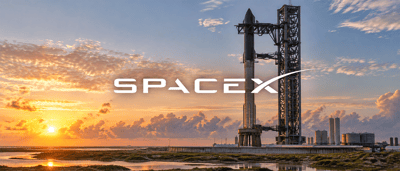
Key Points
- SpaceX posted third-quarter earnings of 35 cents per share, far exceeding the 10-cent consensus estimate, as total revenue rose about 161% year over year to $14.58 billion.
- The new Super Intelligence AI segment generated $7.56 billion in quarterly revenue, while management guided for $35 billion to $40 billion in fourth-quarter capital expenditures.
- SpaceX holds a $63 billion backlog and over $75 billion in IPO proceeds, supporting guidance for $33 billion to $37 billion in first-quarter 2027 revenue.
- Special Report: One Company Spared After Renewable Credits Get Cut.
SpaceX (NASDAQ: SPCX) gave Wall Street just four days' notice before releasing its third-quarter earnings, catching investors off guard with an unusually short announcement window. The aerospace giant then delivered another surprise: Earnings of 35 cents per share easily beat the 10-cent consensus estimate, while quarterly revenue surged 161% year over year to $14.58 billion.
What makes this earnings report compelling is how SpaceX is financing its pivot into artificial intelligence (AI). The Super Intelligence segment generated more than $7.5 billion in revenue, demonstrating that newly deployed compute capacity and AI products are already producing substantial revenue. Management also guided for approximately $35 billion to $40 billion in companywide capital expenditures during the fourth quarter.
Igniting the Bottom Line: Profitability Meets Expansion
Nvidia's Huang doubts Musk's latest mega plan can work (Ad)
Nvidia CEO Jensen Huang says Elon Musk's $119 billion plan will be extremely hard to pull off.
Larry Benedict, who ran a $900 million hedge fund and posted 20 consecutive years without a loss, including over $274 million in audited net income between 2004 and 2012, says one long forgotten American company already holds what Musk needs.
Get the ticker and his full analysis before the November 30 deadline.
Click here to get the free ticker before November 30Achieving profitability during an aggressive infrastructure expansion is a rare feat. SpaceX reported approximately $14.58 billion in total revenue, up roughly 161% year over year. The standout driver was the Super Intelligence unit, which generated around $7.56 billion during the quarter. That figure represents a substantial increase from the roughly $2.56 billion reported in the second quarter. The rapid commercialization of compute capacity, which reached approximately 1.7 gigawatts by the end of September, suggests that cloud service contracts are absorbing the new supply.
The quarter also included the integration of Cursor following an acquisition that carried an implied equity value of approximately $60 billion. Cursor contributed roughly $608 million to the top line while adding about $1.22 billion in acquisition-related share-based compensation. Combined with approximately $675 million in interest expense, the company's ability to post positive net income highlights a durable operating model. High-margin segments are effectively absorbing the costs of rapid expansion, allowing SpaceX to demonstrate bottom-line resilience as the aerospace leader scales new business units.
Escape Velocity: Revenue Outpaces Infrastructure Spend
A critical metric for evaluating high-growth infrastructure plays is the relationship between capital expenditures and revenue generation. In the second quarter, SpaceX spent roughly $18.37 billion on capital expenditures against about $7.81 billion in revenue, resulting in a ratio of nearly 2.35x. In the third quarter, capital expenditures increased to roughly $19.59 billion, but revenue of $14.58 billion compressed that ratio to approximately 1.34x.
This sequential compression suggests that SpaceX's overall revenue is growing faster than its capital spending. AI revenue is scaling rapidly, although the companywide figures do not isolate the costs of building its data centers. Management expects fourth-quarter capital expenditures to accelerate to $35 billion to $40 billion as SpaceX deploys V3 satellites, scales Starship development and expands its compute footprint.
Under normal circumstances, a $40 billion quarterly capital outlay might trigger concerns about debt service and balance-sheet strain. The recent initial public offering fundamentally altered SpaceX's liquidity profile. The IPO generated approximately $85.7 billion in net proceeds, and SpaceX ended September with $51.3 billion in cash and cash equivalents, along with another $38.6 billion in marketable securities. This liquidity allows SpaceX to fund its fourth-quarter ambitions without immediately stressing debt markets or accepting unfavorable financing terms.
The Heavy Lift Booster: Starlink Subsidizes AI Growth
While compute infrastructure commands the headlines, the legacy space and connectivity segments are the financial bedrock supporting these endeavors. The connectivity segment, driven by Starlink, delivered approximately $5.25 billion in revenue and operates at an estimated 55% gross margin.
The consumer broadband base expanded to approximately 13.6 million subscribers, while enterprise and government revenue jumped 91% year over year.
Aviation contracts are also scaling, with thousands of aircraft currently equipped with satellite terminals. These high-margin, recurring revenues provide the operating cash flow necessary to subsidize the capital-intensive Super Intelligence buildout. SpaceX is essentially using its dominance in low Earth orbit to help fund its terrestrial data center ambitions.
Management is also laying the groundwork for an expanded total addressable market. A recent agreement to acquire a portfolio of 800 MHz spectrum licenses positions Starlink Mobile to operate directly as a primary U.S. mobile carrier, although the deal still requires regulatory approval and additional infrastructure investment.
Transitioning from a fixed broadband and aviation provider into the broader telecommunications market could unlock entirely new revenue streams. By establishing a direct-to-device network, SpaceX would create a potential pipeline of recurring revenue to support the cash flow needed in the coming years.
Plotting the Course: Forward Visibility Remains Strong
Looking beyond the immediate capital expenditure cycle requires visibility into future cash flows. SpaceX reported a total backlog of approximately $63 billion, with roughly $42 billion expected to be recognized over the next 12 months.
This contracted revenue provides a high degree of predictability for the coming quarters, helping reduce uncertainty surrounding the anticipated spending. For fundamental analysts, a backlog of this magnitude signals that enterprise demand is not merely theoretical but firmly committed.
Management leveraged this visibility to issue aggressive forward guidance, projecting first-quarter 2027 revenue of between $33 billion and $37 billion. This forecast directly challenges concerns that the AI compute market might face a near-term plateau.
If SpaceX reaches these targets, it would provide further evidence that enterprise demand for inference and training compute remains robust, validating the heavy, front-loaded investments and easing concerns about long-term payback periods.
Mission Control: SpaceX’s Next Phase of Growth
The third-quarter earnings report presents a clear picture of an enterprise successfully navigating a complex growth phase. On one side, improving profitability and a rapidly expanding total addressable market are driving record revenue.
On the other side, the sheer scale of the required capital expenditures demands flawless execution. The compression in the capital expenditure-to-revenue ratio offers a strong signal that the underlying strategy is working as intended.
Investors evaluating the aerospace and telecommunications sectors may view the recent earnings report as confirmation of SpaceX's operating leverage. Those monitoring SpaceX might prefer to watch how effectively the fourth-quarter capital deployment translates into the projected 2027 revenue targets before adjusting their allocations. The foundational elements are in place, but executing a $40 billion infrastructure deployment will be the ultimate test of operational discipline.
This message is a sponsored message for Behind the Markets, a third-party advertiser of MarketBeat. Why was I sent this email message?.
If you have questions or concerns about your account, please feel free to contact our support team, based in the United States, at contact@marketbeat.com.
If you would no longer like to receive promotional emails from MarketBeat advertisers, you can unsubscribe or manage your mailing preferences here.
Copyright 2006-2026 MarketBeat Media, LLC.
345 North Reid Place #620, Sioux Falls, S.D. 57103-7078. United States..

-
We'll be sending you the latest buy and sell ratings from Wall Street's top analysts, but first,...
-
Offices of the United States Attorneys You are subscribed to USAO - New Jersey...
-
We'll be sending you the latest buy and sell ratings from Wall Street's top analysts, but first, this... ͏ ͏ ͏...


