NVIDIA Keeps Crushing Expectations. Investors Still Aren’t Buying It
Posted On Sep 01, 2026 by Ian Cooper
“This time is different,” NVIDIA (NASDAQ: NVDA) CEO Jensen Huang recently said when asked about concerns surrounding a potential artificial intelligence downturn.
Table of Contents
After NVIDIA delivered another solid earnings report, it looked like Huang might be right. For once, investors seemed willing to reward the chipmaker for its extraordinary performance rather than punish the stock, as they had following the company’s previous four blowout earnings reports.
But that optimism didn’t last. NVDA shares initially surged following the earnings. But fell apart later in the week.
So why can’t NVIDIA seem to catch a break from Wall Street?
Investors know that when they hear “this time is different,” it’s usually not. However, it’s worth seeing if Huang is right that something fundamentally different is happening with AI and if NVIDIA could be entering a new phase of growth.
NVIDIA’s Earnings Keep Crushing Wall Street Expectations
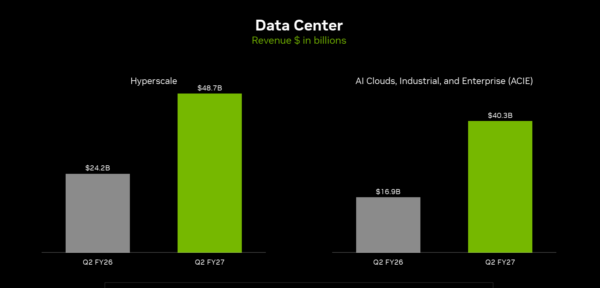
One of the most compelling arguments for this time being different comes from NVIDIA’s performance. The company’s Q2 2027 results were released on Aug. 26, and there was a lot for investors to like.
Revenue more than doubled from the same period a year earlier to $96.2 billion, beating Wall Street expectations.
Adjusted earnings per share jumped 120% year over year to $2.22, compared with analysts’ expectations of $2.09.
The company’s profitability was even better. Adjusted net income reached $54 billion, an increase of $29.2 billion from the prior year.
The company also projected that revenue could grow by roughly 70% in 2027, dramatically exceeding analysts’ consensus forecast of approximately 44%. That guidance helped fuel the initial rally in NVDA shares. The problem is that investors increasingly appear skeptical that the AI spending boom can continue at anything close to its current pace.
Why Investors Still Aren’t Buying NVIDIA’s AI Growth Story
The market’s reaction to NVIDIA’s earnings illustrates a growing tension surrounding the AI boom. On one hand, companies are spending big money on AI infrastructure, and NVIDIA is benefiting more than almost anyone else. Its graphics processing units (GPUs) have become essential components of the data centers powering today’s most advanced AI models.
On the other hand, investors are beginning to ask whether these investments will eventually generate enough economic returns to justify their cost.
That concern is understandable. But Huang believes AI genuinely is different.
In fact, according to Huang, the current AI infrastructure buildout isn’t simply another upgrade cycle. Traditionally, computing improvements have been relatively cyclical. Companies replace older servers and processors with newer, more powerful versions, but the basic architecture and purpose of those systems remain largely unchanged.
Despite the concerns, Huang added, “This time is different because this is not demand-driven. This time is different because it’s not seasonal. This is industrially driven, meaning the fundamental technology of computers is changing.”
His argument is that AI isn’t merely creating demand for faster chips. It is fundamentally changing how computing is performed. After all, AI workloads require substantial amounts of computational power, meaning companies need to build entirely new data-center infrastructure rather than simply replace individual pieces of aging equipment.
As AI models become more capable and widely deployed, the amount of computing required could increase dramatically. If Huang is correct, the current spending boom could be much more durable than traditional technology investment cycles.
For now, NVIDIA has something few companies can claim: results that continue to exceed even extraordinarily high expectations. The question is whether Wall Street will eventually believe those results are sustainable.
NVIDIA Stock Technical Analysis: Can NVDA Break Higher?
NVIDIA’s fundamental performance remains remarkably strong, but the stock’s technical picture suggests investors are still wrestling with the company’s lofty expectations.
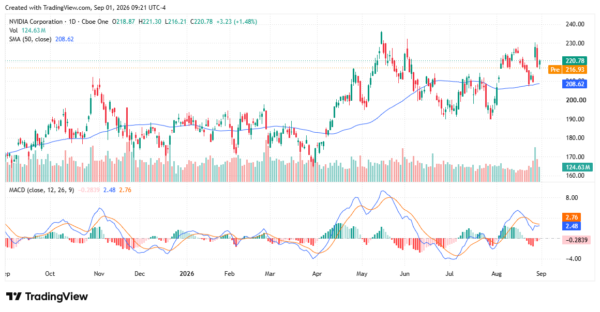
As of Sept. 1, NVDA was trading at $220.78, well above its 50-day simple moving average of $208.62. That is an encouraging sign for the longer-term trend, particularly because the stock has repeatedly found support around the moving average during its recent advance.
However, the chart also shows that NVIDIA is approaching a more significant technical test. Shares have struggled to sustain moves toward the $230 area, which has acted as resistance several times since May. A decisive move above that level could signal that investors are becoming more comfortable with NVIDIA’s growth outlook and potentially put the stock on a path toward new highs.
The momentum indicators are less convincing. The MACD line sits at 2.48, below the signal line at 2.76, while the histogram has turned negative at approximately -0.28. That suggests bullish momentum has weakened following the stock’s August rally.
The setup, therefore, looks constructive but not conclusive. Holding the $208-$210 area would keep the broader bullish trend intact, while a breakout above roughly $230 could provide the technical confirmation that the market is ready to reward NVIDIA’s extraordinary fundamentals.
For investors, that makes the next move particularly important. NVIDIA doesn’t necessarily need another blowout earnings report. It may simply need the stock to prove that Wall Street is ready to believe the growth can continue.
3 Strong Consumer Stocks to Watch as Earnings Season Ends
Posted On Sep 01, 2026 by Chris Markoch
September has arrived, and most investors are already looking past earnings season toward the holidays and year-end tax planning. But three major names have yet to report. Each carries outsized influence over consumer confidence and investor sentiment heading into the final quarter.
Table of Contents
September and October have earned a reputation among investors. September is historically the weakest month for the S&P 500, and October has delivered some of the market’s most memorable crashes, including 1929 and 1987. Yet October has also marked the start of major rallies, which is why traders call it a “bear killer.” That mix of fear and opportunity makes the next few weeks worth watching closely.
Against that backdrop, Costco Wholesale Corp. (NASDAQ: COST), Casey’s General Store (NASDAQ: CASY), and AutoZone (NYSE: AZO) are set to report. None of these stocks is a traditional bellwether, but together they offer a window into how consumers are spending, driving, and maintaining what they already own. Their results could set the tone for how investors read the broader economy through year-end.
For the first time ever, a sitting U.S. President has effectively seized control of the world's most powerful financial institution. Trump didn't just stack the Fed board. He's about to weaponize it. And when it starts on September 16… A handful of little-known stocks could deliver 1,000%+ gains in 12-24 months. Discover details on 3 stocks that could explode imminently.
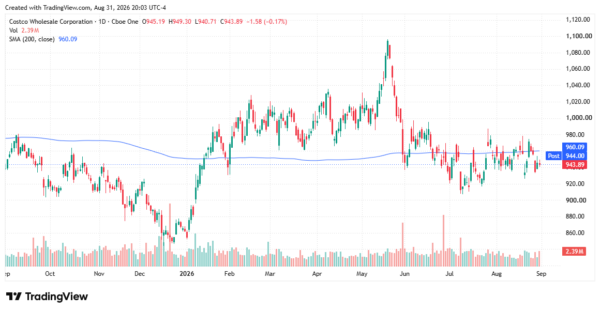
Costco reports earnings on Sept. 24, and expectations are high. The company posted a slight adjusted EPS miss last quarter, even as it logged a solid year-over-year gain. Tough comparisons remain a headwind, and with shares near $1,000, investors are demanding consistency.
Bulls point to a business model that essentially pays for itself. Membership fee revenue flows directly to earnings. That structure gives shoppers a reason to stay loyal, since bulk pricing offers real relief from inflation.
Even at 48 times forward earnings, COST stock looks reasonably valued. The analyst consensus price target suggests roughly 12% upside from here. Add in a dividend that has risen for 22 consecutive years, including several special payouts, and the case for holding through earnings season gets stronger.
For investors who want steady exposure to consumer spending, Costco offers a rare combination: pricing power, loyalty, and income.
Casey’s Offers a Different Read on the Consumer
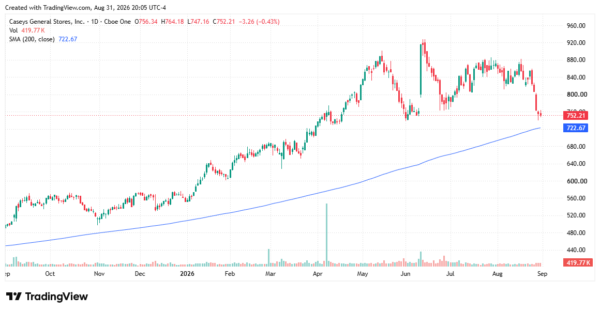
Casey’s General Store reports earnings soon after, giving investors a different lens on consumer health. The company operates travel stores and gas stations nationwide. It isn’t a “travel stock” in the traditional sense, but it can reveal how willing Americans are to drive despite elevated gas prices.
The valuation picture here is more mixed. Analyst sentiment remains bullish overall, yet valuation models don’t all agree on how much upside remains. That split creates a genuine data point for earnings season, rather than a foregone conclusion.
Income investors still have a reason to pay attention. Casey’s has increased its dividend for 22 consecutive years, matching Costco’s streak. The current yield of 0.24% won’t turn heads on its own. But the company has grown that dividend by more than 10% annually over the last three years.
That combination of growth and consistency provides shareholders with benefits beyond the stock price alone.
AutoZone Bets on Consumers Keeping Cars Longer
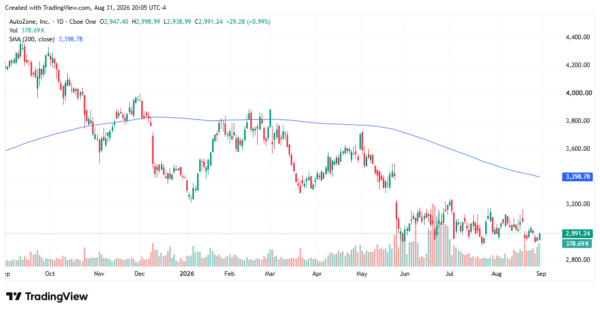
AutoZone rounds out the list, and it plays a different angle on consumer behavior entirely. Shares trade above $2,000, a price point many investors consider out of reach. That headline number can obscure the underlying value.
Despite the sticker price, AZO trades at roughly 19.9 times forward earnings. That’s an attractive multiple for a company benefiting from a durable trend: drivers holding onto vehicles longer and paying to maintain them rather than replace them.
That dynamic tends to hold up even when broader consumer spending softens, since car repairs are rarely optional. For investors screening for earnings season resilience, that durability is the benefit worth weighing against the high share price.
AutoZone’s aggressive share buyback program has also significantly reduced its float over the years, a factor that has helped support per-share earnings growth even in slower-sales environments.
What a Stock Split Could Mean for Shareholders
All three stocks share one more thing in common: each is a candidate for a stock split. Costco and AutoZone trade well above typical retail-friendly price points, and Casey’s isn’t far behind, having seen years of steady appreciation.
That said, none of these companies has announced split plans. Management at each has stayed quiet on the topic. Still, high share prices can suppress trading volume over time, and that could eventually prompt a second look from company leadership.
For now, investors get a clearer benefit from watching earnings than from speculating on splits. Costco offers income and loyalty. Casey’s offers a read on driving habits. AutoZone offers durability tied to aging vehicles. Together, they provide a broader picture of consumer behavior just as earnings season closes and the historically volatile September-October stretch begins in earnest.
This is a PAID ADVERTISEMENT provided to the subscribers of Daily Options Signals Free Newsletter. Although we have sent you this email, Daily Options Signals and StockEarnings does not specifically endorse this product nor is it responsible for the content of this advertisement. Furthermore, we make no guarantee or warranty about what is advertised above.
Your privacy is very important to us. If you no longer wish to receive email from DailyOptionsSignals.com, please click Unsubscribe.
StockEarnings, Inc 33 SE 4th St, Suite 100, Boca Raton, FL 33432 USA
W: 877.6.STOCKS StockEarnings.com







No comments:
Post a Comment