Tomorrow it's $29.97 
AutoZone Shifts Gears, On Track to Reverse Course and Price RecoveryWritten by Thomas Hughes on September 23, 2026 
Key Points
- AutoZone's latest earnings showed positive comparable sales, strong margins, and nearly 15% earnings-per-share growth, helping trigger a stock price bottoming.
- Analysts remain bullish with a Moderate Buy consensus among 27 analysts and no Sell ratings, pointing to more than 30% potential upside.
- Despite consumer headwinds and the EV shift reducing aftermarket parts demand, AutoZone's cash flow and consistent share buybacks continue supporting long-term earnings growth.
- Special Report: Rickards Predicts: Trump to buy tiny $2 stock?

AutoZone (NYSE: AZO) is struggling with consumer headwinds, like every other retailer. However, its recent earnings results reflected the company’s strengths, including sustained growth, geographic expansion, robust cash flow, and capital returns. Key investor takeaways from the report included outperformance and an improved outlook, enough to trigger a bottoming in the stock price. AutoZone’s stock price action is significant, as the company’s sell-off created a descending wedge pattern, which often indicates a bullish reversal. In this case, the pattern was compounded by diverging MACD and stochastic, with stochastic deeply oversold and MACD momentum unwound to nearly zero. In this scenario, the stock is set up not only to rebound but to sustain upward movement, needing only a trigger to get it moving. The trigger was the company's earnings results. 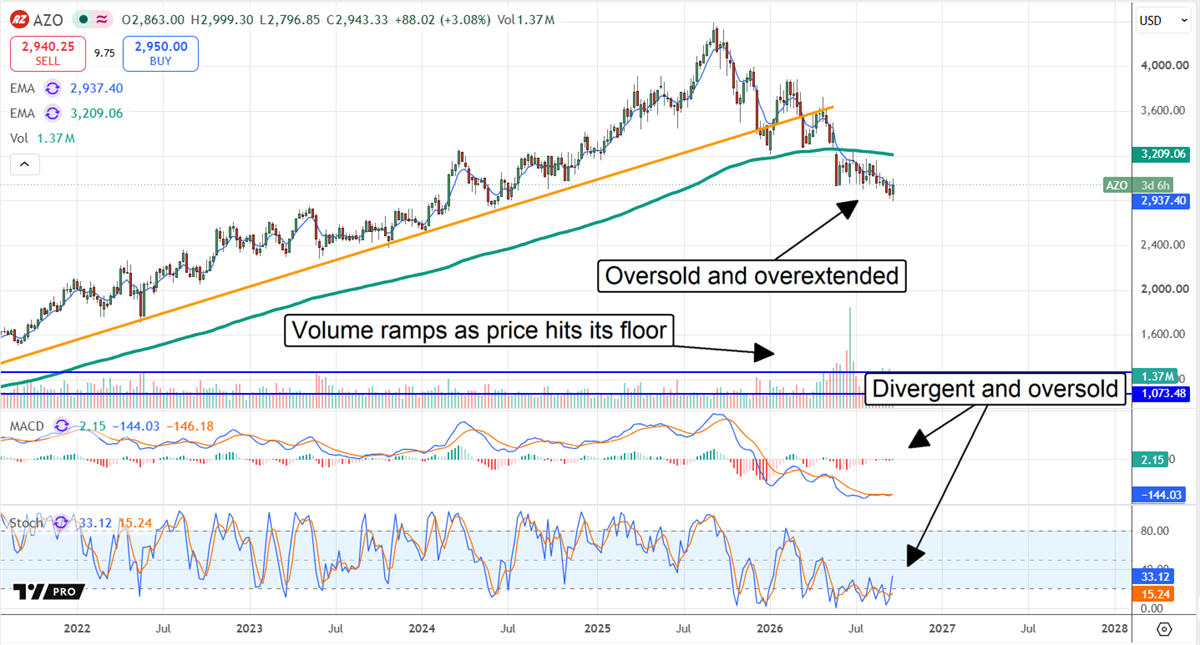
A little-known Arizona gold explorer just hit 66.2 metres grading 6.57 g/t gold, including 20.7 metres at 18.25 g/t.
After roughly 21,000 metres of drilling, the company is closing in on its first-ever mineral resource estimate, expected in Q3 or Q4 2026.
That estimate could offer the market its first real look at the scale of this emerging gold system. See what could be next for this US gold explorer
AutoZone Drives Growth and ProfitabilityAutoZone had a mixed quarter, with 5.6% growth below expectations and a 4.8% annual store count increase. However, the company produced growth, compounded it with positive comps, and drove significant profitability, which is what counts. Comps rose 1.5% systemwide, adjusted for foreign exchange, with domestic comps up 1.6% and international up 10.7% on a currency-neutral basis. Margins were also good, even better than the revenue. While tariff refunds helped, margin gains also reflected organic improvement that carried through to the bottom line. Key details include low double-digit operating and net profit growth and nearly 15% earnings-per-share growth, amplified by share buybacks. AutoZone is a cash-flow machine, allocating capital in a tiered manner: first on growth, second on balance sheet health, and third on buybacks. As a result, the company sustained its investment-grade credit ratings while expanding its store count in its fiscal 2026, increasing inventory to drive sales, and significantly reducing its share count. The share count fell by 2.2% during the period, a pace likely to continue into the coming year. Looking ahead, buybacks may accelerate year over year in the next quarter, given the low share prices and increased buyback activity in the latest quarter. AutoZone Decoupled From Reality: 30% Upside AheadAutoZone’s analyst trends, including analyst reactions to the earnings results, reveal a market decoupled from reality. While trends have included price target reductions and a drop in the consensus price target relative to last year, the data remains bullish. MarketBeat tracks 27 analysts with current ratings. No Sell ratings are logged, and the consensus is Moderate Buy with 77.7% Buy-side bias. The average price target, while moderated, indicates more than 30% upside from the late-September lows and, more importantly, deep value at the low end. AZO shares have fallen below the analysts’ lowest target, suggesting a quick move to $3,200 is possible. Institutional activity suggests the downside is limited. The group owns more than 90% of the shares and bought on balance in the trailing 12 months, ramping activity in early Q3. A wide range of institutional buyers, from retirement funds to private capital to asset managers, will likely keep buying the dips. AutoZone continues to face headwinds, and it is not an attention-grabbing stock with accelerating AI growth potential. The most likely outcome is a slow grind to higher levels, underpinned by performance and capital returns, with a retest of existing highs possible within the next 12 months.
Elon Musk quietly filed a document with the federal government tied to artificial intelligence, one of the largest markets in the world.
James Altucher, who previously flagged Nvidia in 2008 and Bitcoin in 2013, says the filing could rival Tesla, SpaceX and xAI combined.
Few investors know this filing exists, but that is expected to change quickly. Click here to see details on Elon Musk's newest AI filing
AutoZone Has Risks, But the Market Is Mispricing Them in 2026Among AutoZone’s risks is the EV shift. EVs mean fewer replaceable parts, especially for aftermarket do-it-yourselfers, and are affecting sales. To counter it, AutoZone execs are shifting inventory to match demand for replacement parts, focusing on high-wear items like tires, suspension, and chassis parts, along with the usual low-voltage electrical components that power cabin electronics, sensors, and gauges. Charging and charging equipment are another avenue, as is leveraging the ALLDATA segment. It is a proprietary platform being upgraded and updated to include pertinent information for EV maintenance and repair, ensuring AutoZone’s network of independent repair shops remains dependent on it for information and solutions. Investors often get AZO's model wrong. While balance sheet metrics often show low cash relative to accounts payable, AZO sells inventory before payments are due, mitigating the perceived cash flow crisis. At the same time, consumer headwinds impair near-term sales but keep consumers in their cars longer, sustaining the business long term and, in turn, its capacity for capital returns. Capital returns are consistent, reduce the count significantly each year, and keep earnings per share tracking higher, at an accelerated pace, regardless of business cycles. When business improves, buybacks improve along with it. Read this article online › Featured Stories

Did you find this article useful?  
|






No comments:
Post a Comment