You worked hard to build your retirement savings.
But with Washington looking for new tax revenue, many Americans are asking whether retirement accounts could eventually become a target.
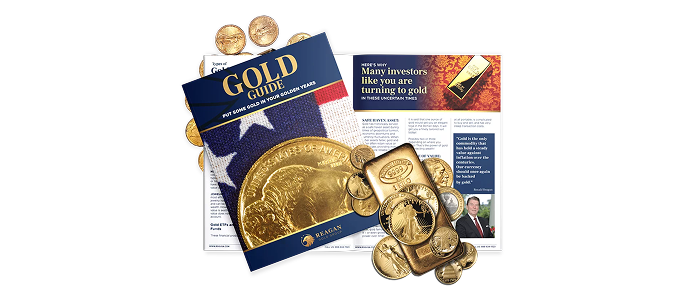
Reagan Gold's free guide explains why gold is getting renewed attention from retirement savers.
You'll learn how physical gold works, why it has been trusted for generations, and how a Gold IRA may help diversify your retirement strategy.
GET YOUR FREE GOLD GUIDE TODAY
GET YOUR FREE GOLD GUIDE TODAY
3 Big Banks Plan Double Digit Dividend Increases After Passing Fed Stress Test
Submitted by Leo Miller. Published: 7/1/2026.

Key Points
- Goldman Sachs, Wells Fargo, and Citigroup all passed the Fed's 2026 stress tests and plan meaningful dividend increases as a result.
- Goldman intends to raise its dividend from $4.50 to $5 per share, Wells Fargo plans an 11% increase, and Citigroup a 12% increase.
- Analysts see the most upside in Wells Fargo, with a consensus price target near $98 implying gains of more than 15% from current levels.
- Special Report: SpaceX is offering you shares. Don't take them.
Not long ago, the Federal Reserve completed its stress tests on the country’s largest banks, and many firms announced large dividend increases afterward. The Fed’s stress tests gauge how well these large financial institutions can weather a recession. They were introduced in response to the Great Financial Crisis, which showed that bank failures could have systemic negative effects on the broader economy.
The Fed’s 2026 stress tests analyzed the impact that a severe hypothetical recession would have on 32 banks. All 32 passed, indicating that their assets would be sufficient to cover loan losses in a severe downturn. On that basis, several banks moved ahead with dividend increases, since they had extra capital to distribute to shareholders.
Google signed. Gates wrote a 100 million dollar check. Here's why. (Ad)
A drilling crew in rural Utah was handed a 64-day timeline to bore through nearly three miles of solid granite. They finished in 16 days - twelve years ahead of the DOE's own performance projections.
Drilling costs were cut in half in 18 months. Google signed a 15-year contract. Bill Gates reversed his position and committed $100 million. When Congress rewrote energy tax credits, this was the one source that kept them through 2033. The company behind it has been operating for sixty years.
See the company that just rewrote the DOE's timelineThe common equity tier 1 capital ratio (CET1) is the key metric tested. The ratio must stay above a minimum requirement of 4.5% to pass. In doing so, the bank shows it has the capital needed to absorb substantial loan losses.
After passing the tests, these three banking giants plan to add juice to their dividends.
Goldman Plans to Continue Strong Dividend Growth
First up is The Goldman Sachs Group (NYSE: GS). During the forecast period, Goldman’s CET1 ratio started at 14.3% and fell as low as 11.4%, easily clearing the 4.5% threshold.
In response, the company said it “intends” to increase its common dividend from $4.50 to $5 per share. It uses the word “intends” because the increase is not official until approved at the Board of Directors’ next meeting, but with the stress test results already in hand, that approval is largely a formality. Since the dividend is not yet official, the record and payment dates are still unknown.
Currently, Goldman’s yield sits near 1.8%. After the planned increase, the stock’s indicated yield would rise to around 2%. Excluding this planned increase, Goldman has grown its dividend by a very strong 22.87% annually over the past five years.
Overall, Goldman has demonstrated its ability to hold up during a recession while also offering investors a solid and rapidly growing dividend.
Wells Fargo Plans Over 10% Dividend Increase Upon Passing Fed’s Test
Wells Fargo & Company (NYSE: WFC) also demonstrated its ability to withstand a severe economic downturn during the Fed’s stress tests. During the test, the firm’s CET1 ratio started at 10.6% and dropped to 9.2%, remaining well above the required hurdle.
Similar to Goldman, Wells Fargo announced that it “expects” to increase its dividend. During Q3 2026, the company plans to boost its dividend from 45 cents to 50 cents per share, or an 11% increase.
Currently, Wells Fargo’s indicated yield is approximately 2.15%. After the expected increase, that figure would move up significantly to just below 2.4%.
Excluding this planned increase, its five-year annualized dividend growth rate is 6.86%. That is somewhat underwhelming, given the firm's significant 2020 dividend cut to 10 cents. Since then, however, its dividend has increased dramatically.
According to the Fed’s testing, Wells Fargo is in a solid position to weather the worst of a recession. Meanwhile, the company offers a meaningful dividend yield, along with recovering dividend growth.
Citigroup Plans Sizeable Dividend Increase, Yield to Approach 2%
Last up is Citigroup (NYSE: C). The company began the stress test period with a CET1 ratio of 13.2%. During the test, its ratio fell to 10.3%, solidly surpassing the 4.5% minimum. Now, Citigroup plans to increase its dividend by 12% from 60 cents per share to 67 cents per share.
Currently, the firm has an annualized dividend of $2.40, equating to a yield of just under 1.7%. The company’s planned dividend increase would bring the figure to just under 1.9%.
Notably, Citi has grown its dividend at a very slow rate in recent years. The company’s five-year dividend growth rate is only 2.61%, excluding this planned increase. This follows an over four-year period from 2019 to 2023 when Citi did not increase its dividend at all. However, Citi has been turning around its business, with the firm posting record revenues across all five of its main divisions in 2025.
This has allowed the company to resume dividend increases more recently.
Citi’s strong performance during the Fed's stress test demonstrates its financial resilience and gives it the ability to continue returning significant capital.
Analysts Forecast Gains in Wells Fargo After Meager Performance
Overall, Goldman, Wells Fargo, and Citigroup all easily passed the Fed’s stress test, staying well above the minimum requirement. Beyond capital returns, Wall Street analysts are forecasting the most upside in Wells Fargo among this group. The MarketBeat consensus price target on Wells Fargo sits near $98, implying gains of more than 15%.
This is partly because Wells Fargo has underperformed, while Goldman and Citigroup have already gone on strong runs. Since the beginning of 2025, Citigroup is up more than 100%, Goldman is up more than 75%, and Wells Fargo’s return is less than 30%.
MarketBeat Week in Review – 06/22 - 06/26
Submitted by MarketBeat Staff. Published: 6/27/2026.

Key Points
- SpaceX IPO excitement faded quickly as AI sector volatility increased, and reports suggested OpenAI could delay its IPO until 2027.
- Inflation remained stubbornly high, with the PCE index rising 4.1% year over year, matching expectations but staying well above the Fed’s 2% target.
- Markets head into a shortened holiday week as investors prepare for earnings season and look for strategies to navigate ongoing market volatility.
- Special Report: SpaceX is offering you shares. Don't take them.
It’s been just two weeks since the SpaceX (NASDAQ: SPCX) IPO, and it’s already starting to feel like back-page news. This week, the market had a long memory for stocks, and that memory backlog is a real bottleneck in the artificial intelligence (AI) trade. Adding volatility to the tech sector was the news that OpenAI may postpone its IPO until 2027.
Investors also had to digest the latest inflation reading. The Personal Consumption Expenditures (PCE) index came in hot, with a year-over-year increase of 4.1%. That’s double the Fed’s preferred target. The silver lining? The reading was as expected.
Google signed. Gates wrote a 100 million dollar check. Here's why. (Ad)
A drilling crew in rural Utah was handed a 64-day timeline to bore through nearly three miles of solid granite. They finished in 16 days - twelve years ahead of the DOE's own performance projections.
Drilling costs were cut in half in 18 months. Google signed a 15-year contract. Bill Gates reversed his position and committed $100 million. When Congress rewrote energy tax credits, this was the one source that kept them through 2033. The company behind it has been operating for sixty years.
See the company that just rewrote the DOE's timelineNext week will be another short trading week. Markets will be closed on Friday, July 3, in observance of the Fourth of July holiday in the United States. The MarketBeat team of analysts will be getting you ready for the current volatility and how to position for the upcoming earnings season. Here are some of our most popular articles from this week.
Articles by Thomas Hughes
Is the sell-off in Oracle (NYSE: ORCL) overdone? That’s the question Thomas Hughes addressed head-on. Hughes made the case that what started as an understandable, but overblown, concern over debt has become more of a mispricing than a warning.
Investors may be wondering how to position in energy stocks with the price of oil moving lower. Hughes recommended three oil refiners that are positioned to benefit from short-term market dynamics that will keep supply tight.
Oil prices are coming down, but it will take time for the rate of inflation to follow suit. That’s likely to keep pressure on the retail sector, which is why Hughes focused on three inflation-resistant stocks that stand out when inflation is running hot.
Articles by Sam Quirke
It was another week of one step forward and two steps back for Amazon.com Inc. (NASDAQ: AMZN). Sam Quirke highlighted a potential complaint being brought by the Federal Trade Commission (FTC). However, Quirke reminded long-term investors that Amazon has a history of absorbing regulatory blows to the benefit of shareholders.
Tesla Inc. (NASDAQ: TSLA) is facing regulatory scrutiny of a different kind. In this case, the company faces a probe from the National Highway Traffic Safety Administration (NHTSA) after a crash involving one of its Model 3 cars, which raised fresh concerns about full self-driving (FSD).
Quirke also wrote about Applied Materials (NASDAQ: AMAT) and concerns that the stock is starting to look bubblicious. Read why the long-term story is bullish, even if AMAT may face short-term pressure.
Articles by Chris Markoch
This was the last week for investors to buy CrowdStrike Holdings Inc. (NASDAQ: CRWD) before its 4-for-1 stock split. Chris Markoch reminded investors that a stock split is never the right reason to buy a stock, but in the case of CRWD, it’s coming as the company’s fundamentals point to a higher price regardless of its current level.
Microsoft (NASDAQ: MSFT) continues to be one of the market’s weakest performers. But Markoch pointed out that while the company remains a tech stalwart, its boring business includes a beautiful balance sheet.
Higher-for-longer interest rates are increasing interest in dividend stocks that offer yields above inflation and the 10-year Treasury rate. This week, Markoch highlighted three dividend stocks with a yield over 4% that are priced under $30, which may appeal to investors looking for an anchor for their portfolio.
Articles by Ryan Hasson
The SpaceX IPO has triggered a wave of leveraged ETF launches within days of its listing. This week, Ryan Hasson helped investors understand the structure and risk of these funds and highlighted two of the biggest names: one long and one short.
The biotechnology sector has been hinting at a fundamental breakout for some time. This week, Hasson explained why the iShares Nasdaq Biotechnology ETF (NASDAQ: IBB) may be the most efficient way for many investors to capture gains in this trade.
One of the largest beneficiaries in the AI infrastructure trade has been companies tasked with delivering the power data centers need. Hasson highlighted five stocks that will power the AI power crisis.
Articles by Leo Miller
Investors are drawn to insider buying and selling, which can best be summarized as: it doesn’t matter unless it does. This week, Leo Miller pointed investors to two stocks with heavy insider selling that could signal a short-term top for the respective names. He also highlighted one company where insiders are buying the stock on weakness.
Miller also highlighted three big names in the consumer discretionary sector that have made significant increases to their share buyback programs. The devil is in the details, and investors should be aware of the circumstances surrounding each of these increases.
Dividend investors understand that the best dividends grow over time. This week, Miller put a spotlight on three companies that recently raised their dividends. One of those names also offers investors a high yield of over 10%.
Articles by Nathan Reiff
After a disappointing earnings report, D-Wave Quantum (NYSE: QBTS) needed a win. Nathan Reiff explained why the company’s announcement of an upcoming gate-model quantum computing simulator may not be a game-changer, but it could be the lifeline the company needed.
Many defense and space stocks have been sliding after the SpaceX IPO. But Reiff pointed investors to two names with significant backlogs that could make this pullback a buying opportunity.
A major story this week was the plunge in South Korea’s Kospi index. That may have some investors concerned about investing in the country. But Reiff highlighted three South Korea ETFs that offer more runway despite the significant gains already made in 2026.
Articles by Dan Schmidt
Investors have been encouraged to look outside the United States for market-beating returns. One example came from European banks that had a strong year in 2025. That has some calling a bubble, but Dan Schmidt explained why three European banks continue to be undervalued compared to their U.S. peers.
The trend of Bitcoin miners becoming data center landlords is a key story in 2026. However, Schmidt highlighted three Bitcoin miners that have posted strong gains but may be due for a pullback.
Schmidt also pointed out the market-beating growth of The Cheesecake Factory (NASDAQ: CAKE). This is less about the company’s flagship namesake brand and more about its strategic expansion. The question is whether the 50% year-to-date gain has room to run.
Articles by Jeffrey Neal Johnson
Micron Technology (NASDAQ: MU) delivered one of the most important earnings reports this season. However, prior to the report, the stock sold off more than 8% in sympathy with an implosion in South Korea’s Kospi index. Jeffrey Neal Johnson explained why nimble investors used the sell-off as a setup for a bullish rally.
After soaring higher following its IPO, SpaceX is confronting the market reality of gravity. Johnson provides investors with context that could mean the sell-off is structural, not just a profit-taking exercise.
The hottest part of the AI infrastructure trade is about keeping things cool. Johnson wrote about three liquid cooling stocks as the futuristic technology becomes increasingly important for keeping the modern internet online.
Articles by Jennifer Ryan Woods
Shares of Sweetgreen Inc. NYSE: SG have surged 60% over the past three months. Jennifer Ryan Woods explained why the company's efforts to revive the business suggest that what started as a relief rally may have more room to run.
It’s been a rough first half for Domino’s Pizza (NASDAQ: DPZ), and shares are near a 52-week low after the company announced a change in the C-suite. However, Woods noted that analysts still forecast strong upside, which could show up in the stock if the company can deliver on earnings.
Articles by Peter Frank
Cruise lines have delivered strong results this earnings season. However, Peter Frank highlighted two different risks for two of the biggest names. In the case of Royal Caribbean (NYSE: RCL), the company posted a double-digit revenue increase with further growth projected. However, investors have to ask whether that growth is already priced in.
For Carnival Corp. (NYSE: CCL), the strong report comes with concerns about the company’s future guidance, which includes higher fuel costs and a mixed picture about confidence in its core customer base.
Like many off-price retailers, Burlington Stores (NYSE: BURL) is having a strong year. However, Frank pointed out that the growth has created a potential valuation concern, meaning the company needs flawless execution to move higher.
This email is a sponsored email from Reagan Gold Group, a third-party advertiser of DividendStocks.com and MarketBeat.
This is an advertisement.
If you no longer wish to receive promotional messages from this advertiser, please click here: Unsubscribe. Or write to: 2029 Century Park E Suite 400, Los Angeles, CA 90067
If you have questions about your account, please email our U.S. based support team at contact@marketbeat.com.
If you no longer wish to receive email from DividendStocks.com, you can unsubscribe.
Copyright 2006-2026 MarketBeat Media, LLC.
345 North Reid Place, Suite 620, Sioux Falls, South Dakota 57103-7078. U.S.A..





No comments:
Post a Comment