Tuesday, July 1, 2025

The Sleeper Asset Wall Street Is Quietly Buying

Shield

AN OXFORD CLUB PUBLICATION

Loyal reader since December 2024

Liberty Through Wealth

SPONSORED

“Move over Nvidia, Buy this Elon Musk Play”


A legendary billion-dollar former hedge fund manager just issued this critical alert. He believes Elon’s new AI technology could not only trigger a 50% crash in shares of Nvidia in the next 12 months but also make a lot of regular Americans rich in the process if they act before August 1. Click here to see the details.

EDITOR'S NOTE

At Liberty Through Wealth, we don't typically focus on crypto.

But when a convergence of Wall Street, Big Tech, and Washington D.C. signals a major shift in the financial system... we pay attention.

JPMorgan just filed for its own stablecoin. Amazon and Walmart are quietly building their own payment rails. And Congress is fast-tracking legislation that could give crypto the regulatory clarity it's never had before.

In short: A new financial infrastructure is being built. And stablecoins are at the center of it.

That's why we've asked longtime analyst Robert Ross to weigh in.

Robert has tracked every major move in digital assets over the last decade. And today, he's sounding the alarm on a little-known crypto project that could become essential to this next wave of adoption.

Get the full details on his research before this stablecoin shake-up hits the headlines.

- Nicole Labra, Senior Managing Editor

THE SHORTEST WAY TO A RICH LIFE

Why Stablecoins Are the Infrastructure Play of the Decade

Robert Ross, Speculative Assets Specialist, Manward Press

Robert Ross

If you watched only the highlight reels from the latest Bitcoin conference, you might think the biggest topics were ETFs or AI.

But had you attended - had you listened to the panels, talked to developers, hedge fund managers, and regulators - one word came up more than any other: stablecoins.

Seriously. Someone even put together a supercut video of conference speakers saying the word "stablecoin." It ran for more than five minutes.

Why the sudden obsession?

Because stablecoins are no longer just the "plumbing" of crypto - they're becoming the foundation. The invisible infrastructure. The layer that links the wild west of crypto with the real economy.

And as someone who has studied this space for more than a decade, I can tell you...

The next crypto bull run won't be built on meme coins or moonshots...

It'll be built on stablecoins...

What Are Stablecoins?

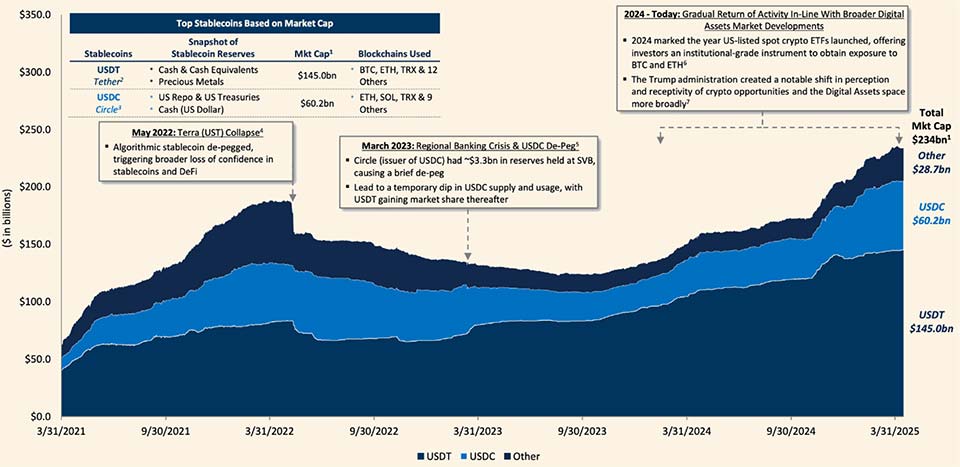
Stablecoins are cryptocurrencies pegged to the value of a stable asset - usually U.S. Treasurys. The most popular ones are USDT (Tether) and USDC (Circle). Together, they account for nearly 85% of the stablecoin market.

Chart: Top Stablecoins Based on Market Cap
 

Unlike Bitcoin or Ethereum, stablecoins don't move much. That's the point. Their job is to act as cash equivalents - the dollars that live inside the crypto world.

Traders use them to move in and out of crypto positions. Developers use them to power DeFi applications. And more than ever, people outside the U.S. use them to store savings, send remittances, and escape volatile local currencies.

Stablecoins are crypto's killer app - and we're just scratching the surface.

The Numbers Don't Lie

The total value of stablecoins in circulation now exceeds $160 billion, up from just $5 billion in 2019.

But that's just the beginning.

According to Bernstein, the stablecoin market could hit $2.5 trillion by 2030. That's more than 15x from today's levels.

This isn't just about speculation. Stablecoins are being used right now to...

  • Send money across borders without banks
  • Buy goods and services in emerging markets
  • Power DeFi lending, borrowing, and trading
  • Tokenize real-world assets like U.S. Treasurys and commodities.

Think about that for a second...

The U.S. dollar is now natively programmable - and available globally, 24/7, without a bank account.

This isn't some crypto fantasy. It's already happening.

SPONSORED

Man Who Called Nvidia at $1.10: THIS TRUMP TRADE Could Create the Next Trillion Dollar Company

AG Magnificent Seven
 

Biggest Tech Firms in the World are Loading Up! And Apple Just Signed a Deal Through 2040. Get the Whole Story on the #1 Trump Stock for His Second Term.

The Regulatory Shift

Of course, the big blocker until now has been regulation.

That's why the biggest applause line at the conference wasn't about Bitcoin ETFs or Ethereum upgrades - it was about the GENIUS Act, a new stablecoin bill making its way through Congress.

The bill lays out a framework for how stablecoins can operate legally in the U.S...

  • 1:1 backing with liquid reserves (like T-bills)
  • Mandatory audits
  • Oversight from federal regulators.

If passed, it would give U.S.-backed stablecoins the regulatory clarity they've been waiting for - and unlock billions in institutional capital.

Even Bitwise CIO Matt Hougan said it could be a "bigger deal than the 2024 Bitcoin ETF approvals."

Why?

Because it gives crypto something it's never really had before...

A clear, legal connection to the U.S. financial system.

It would also help the U.S. government by driving more demand for Treasurys - at a time when we need buyers the most.

Why This Matters for Investors

I don't invest in narratives. I invest in infrastructure.

Stablecoins are infrastructure. They're the bridges, the highways, the payment rails of our future financial system.

When you look at what's been driving crypto adoption behind the scenes, it's not always the assets people are hyped about on Twitter/X.

It's the tools that make those assets usable.

Stablecoins are the tools.

That's why we're paying close attention to...

  • Layer 1 blockchains that specialize in stablecoin payments (like Solana)
  • Infrastructure players like Coinbase and Fireblocks that benefit from rising volumes
  • On-chain Treasurys and DeFi platforms that tokenize real-world assets (RWAs).

These are the picks and shovels of the next phase of crypto adoption - and they're already gaining traction.

The Bottom Line

Stablecoins may not be as sexy as AI tokens or Layer 2 scaling solutions.

But they're the glue holding crypto together - and the runway for its next leg higher.

The smartest people in the room are laser-focused on them for a reason.

If the GENIUS Act passes?

Expect a flood of capital to follow.

Because once the infrastructure is in place, the rest tends to build fast.

And if you want to know exactly which infrastructure plays I'm positioning for ahead of this shift... including my top pick that could benefit most when institutional money starts flowing through stablecoin rails... click here.

But hurry... the window to get positioned ahead of the big money is shrinking fast.

Find details here.

Stay safe out there,

Robert

This secret stock is set to bring 50,000 new jobs to America with a deal involving Apple and $10 billion

BUILD AND PROTECT YOUR WEALTH

Little-Known AI Company Could Be the Next Stock Giant. Click here to see Shah's urgent briefing.

Are the Magnificent Seven's Best Days Behind Them?

This Legend Is Like "The Babe Ruth of Investing"... ☝️ He Keeps Calling His Home Runs!

Why My Put Selling Strategy is so Darn Successful

SPONSORED

Top Stock Forecaster:
"Buy These Stocks Before Trump Takes Office"

Shah Gilani
 

Weekly Fox Business guest who accurately predicted President's Trump's first Stockwave says the Dow could skyrocket to 75,000 with Trump back in office.

The last time he was in office, stocks rose as much as 3,480%...

See what stocks could surge this time:

Click here to see the details.

The Economics Daily

Bureau of Labor Statistics
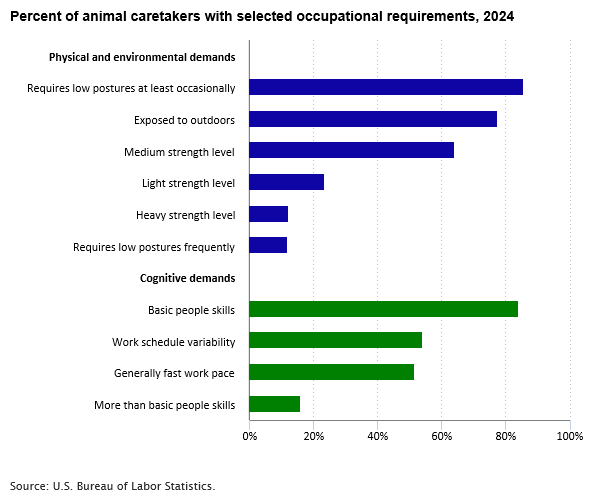
The latest Economics Daily article is available here: https://www.bls.gov/opub/ted/2025/not-monkeying-around-koalafications-of-animal-caretakers.htm. Highlights are below.

Not monkeying around: koalafications of animal caretakers

07/01/2025

July 1 is American Zoo Day, commemorating the date in 1874 when the first American zoo opened in Philadelphia. Today there are over 250 accredited zoos and aquariums in the United States. These facilities house more than 780,000 animals from over 8,600 different species.

HTML


Artigo “Tornando a ajuda externa grande novamente”

Department of State United States of America

Tradução cortesia do Departamento de Estado dos Estados Unidos


Autor: MARCO RUBIO, SECRETÁRIO DE ESTADO

Todo servidor público tem a obrigação para com cidadãos americanos de garantir que todos os programas que financiam promovam os interesses de nossa nação. Durante a análise minuciosa feita pelo governo Trump de milhares de programas e mais de US$ 715 bilhões em gastos ajustados pela inflação ao longo das décadas, ficou evidente que a Agência dos EUA para o Desenvolvimento Internacional (Usaid) ficou bem abaixo desse padrão.

A Usaid teve décadas e um orçamento dos contribuintes quase ilimitado para fazer avançar a influência americana, promover o desenvolvimento econômico em todo o mundo e permitir que bilhões de pessoas consigam se manter por conta própria.

Além de criar um complexo industrial de ONGs que se estende por todo o mundo às custas dos contribuinte, a Usaid tem pouco a mostrar desde o fim da Guerra Fria. Os objetivos de desenvolvimento raramente foram alcançados, a instabilidade muitas vezes piorou e o sentimento antiamericano só cresceu. No cenário global, os países que mais se beneficiam de nossa generosidade geralmente não retribuem. Por exemplo, em 2023, nações da África Subsaariana votaram com os Estados Unidos apenas 29% das vezes em resoluções essenciais na ONU, apesar de terem recebido US$ 165 bilhões em gastos desde 1991. Essa é a taxa mais baixa do mundo. No mesmo período, mais de US$ 89 bilhões investidos no Oriente Médio e no Norte da África deixaram os EUA com índices de favorabilidade mais baixos do que a China em todas as nações, exceto no Marrocos. Os gastos de US$ 9,3 bilhões da agência em Gaza e na Cisjordânia desde 1991, cujos beneficiários incluíam aliados do Hamas, geraram queixas em vez de gratidão para com os Estados Unidos. Os únicos que viviam bem eram os executivos das inúmeras ONGs, que muitas vezes desfrutavam de estilos de vida cinco estrelas financiados pelos contribuintes americanos, enquanto aqueles que eles supostamente ajudavam ficavam ainda mais para trás.

Essa era de ineficiência sancionada pelo governo chegou oficialmente ao fim. Sob a regência do governo Trump, finalmente teremos uma missão de financiamento estrangeiro nos Estados Unidos que prioriza nossos interesses nacionais. A partir de 1º de julho, a Usaid deixará oficialmente de implementar a ajuda externa. Os programas de ajuda externa que se alinham com as políticas do governo — e que promovem os interesses americanos — serão administrados pelo Departamento de Estado, onde serão cumpridos com mais responsabilidade, estratégia e eficiência.

Não nos desculparemos por reconhecer que o compromisso de longa data dos Estados Unidos com a ajuda humanitária vital e com a promoção do desenvolvimento econômico no exterior deve estar em consonância com uma política externa Estados Unidos em Primeiro Lugar.

A Usaid via sua base de apoio como as Nações Unidas, ONGs multinacionais e a comunidade global em geral — não os contribuintes americanos que financiaram seu orçamento ou o presidente que elegeram para representar seus interesses no cenário mundial. A Usaid comercializava seus programas como uma instituição de caridade, em vez de instrumentos da política externa americana destinados a promover nossos interesses nacionais. Com muita frequência, esses programas promoviam ideais e grupos antiamericanos, desde a "DEI" (diversidade, equidade e inclusão) global, censura e operações de mudança de regime, até ONGs e organizações internacionais em conluio com a China comunista e outros adversários geopolíticos.

Isso termina hoje, e onde antes havia um arco-íris de logotipos não identificáveis ​​em ajuda humanitária, agora haverá um símbolo reconhecível: a bandeira americana. Os beneficiários merecem saber que a assistência prestada a eles não é uma esmola de uma ONG desconhecida, mas um investimento do povo americano.

Igualmente importante, o modelo assistencialista fracassou porque a liderança dessas nações em desenvolvimento criou uma dependência. Pesquisas do Departamento de Estado revelam que o sentimento predominante em países que anteriormente recebiam financiamento da Usaid é favorável ao comércio e não à ajuda. Após interagir com nações da América Latina e da África, ouvimos constantemente que países em desenvolvimento desejam investimentos que os capacitem a crescer de forma sustentável — e não décadas de apoio paternalista administrado pela ONU ou pela Usaid. O Departamento tem ouvido constantemente o mesmo de pessoas nessas nações: um zambiano disse a diplomatas americanos que seria mais útil para seus compatriotas aprenderem a pescar do que receberem peixes do governo dos EUA; uma etíope disse que considerava os benefícios mútuos do investimento superiores à natureza unilateral da ajuda; e muitos outros exemplos para relatar.

Os americanos não devem pagar impostos com o intuito de financiar governos falidos em terras distantes. No futuro, nossa assistência será direcionada e terá prazo limitado. Favoreceremos nações que demonstrem capacidade e disposição para se ajudarem e direcionaremos nossos recursos a áreas onde possam ter um efeito multiplicador, e catalisar o setor privado duradouro, incluindo empresas americanas e o investimento global.

Esse trabalho está bem encaminhado. Já estamos observando um tremendo progresso em fazer com que a ONU, outros aliados e fundos privados paguem uma parcela maior de projetos em todo o mundo, um processo equiparado ao sucesso do presidente em convencer nossos aliados da Otan a cumprirem seus compromissos de gastos. Estamos consolidando contas de dotações fragmentadas visando construir fundos mais flexíveis e dinâmicos, eliminando processos burocráticos a fim de agir com mais rapidez e responder a crises em tempo real, e implementando novos critérios de eficiência com o objetivo de medir o impacto quantitativamente. Ao empoderar diplomatas em campo por meio de escritórios regionais, estamos criando um ciclo de feedback rápido capaz de garantir que os programas estejam alinhados aos interesses americanos e às necessidades das nações parceiras.

Esse modelo também nos colocará em uma posição mais forte com o intuito de combater o modelo de ajuda exploratória da China e promover nossos interesses estratégicos em regiões-chave ao redor do mundo.

Faremos isso priorizando o comércio em vez da ajuda, a oportunidade em vez da dependência e o investimento em vez da assistência. Para os americanos e muitos ao redor do mundo, 1º de julho marcará o início de uma nova era de parceria global, paz, investimento e prosperidade.

Marco Rubio foi empossado como 72º secretário de Estado em 21 de janeiro de 2025. O secretário está criando um Departamento de Estado que coloca os Estados Unidos em primeiro lugar.

Veja o conteúdo original: https://statedept.substack.com/p/making-foreign-aid-great-again

Esta tradução é fornecida como cortesia e apenas o texto original em inglês deve ser considerado oficial. 


This email was sent to stevenmagallanes520.nims@blogger.com using GovDelivery Communications Cloud on behalf of: Department of State Office of International Media Engagement · 2201 C Street, NW · Washington, DC · 20520 GovDelivery logo

This ONE coin is ready to explode! This is your last chance to get in before everyone else knows...

Summer's hottest crypto pick ͏  ͏  ͏  ͏  ͏  ͏  ͏  ͏  ͏  ͏  ͏  ͏  ͏  ͏  ͏  ͏  ͏  ͏  ͏  ͏  ͏  ͏  ͏  ͏  ͏  ͏  ͏  ͏  ͏  ͏  ͏  ͏  ͏  ͏  ͏  ͏  ͏  ͏  ͏  ͏  ͏  ͏  ͏  ͏  ͏  ͏  ͏  ͏  ͏  ͏  ͏  ͏  ͏  ͏  ͏  ͏  ͏  ͏  ͏  ͏  ͏  ͏  ͏  ͏  ͏  ͏  ͏  ͏  ͏  ͏  ͏  ͏  ͏  ͏  ͏  ͏  ͏  ͏  ͏  ͏  ͏  ͏  ͏  ͏  ͏  ͏  ͏  ͏  ͏  ͏  ͏  ͏  ͏  ͏  ͏  ͏  ͏  ͏  ͏  ͏ ­ ­ ­ ­ ­ ­ ­ ­ ­ ­ ­ ­ ­ ­ ­ ­ ­ ­ ­ ­ ­ ­ ­ ­ ­ ­ ­ ­ ­ ­ ­ ­ ­ ­ ­ ­ ­ ­ ­ ­ ­ ­ ­ ­ ­ ­ ­ ­ ­ ­ ­ ­ ­ ­ ­ ­ ­ ­ ­ ­ ­ ­ ­ ­ ­ ­ ­ ­ ­ ­ ­ ­ ­ ­ ­ ­ ­ ­ ­ ­ ­ ­ ­ ­ ­ ­ ­ ­ ­ ­ ­ ­ ­ ­ ­ ­ ­ ­ ­ ­  

From Chaos to Crypto: My Top 2025 Pick ͏  ͏  ͏  ͏  ͏  ͏  ͏  ͏  ͏  ͏  ͏  ͏  ͏  ͏  ͏  ͏  ͏  ͏  ͏  ͏  ͏  ͏  ͏  ͏  ͏  ͏  ͏  ͏  ͏  ͏  ͏  ͏  ͏  ͏  ͏  ͏  ͏  ͏  ͏  ͏  ͏  ͏  ͏  ͏  ͏  ͏  ͏  ͏  ͏  ͏  ͏  ͏  ͏  ͏  ͏  ͏  ͏  ͏  ͏  ͏  ͏  ͏  ͏  ͏  ͏  ͏  ͏  ͏  ͏  ͏  ͏  ͏  ͏  ͏  ͏  ͏  ͏  ͏  ͏  ͏  ͏  ͏  ͏  ͏  ͏  ͏  ͏  ͏  ͏  ͏  ͏  ͏  ͏  ͏  ͏  ͏  ͏  ͏  ͏  ͏ ­ ­ ­ ­ ­ ­ ­ ­ ­ ­ ­ ­ ­ ­ ­ ­ ­ ­ ­ ­ ­ ­ ­ ­ ­ ­ ­ ­ ­ ­ ­ ­ ­ ­ ­ ­ ­ ­ ­ ­ ­ ­ ­ ­ ­ ­ ­ ­ ­ ­ ­ ­ ­ ­ ­ ­ ­ ­ ­ ­ ­ ­ ­ ­ ­ ­ ­ ­ ­ ­ ­ ­ ­ ­ ­ ­ ­ ­ ­ ­ ­ ­ ­ ­ ­ ­ ­ ­ ­ ­ ­ ­ ­ ­ ­ ­ ­ ­ ­ ­  

One $3 report, five years of wealth potential ͏  ͏  ͏  ͏  ͏  ͏  ͏  ͏  ͏  ͏  ͏  ͏  ͏  ͏  ͏  ͏  ͏  ͏  ͏  ͏  ͏  ͏  ͏  ͏  ͏  ͏  ͏  ͏  ͏  ͏  ͏  ͏  ͏  ͏  ͏  ͏  ͏  ͏  ͏  ͏  ͏  ͏  ͏  ͏  ͏  ͏  ͏  ͏  ͏  ͏  ͏  ͏  ͏  ͏  ͏  ͏  ͏  ͏  ͏  ͏  ͏  ͏  ͏  ͏  ͏  ͏  ͏  ͏  ͏  ͏  ͏  ͏  ͏  ͏  ͏  ͏  ͏  ͏  ͏  ͏  ͏  ͏  ͏  ͏  ͏  ͏  ͏  ͏  ͏  ͏  ͏  ͏  ͏  ͏  ͏  ͏  ͏  ͏  ͏  ͏ ­ ­ ­ ­ ­ ­ ­ ­ ­ ­ ­ ­ ­ ­ ­ ­ ­ ­ ­ ­ ­ ­ ­ ­ ­ ­ ­ ­ ­ ­ ­ ­ ­ ­ ­ ­ ­ ­ ­ ­ ­ ­ ­ ­ ­ ­ ­ ­ ­ ­ ­ ­ ­ ­ ­ ­ ­ ­ ­ ­ ­ ­ ­ ­ ­ ­ ­ ­ ­ ­ ­ ­ ­ ­ ­ ­ ­ ­ ­ ­ ­ ­ ­ ­ ­ ­ ­ ­ ­ ­ ­ ­ ­ ­ ­ ­ ­ ­ ­ ­  

Page List

Blog Archive

Search This Blog

SI:CYMI | We Went to Pig Beach So You Don’t Have To

Our latest roundup of news from the sports world. ...