Dear Reader,
When a former advisor to the Pentagon released this AI Black Paper…
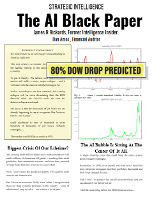
He warned that the brewing crisis in AI would cause:
“A multi-trillion dollar stock market meltdown that will catch millions of Americans off guard….torching their stock portfolios, retirement accounts, and even their personal savings faster than any crisis we’ve seen before.”
Well, now with problems at Nvidia and ChatGPT…
It looks like he may have undersold the case.
And as soon as July 29th at 6:30 PM the entire AI bubble could implode.
If you have money in the markets or assets you need to protect…
I suggest you view this AI Black Paper now.
Because it not only details the full nature of this crisis…
But it walks you through 3-steps to avoid the coming carnage (including a way you could take home gains of as high as 600% or more in 12 months during the coming crash).
But do it soon…
Because once this crisis hits, you won’t get any second chances.
Click here to view this analysis and see how to prepare.
Regards,
Matt Insley
Publisher, Paradigm Press
3 Big Banks Plan Double Digit Dividend Increases After Passing Fed Stress Test
Authored by Leo Miller. Article Published: 7/1/2026.

Key Points
- Goldman Sachs, Wells Fargo, and Citigroup all passed the Fed's 2026 stress tests and plan meaningful dividend increases as a result.
- Goldman intends to raise its dividend from $4.50 to $5 per share, Wells Fargo plans an 11% increase, and Citigroup a 12% increase.
- Analysts see the most upside in Wells Fargo, with a consensus price target near $98 implying gains of more than 15% from current levels.
- Special Report: Forget SpaceX. Buy the company Musk can't replace.
Not long ago, the Federal Reserve completed its stress tests on the country’s largest banks, and many firms announced large dividend increases afterward. The Fed’s stress tests measure how well these major financial institutions can withstand a recession. The tests were introduced after the Great Financial Crisis, which showed that bank failures can have severe spillover effects on the broader economy.
The Fed’s 2026 stress tests analyzed the impact a severe hypothetical recession would have on 32 banks. All 32 passed, indicating that their assets would be sufficient to cover loan losses in a severe downturn. On that basis, several banks moved ahead with dividend increases, since they had additional capital available to return to shareholders.
ALERT: Drop these 5 stocks before the market opens tomorrow! (Ad)
The Wall Street Journal is already raising the alarm about a potential market crash, and Weiss Ratings research points to the first half of 2026 as a particularly rough stretch for certain holdings.
Some of America's most popular stocks could take serious damage as a radical market shift plays out. Analysts at Weiss Ratings have identified five names you may want to remove from your portfolio before this unfolds.
If any of these are in your portfolio, now is the time to review your positions.
See the 5 stocks to avoidThe common equity tier 1 capital ratio (CET1) is the key metric being tested. The ratio must remain above a minimum requirement of 4.5% to pass. In doing so, the bank shows it has the capital needed to absorb significant loan losses.
After passing the tests, these three banking giants plan to add more juice to their dividends.
Goldman Plans to Continue Strong Dividend Growth
First up is The Goldman Sachs Group (NYSE: GS). During the forecast period, Goldman’s CET1 ratio started at 14.3% and fell as low as 11.4%, easily clearing the 4.5% threshold.
In response, the company said it “intends" to increase its common dividend from $4.50 to $5 per share. It says "intends" because the increase is not formal until approved at the Board of Directors' next meeting—but with the stress test results already in hand, that approval is largely a formality. Since the dividend is not yet official, the record and payment dates are still unknown.
Currently, Goldman’s yield sits near 1.8%. After the planned increase, the stock’s indicated yield would move up to around 2%. Excluding this planned increase, Goldman has grown its dividend by a very strong 22.87% annually over the past five years.
Overall, Goldman has shown it can hold up during a recession while also offering investors a solid and rapidly growing dividend.
Wells Fargo Plans Over 10% Dividend Increase Upon Passing Fed’s Test
Wells Fargo & Company (NYSE: WFC) also demonstrated its ability to withstand a severe economic downturn during the Fed’s stress tests. During the test, the firm’s CET1 ratio started at 10.6% and dropped to 9.2%, staying comfortably above the required hurdle.
Similar to Goldman, Wells Fargo announced that it “expects” to increase its dividend. During Q3 2026, the company plans to boost its dividend from 45 cents to 50 cents per share, an 11% increase.
Currently, Wells Fargo’s indicated yield is approximately 2.15%. After the expected increase, that figure would rise significantly to just below 2.4%.
Excluding this planned increase, its five-year annualized dividend growth rate is 6.86%. That figure is somewhat underwhelming, given the firm's significant 2020 dividend cut to 10 cents. Since then, however, its dividend has increased sharply.
According to the Fed’s testing, Wells Fargo is in a solid position to weather the worst of a recession. Meanwhile, the company offers a meaningful dividend yield, along with improving dividend growth.
Citigroup Plans Sizeable Dividend Increase, Yield to Approach 2%
Last up is Citigroup (NYSE: C). The company began the stress test period with a CET1 ratio of 13.2%. During the test, its ratio fell to 10.3%, solidly surpassing the 4.5% minimum. Now, Citigroup plans to increase its dividend by 12%, from 60 cents per share to 67 cents per share.
Currently, the firm has an annualized dividend of $2.40, equating to a yield of just under 1.7%. The company’s planned dividend increase would bring the figure to just under 1.9%.
Notably, Citi has grown its dividend at a very slow pace in recent years. The company’s five-year dividend growth rate is only 2.61%, excluding this planned increase. This follows a more than four-year stretch from 2019 to 2023 in which Citi did not increase its dividend at all. However, Citi has been turning its business around, with the firm posting record revenues across all five of its main divisions in 2025.
This has allowed the company to return to dividend increases more recently.
Citi’s strong performance during the Fed's stress test demonstrates its financial resilience and gives it the ability to continue returning significant capital.
Analysts Forecast Gains in Wells Fargo After Meager Performance
Overall, Goldman, Wells Fargo, and Citigroup all easily passed the Fed’s stress test, staying well above the minimum requirement. Beyond capital returns, Wall Street analysts are forecasting the most upside in Wells Fargo among this group. The MarketBeat consensus price target on Wells Fargo sits near $98, implying gains of more than 15%.
This is partly because Wells Fargo has underperformed, while Goldman and Citigroup have already posted strong runs. Since the beginning of 2025, Citigroup is up more than 100%, Goldman is up more than 75%, and Wells Fargo’s return is less than 30%.
Energy Fuels Just Made a Bold Bet on Rare Earth Magnets
Submitted by Jeffrey Neal Johnson. Originally Published: 6/25/2026.
Key Points
- Energy Fuels' $1.9 billion acquisition of Vacuumschmelze creates a domestic mine-to-magnet supply chain that bypasses Chinese export controls on rare earth materials.
- Energy Fuels' uranium production, which reached 1.6 million pounds in the first half of 2026, provides internal cash flow to fund the rare earth expansion without excessive debt.
- The Sumter, South Carolina magnet facility is projected to generate $65 million to $75 million in run-rate EBITDA at current capacity, with significant upside as output scales.
- Special Report: Forget SpaceX. Buy the company Musk can't replace.
Traders who sold Energy Fuels (NYSEAMERICAN: UUUU) shares after its $1.9 billion deal to buy German magnet maker Vacuumschmelze may be overlooking a major strategic shift.
The immediate share price pullback reflects short-term dilution concerns rather than a loss of long-term asset value. By acquiring Vacuumschmelze, Energy Fuels is pursuing a vertical integration strategy designed to secure a domestic mine-to-magnet supply chain.
ALERT: Drop these 5 stocks before the market opens tomorrow! (Ad)
The Wall Street Journal is already raising the alarm about a potential market crash, and Weiss Ratings research points to the first half of 2026 as a particularly rough stretch for certain holdings.
Some of America's most popular stocks could take serious damage as a radical market shift plays out. Analysts at Weiss Ratings have identified five names you may want to remove from your portfolio before this unfolds.
If any of these are in your portfolio, now is the time to review your positions.
See the 5 stocks to avoidThe broader industrial economy is shifting toward a more nuclear-powered grid to support AI data centers and advanced electric vehicle networks. By linking raw material mining with precision manufacturing, Energy Fuels is building a domestic pipeline that bypasses foreign restrictions on critical minerals. The short-term dip in the stock price may be masking a strategic business transition insulated from geopolitical volatility, positioning Energy Fuels as a potential cornerstone of national security and Western industrial supply chains.
Shovels in Australia and Magnets in Carolina
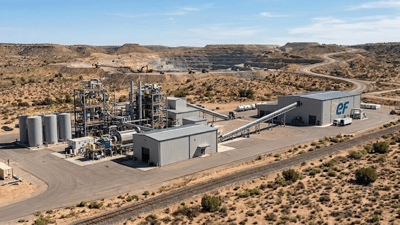
To understand the asset value, investors need to map out the operational pipeline. The loop begins with the excavation of heavy mineral sands at the shovel-ready Donald Project in Australia, where a final investment decision is expected in the third quarter of 2026. Monazite feedstock from this mine will then be processed and separated into heavy rare earth oxides at the White Mesa Mill in Utah. These separated oxides will then be transported to Australian Strategic Materials' Korean Metals Plant for conversion into high-purity metals and alloys, with plans to replicate this processing step at a future American Metals Plant.
The final stage of this loop occurs at Vacuumschmelze's advanced magnet manufacturing plants, specifically the newly commissioned facility in Sumter, South Carolina. The facility has the physical capacity to produce 2,000 tonnes per annum of permanent neodymium-iron-boron magnets, with a clear pathway to scale to 12,000 tonnes per annum. This domestic footprint is supported by a 20-year, $725 million conditional loan commitment from the U.S. Office of Strategic Capital, which will accelerate the expansion of the White Mesa Mill. Energy Fuels is also progressing discussions with Export Finance Australia for a 220 million Australian dollars (approximately $146 million U.S.) lending package to support the Donald Project, alongside an existing $41 million grant from the U.S. Department of War.
Yellowcake Yields Are Funding the New Rare Earth Frontier
Expensive acquisitions often trigger shareholder anxiety over toxic debt or excessive equity issuance. However, Energy Fuels has an internal funding mechanism that sets it apart from riskier, early-stage peers. The company remains the leading natural uranium producer in the United States, and its core business generates substantial cash flow.
According to the mid-year operational update, first-half uranium production reached 1.6 million pounds of finished uranium oxide, achieving full-year guidance in just six months. Processing costs at the White Mesa Mill are tracking at an exceptionally low $9 to $12 per pound, while mining costs at the Pinyon Plain mine range between $23 and $30 per pound. With spot uranium prices trading at healthy premiums, this highly profitable uranium segment acts as an internal cash generator. This reliable cash stream supports Energy Fuels' aggressive rare-earth expansion, reducing the need to rely on high-interest debt.
Breaking China's Magnetic Monopoly
A primary risk for magnet manufacturers is their reliance on imported raw materials. In late 2025 and April 2026, China implemented stringent export controls on critical heavy rare earth additives, including dysprosium and terbium.
These export controls directly affected Vacuumschmelze, capping its 2025 adjusted EBITDA at $28.6 million and resulting in a net loss of $50.6 million due to severe feedstock constraints.
Energy Fuels' heavy rare-earth separation capabilities directly address this challenge. By processing monazite at the White Mesa Mill, Energy Fuels can provide a domestic, reliable stream of heavy rare-earth oxides to Vacuumschmelze's plants.
Unshackling the German firm from Chinese supply restrictions should unlock significant operating leverage. Once fully supplied, the Sumter facility alone is expected to generate $65 million to $75 million in run-rate EBITDA at its current 2,000 tonnes-per-annum capacity. Scaling to 4,000 tonnes per annum projects run-rate EBITDA of $130 million to $140 million, highlighting the potential for rapid margin expansion in this deal.
Energy Fuels Recharges Its Outlook
The market's initial reaction treated the acquisition as a risky, premium-priced gamble, but a closer look at the price chart suggests a near-term floor may be forming. While some observers claim the deal creates an outright Western monopoly, a more realistic assessment points to a highly lucrative domestic duopoly.
Energy Fuels' primary competitor is MP Materials (NYSE: MP), which has a market capitalization of $10.2 billion and is constructing a 10,000-tonne-per-annum permanent magnet facility in Northlake, Texas, supported by a 10-year defense contract. This two-player dynamic should promote healthy competition while establishing a secure, diversified supply base for Western automotive and defense clients.
Wall Street is increasingly recognizing this potential. On June 22, 2026, H.C. Wainwright reiterated its Buy rating and maintained its $29 price target, signaling strong analyst support immediately before the transaction announcement. Recent headlines and the options market reinforce this bullish outlook, with a tight volume put/call ratio of 0.17. Meanwhile, short interest stands at 39.76 million shares, representing 16% of the free float. As Energy Fuels achieves its vertical integration milestones over the coming quarters, this heavy short position could provide a powerful short-squeeze catalyst.
Prepare for the Final Atomic Attraction
The strategic alignment of low-cost upstream mining and processing with downstream magnet fabrication creates a highly resilient business model. Cautious investors may prefer to monitor the progress of the upcoming regulatory approvals and the formal transaction close in early 2027 before initiating a core position to capitalize on the positive analyst forecasts.
This email is a paid sponsorship from Paradigm Press, a third-party advertiser of DividendStocks.com and MarketBeat.
If you need help with your subscription, feel free to contact our U.S. based support team at contact@marketbeat.com.
If you no longer wish to receive email from DividendStocks.com, you can unsubscribe.
© 2006-2026 MarketBeat Media, LLC. All rights protected.
345 North Reid Place #620, Sioux Falls, South Dakota 57103. United States of America..





No comments:
Post a Comment