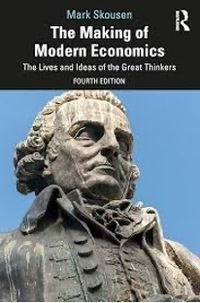
| Adam Smith Discovers the Secret to Wealth Creation What did this Scottish philosopher learn after ten years of research? He wrote at a time when government controlled everything - wages, prices, occupations, even where you could live! The princes, kings and parliaments throughout Europe engaged in a detailed economic policy which requires active intervention in the affairs of the community in a thousand and one ways. Wealth was therefore based on control, seizure, exploitation and monopoly power. And not surprisingly, it was not working. For centuries the standard of living stagnated while a few aristocrats became wealthy at the expense of everyone else. What was his alternative to what he called mercantilism (what we would call "crony capitalism" today)? Give people their freedom! Unleash the powers of enlightened self-interest! Adam Smith came up with a way to achieve real prosperity for all: Give people their maximum freedom under conditions of competition and the rule of law (justice). Within those boundaries, citizens and businesses would have the freedom to do what they wish without interference from the state. It meant the free movement of labor, capital, money, and goods. Let them decide on their own what to do. According to economist Wesley Mitchell, Smith came to the conclusion "that the wealth of nations will increase most rapidly if every person is allowed the fullest opportunity to decide for his own individual self what is the best way to use his labor and whatever capital he possesses. In other words, the best policy for governments... is to interfere as little as possible with the occupations and investments of its citizens." Smith even went so far as to insist it was a God-given natural right to be free to act. He wrote, "To prohibit a great people from making all that they can of every part of their own produce, or from employing their stock and industry in the way that they judge most advantageous to themselves, is a manifest violation of the most sacred rights of mankind." It was an ingenious solution: To the extent possible, government should get out of the way and let individuals and entrepreneurs work their magic. Proof that the Adam Smith Model Works Smith promised incredible success if they adopted what he called a "system of natural liberty." He said, "Little else is requisite to carry a state to the highest degree of opulence but peace, easy taxes, and a tolerable administration of justice." What made Adam Smith revolutionary was his insight that prosperity does not come from royal decrees or government planning. It comes from millions of individuals improving their own condition within a system of justice and competition. Indeed, most nations (especially the United States) have gradually adopted the Adam Smith model, as evidenced by the Economic Freedom Index, which measures the Adam Smith's model. If he were alive today, Adam Smith would be pleased with the incredible growth and higher standards of living, especially after the collapse of the Berlin Wall and the Soviet socialist model. Readers can explore the historical story behind these ideas in Adam Smith in my book, The Making of Modern Economics. Economic Freedom in Decline? However, in the 21st century, growth in the World Economic Freedom Index has slowed in many regions. Critics of free markets have increasingly advocated policies such as higher taxes, protectionist trade measures, and expanded regulation. Skousen notes that the conditions Smith described as "peace, easy taxes, and a tolerable administration of justice" are now challenged by rising tariffs and growing geopolitical tensions. But, like Adam Smith, I remain optimistic. He wrote 250 years ago: "The uniform, constant, and uninterrupted effort of every man to better his condition is frequently powerful enough to maintain the natural progress of things toward improvement, despite the extravagance of government, and of the greatest errors of administration." Long live Adam Smith! "It all started with Adam... Adam Smith, that is." I've written a bold, new history of "The Worldly Philosophers" - the dramatic story of how Adam Smith and his "system of natural liberty" succeeded in a world of conflict. "The Making of Modern Economics" is a dramatic story, with a running plot and a singularly heroic figure, Adam Smith, who constantly comes under attack by the Marxists, Keynesians and socialists. He is sometimes left for dead, only to be resuscitated by the French laissez faire school, the Austrians, the Chicagoans, and the supply siders and triumphs in the end! My guidebook is unique: Every economist is ranked as either a supporter of the House that Adam Smith built, or a dissenter who wants to tear it down and build his own. No other textbook tells it better. As one historian says, "It's unputdownable!" Milton Friedman said it best: "All histories of economics are BS—Before Skousen!" To Celebrate Adam Smith Day, All Copies Will be Dated March 9, 2026 It's now in its 4th edition, published by Routledge. The paperback edition retails for $55, but you pay only $37 per copy if you buy the book here. Special deal: I will autograph each copy and date it March 9, 2026, and mail it at no extra charge inside the US. I'm personally comforted by the fact that my book was also published in 2001 with the same pub date, March 9. How cool is that? Note: For everyone who buys a copy of "The Making of Modern Economics," you will receive a free copy of my popular essay, "Economics of Life Made Simple," which brings the Adam Smith model up to date. As a lawyer said, "It's the best brief I've ever read about economics." Good investing, AEIOU, Mark | 











No comments:
Post a Comment