News you can use from the National Ocean Service September 9, 2025  This year is an exciting moment for the Arctic Report Card with the 20th anniversary in 2025! In addition to the recording of the webinar, "Two decades of the NOAA Arctic Report Card: history, reflections, and next steps" being available to everyone on the NOAA Library YouTube Channel, we are planning to have specific K - 16 Educational components/accompaniments alongside the 20th anniversary Arctic Report Card. If you have ideas, questions, or suggestions, especially for what could help you bring the Arctic Report Card into your classrooms, please send heather.heenehan@noaa.gov an email. We also want to hear your suggestions for future topics. What aspects of Arctic change matter most to you and your communities? Please share your ideas with us! | Wednesday, September 17, 2025 | 1 p.m. ET RipFinder: Real-Time Rip Current Detection and Citizen Science via Smartphone App Wednesday, September 17, 2025 | 2 p.m. ET NOAA Fire Research from Conditions to Impacts: Fire and air quality extremes Tuesday, September 30, 2025 I 6 p.m. ET When Disaster Strikes: A Panel on Debris Response and Removal Wednesday, October 1, 2025 | 2 p.m. ET NOAA Fire Research from Conditions to Impacts: Improving wildfire risk tools   Region: Participants welcome from anywhere NOAA's Pacific Islands Fisheries Science Center deploys stereo-camera systems on the seafloor to help monitor populations of deep-water snappers and groupers. Each camera can record tens of thousands of images! In the OceanEYEs program, human observers annotate the images to count and measure each species. This can take months using only a small team of researchers. With your help, we can speed up the work and train machine vision algorithms to improve our analysis. This will make us one step closer to improving fish stock assessments, which are used by fishery managers! |  A Meaningful Watershed Educational Experience, or MWEE, is a student-centered approach to evidence-driven learning that's grounded in real-world issues. When students participate in MWEEs, they're investigating, problem-solving, and making connections between what they're studying and the world around them. The eeLEARN: MWEE 101 online course includes tools, case studies, and planning resources designed for educators, professional development providers, and anyone working to support deeper learning in the classroom and in the field.  Are you interested in using authentic NASA Earth/Environmental data to help students unravel Earth's complexity? Do you need resources to support lessons that engage students with science practices and enhance their data literacy? Come learn about Earth System phenomena using authentic NASA data and explore practical ways to inspire the next generation of scientists and engineers. Fall 2025 Webinars Series Information and Registration Link - My NASA Data: Data Literacy for All** Tuesday, September 23, 2025 | 7 p.m. ET
- My NASA Data: Exploring Mini Lessons** Tuesday, October 7, 2025 | 7 p.m. ET
- My NASA Data: Exploring StoryMaps** Tuesday, October 21, 2025 | 7 p.m. ET
- My NASA Data: Exploring Lesson Plans** Tuesday, November 4, 2025 | 7 p.m. ET
- My NASA Data: A Deep Dive into Data Visualization** Tuesday, November 18, 2025 | 7 p.m. ET
Enhance your teaching strategies with NASA's cutting-edge resources and elevate your science lessons to the next level! 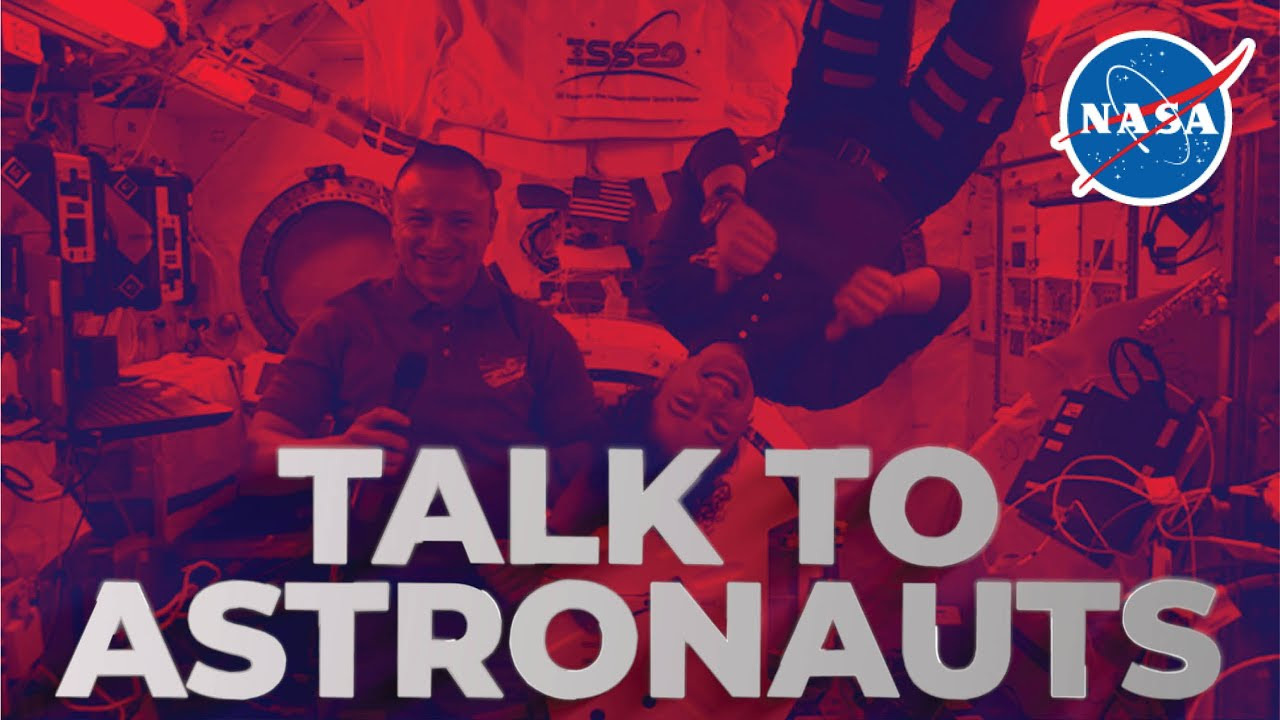 Proposal Deadline: Thursday, October 2, 2025 NASA is currently accepting proposals from U.S.-based formal and informal STEM organizations to host a downlink during International Space Station Expedition 75, which runs July 2026 – February 2027. Proposals will have a special focus on space workforce. In-flight STEM downlinks are 20-minute live video Q&A opportunities to interact with astronauts aboard the station.  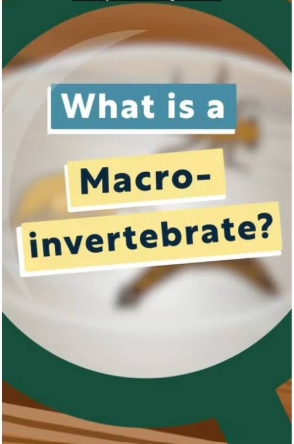 The Multimedia Team at The Mariners' Museum and Park (Newport News, Virginia) has been creating a series of environmental education animated YouTube shorts in conjunction with our Science Educators, based around our watershed, water quality, and macroinvertebrates in Mariners' Lake. The shorts are geared toward 4-6th grade level. They are a brief and fun way for kids to learn about part of the Chesapeake Bay watershed. |   Application Deadline: Wednesday, September 17, 2025 EarthEcho International just opened applications for their U.S. cohort of the Ocean Protection Ambassador Program - a paid opportunity for young leaders to protect our ocean by mobilizing community support for regional marine protected areas while engaging with Congress and federal agencies in defense of key environmental laws and ocean protection in the United States. The Ocean Protection Ambassador program is a unique opportunity for youth (ages 17-22) based in California, Georgia, Hawai'i, Maine, Massachusetts, New York, South Carolina, or Washington D.C. Metro Area to lead the way to defend and advance ocean protections. Ambassadors will receive mentorship, a paid stipend, and hands-on experience in advocacy and campaign planning. The program runs from October 2025-April 2026.  Deadline: Monday, November 3, 2025 Audience: Grades 6-12 The challenge includes information sessions for your department or organization upon request, free educational resources to foster classroom learning and an exciting student virtual field trip in the fall. Sixty winning teams will also receive $1500 to build their experiment, a spot to test it on a NASA-sponsored flight, and technical support from our awesome NASA TechRise advisors. The challenge is a great way to get hands-on with a NASA project this school year, and we encourage teams of all skill levels to apply. Updated challenge resources (including videos, slide decks, and educator pacing guides) can all be found on the NASA TechRise challenge website when the challenge opens. Deadline: Wednesday, October 5, 2025 CCI is a paid internship opportunity that is sponsored and managed by the DOE Office of Science's Office of Workforce Development for Teachers and Scientists in collaboration with DOE laboratories/facilities. Students participate in a 10-week summer internship (May–August) or in a 10-week internship during the semester (August–December or January–May). Application Timeline: Monday, September 15 - Monday, December 15, 2025 The National Earth Science Teachers Association (NESTA) is committed to continuing the efforts of the NOAA Planet
Stewards Education Project (PSEP), supporting educators in building a more sustainable future. PSEP will award funding opportunities of up to $5000 for 10 hands-on, action-based stewardship projects for elementary through college age students, as well as the general public. NESTA Planet Stewards funds are only allocated to a school, a school district, a not-for-profit organization, or
institution affiliated with the educator applicants.
Focus areas include:
Carbon Footprint Reduction
Carbon Sequestration
Community Resilience
Habitat Conservation and Restoration
Marine Debris and Waste Reduction Grant eligibility, resources, examples of past projects, the rubric, a checklist, and the application, are available for your support. Do you have an item you'd like to share in future issues of The Watch? | |









No comments:
Post a Comment