Why the Dollar is Crashing: A Case Study
People living within a currency zone might have a hard time conceptually with the idea of “selling” that currency.
If you live in the United States, you probably don’t think about exchange rates at all unless you’re traveling somewhere and need to swap currencies. You aren’t really in the market for “selling” the US dollar. After all, you need some kind of cash position in the dollar if only to pay your taxes or to cover expenses.
But in global finance, among large institutional firms, banks, and even sovereign governments, currency movements are important considerations. They don’t have to hold dollars, and at the margins, they may prefer to sell.
That’s because most of the time, currencies tend to move slowly. If you have the misfortune of talking to people who trade currencies, they talk about currencies moving in “pips.”
For instance, if the Euro/US dollar exchange goes from 1.0001 to 1.0002, that tiny 0.0001 change is called a pip. For people used to trading stocks that move whole percentage points on any given day, it’s a ridiculously small move…
But sometimes, currencies can and do experience wild swings. Large institutions don’t prefer to make big moves with their currency holdings. Being forced to buy or sell a large quantity of a currency means making a big splash in the market.
So if you see a central bank making a big move, you know it’s for a serious reason.
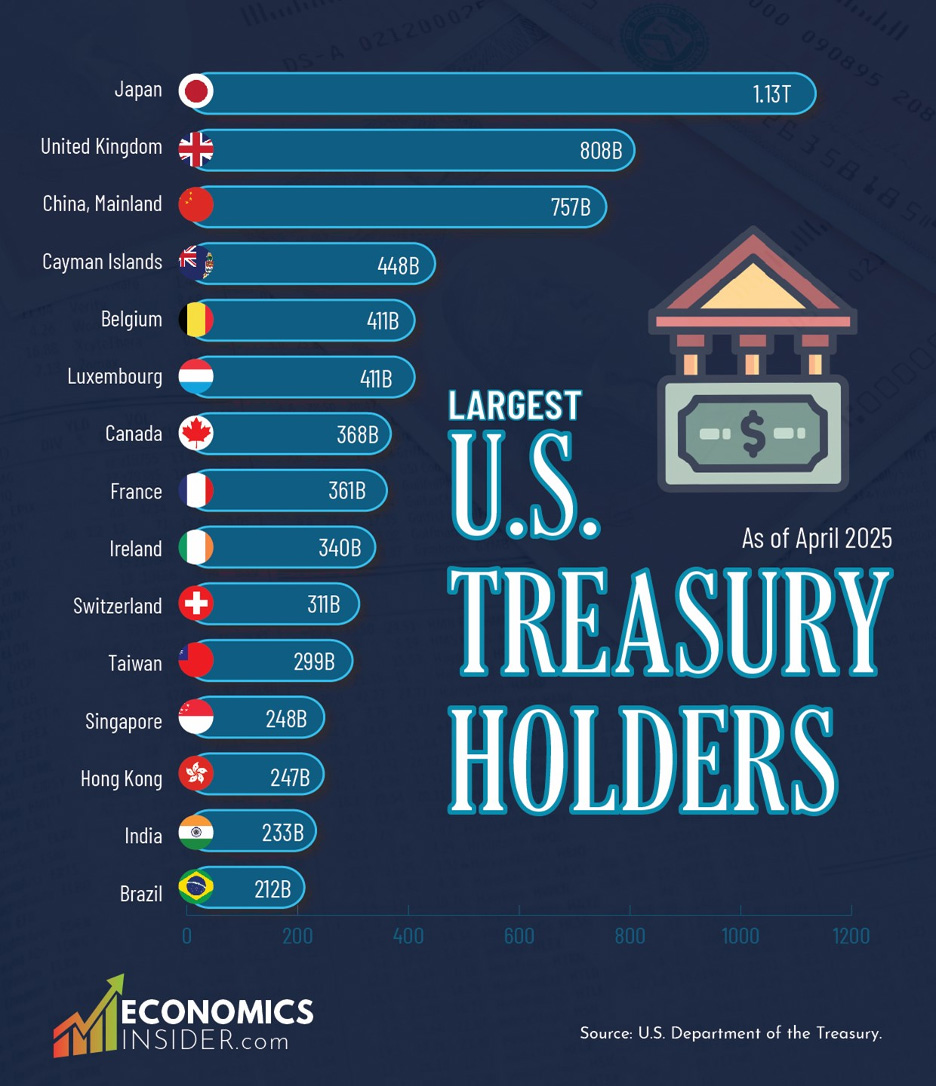
To that point, China just announced the sale of over $8 billion in US Treasuries.
That’s not a huge amount when it comes to the Treasury market, of course, but the problem is that if China is selling on net, those bonds are in competition with new issuance from the US Treasury itself.
And notably, China used to be a large purchaser of US bonds - though it has been unwinding its holdings for years at this point. It now holds fewer bonds than the United Kingdom…
Headlines from a couple months ago after President Trump announced his tariffs all blamed the tariffs for the Treasury sell off.
But with this latest announcement from China, it appears there’s still some more selling to be had.
At the same time, some of that selling has to come from the US Treasury, which has monthly auctions of Treasury securities that will total over $9 trillion for 2025.
The question arises: If the US has to sell, and these other countries choose to sell… Who the hell is buying?
This question is not merely academic. At a certain point, if there are no buyers in the market, or too few, then the Federal Reserve will have to step in and start buying.
Once that happens, it’s look-out-below for the dollar. Once any central bank starts printing money to buy its own debt, other buyers tend to grow increasingly, not less skeptical of the solvency of the currency.
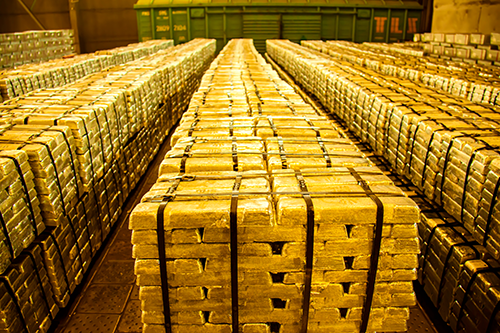
That’s unfortunate for dollar holders… The only other game in town right now, is gold.
In a race to the bottom with other currencies, the choice is becoming increasingly clear...
Gold is winning.
Best,
Garrett Goggin, CFA, CMT
Lead Analyst and Founder, Golden Portfolio
P.S.Trump’s plan to revalue gold and decrease the US debt burden is causing a major dislocation in four small gold miners. Some 30 million ounces of gold have left London for the US. If you want to know why - and why four little-known gold miners are up 136% in just the last 12 months while major gold ETFs have barely moved. Click below.





No comments:
Post a Comment