|
Hello, Thanks for signing up for MarketBeat Daily Ratings—we’re excited to have you on board. Every weekday, you’ll get a curated summary of new “Buy” and “Sell” ratings from Wall Street’s top-rated analysts, the latest stock news, and bonus investing content—all delivered straight to your inbox. You’re just two quick steps away from completing your sign-up: 1. Make sure our emails go to your inboxGmail users:
Mobile: Tap the three dots (…) in the top right and select Move to Inbox or Move to Primary
Desktop: Click the folder icon at the top and select Move to Inbox or Primary Apple Mail users:
Tap our email address at the top (next to From: on mobile), then select Add to VIP Other providers:
Reply to this message and add newsletters@analystratings.net to your contacts 2. Confirm your subscriptionClick this link to confirm your subscription. This verifies your account and ensures you receive your newsletters without interruption instead of getting stuck in your spam filter. Confirm your subscription here. After you confirm, feel free to download our popular free report, "7 Stocks to Buy and Hold Forever" with this link. Thanks again for subscribing—we look forward to being part of your investing journey. 
Matthew Paulson
Founder and CEO, MarketBeat. P.S. If you didn’t mean to subscribe, no problem—you can unsubscribe here.
Just For You
The New Fed Chair Trade: Who Wins When Warsh Takes the Helm?Reported by Chris Markoch. Date Posted: 5/5/2026. 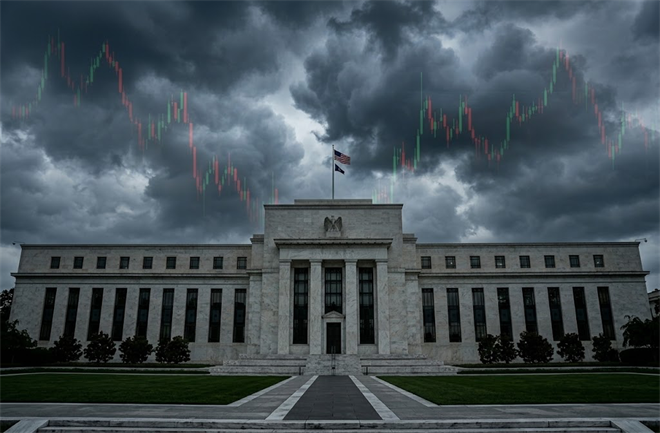
Key Points
- Kevin Warsh’s Fed policy may shift the 2026 interest rate outlook, driving different outcomes across bank stocks.
- JPMorgan and Goldman Sachs appear positioned to benefit from volatility and diversified revenue streams.
- Bank of America and regional banks offer higher upside but carry greater risk tied to rate cuts.
- Special Report: Elon’s “Hidden” Company
In June 2026, Kevin Warsh will take over as Chair of the Federal Reserve Board. Current Fed chair Jerome Powell’s term ends on May 15, and the U.S. Senate is expected to confirm Warsh sometime that week. Warsh has stated an intention to change how the Fed operates. But the first order of business, as far as investors are concerned, is to provide action, or at least clear guidance, on the direction of interest rates in 2026.
Elon Musk's team has quietly filed confidential paperwork with the SEC for what Bloomberg estimates could be a $1.75 trillion IPO - larger than Saudi Aramco and any tech offering in history.
CNBC calls it 'the big market event of 2026.' According to former tech executive and angel investor Jeff Brown, there's a way to claim a stake before the public filing drops, starting with as little as $500. See how to get positioned in SpaceX before the announcement goes public
To many investors these discussions may sound like idle chatter, but they have meaningful consequences for consumers and for companies that need lower rates to shore up their loan portfolios. More Greenspan Than VolckerWarsh previously served on the Fed board and was known as an inflation hawk, which led some analysts to expect he might follow Paul Volcker’s tough approach from the late 1970s and early 1980s. But past behavior is not a guarantee of future action. At his confirmation hearing, Warsh emphasized price stability rather than strictly insisting the Fed must hit a 2% inflation target. He has also called AI “the most productivity-enhancing wave of our lifetimes...” and described that technology’s impact as potentially “structurally disinflationary.” Those comments are closer to the approach taken under former Fed chair Alan Greenspan in the 1990s, when relatively stable interest rates allowed the economy to run hotter and a productivity boom to unfold. Warsh has also signaled that his initial focus may be on shrinking the Fed’s balance sheet rather than moving interest rates. It’s Unclear What the Fed Will DoWarsh’s views are not unopposed. For example, Cleveland Fed President Beth Hammack has warned that stronger productivity could push the neutral rate higher—meaning the economy could tolerate elevated borrowing costs. That perspective runs counter to positions coming from the Trump administration. Warsh’s AI-disinflation thesis is also not yet supported by current economic data. The Fed will also have to weigh the geopolitical risk tied to the conflict with Iran, which has made energy prices more volatile than usual. That volatility could force the Fed to prioritize keeping inflation in check. Economic theory often proves accurate only in the rearview mirror. In recent years investors have repeatedly found that the real outcome tends to sit somewhere between the most optimistic and the most pessimistic forecasts. Bank stocks can be winners or losers under any interest-rate regime. Given the uncertainty around rates, the smarter approach may be to focus on how each bank earns its money and how much of that depends on the Fed’s decisions. Here’s a breakdown of four financial stocks and how the Warsh Fed factors into each investment case. JPMorgan Chase: Built for All WeatherJPMorgan Chase & Co. (NYSE: JPM) is the least rate-dependent stock on this list. In Q1 2026, the bank posted $50.5 billion in revenue, driven by a 19% jump in its commercial and investment banking division and record markets revenue. Net interest income also rose 9% year over year. If rates stay higher, JPM benefits from wider lending margins. If Warsh cuts, deal-making and capital markets activity would likely accelerate. CEO Jamie Dimon has flagged geopolitical risk, but the bank's diversified revenue streams make it the most defensible name here regardless of how the rate debate resolves. Goldman Sachs: The Volatility and Deal-Flow PlayThe Goldman Sachs Group (NYSE: GS) doesn't care much about the direction of interest rates, but it cares a great deal about activity. In Q1 2026, the bank posted a 19% profit jump, with M&A advisory fees surging 89% and equities trading hitting a record $5.3 billion. Goldman held the top rank in both announced and completed M&A globally. A Fed that produces uncertainty and market volatility—regardless of the eventual rate outcome—is good for Goldman. Unclear policy creates trading opportunities and can push corporate boards toward strategic action, both of which can boost Goldman’s results. Bank of America: The Rate Sensitivity Wild CardBank of America (NYSE: BAC) is the most directly exposed to the direction of rates. Its filings are explicit: a 100-basis-point rate cut would reduce its net interest income (NII) by about $2 billion over 12 months, while a 100-basis-point increase would add just under $500 million. That asymmetry makes Bank of America anything but rate-neutral. BAC raised its full-year NII guidance to 6%–8% growth precisely because expectations for rate cuts have faded. That’s a positive sign, but it also means the stock is most vulnerable if Warsh’s AI-disinflation thesis proves correct and cuts arrive faster than expected. SPDR S&P Regional Banking ETF: High Risk, High RewardThe SPDR S&P Regional Banking ETF (NYSEARCA: KRE) is the purest rate-cut bet in this group. Regional banks typically borrow short and lend long, so Fed cuts directly widen their margins. Roughly 80% of regional bank revenue comes from spread-based lending—making them uniquely sensitive to the federal funds rate. The problem: the Iran conflict has effectively priced out near-term cuts. KRE needs Warsh’s AI-disinflation argument to prevail—and the faster that argument materializes, the better the payoff. It’s the highest-reward scenario here, but also the one that requires the most from the new Fed chair to deliver. |





No comments:
Post a Comment