Welcome to Insider Trades Daily, glad you're here! Every day, more than 500,000 investors use this newsletter to track insider buying and selling across major public companies. It’s a simple way to see what the people closest to the business are doing with their own money. Before we start sending your daily updates, there’s just one quick thing left to do. Please confirm your subscription using the link below. Click Here to Confirm Your Subscription to Insider Trades Daily It takes a few seconds and helps make sure your newsletter shows up where it belongs, your inbox, not a spam folder. Once you’re confirmed, we’ll take it from there and deliver clear, no-nonsense insider trading insights straight to you. Start Receiving Insider Information The InsiderTrades.com Team P.S. If there's anything we can do to improve your experience, please let us know by replying to this email.
Just For You
The USMCA Review Is Coming: 3 Border-Sensitive Stocks to WatchSubmitted by Chris Markoch. Published: 5/8/2026. 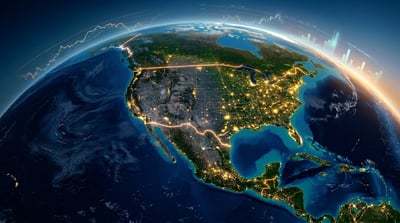
Key Points
- USMCA review introduces uncertainty for automotive, agriculture, energy, and electronics sectors.
- Ford and PACCAR face direct exposure to rule-of-origin changes and cross-border supply chain costs.
- Kraft Heinz could see margin pressure from agricultural disputes and Canada-U.S. trade tensions.
- Special Report: The Biggest IPO Ever: Claim Your Stake Today
Investors are understandably tired of hearing about tariffs. But the United States is approaching a deadline that, despite not getting much coverage, could have a significant impact on stocks in the second half of the year. The United States-Mexico-Canada Agreement (USMCA) replaced the North American Free Trade Agreement (NAFTA) in 2020. The agreement introduced updated provisions on rules of origin, labor rights, digital trade, and agricultural market access.
When the SpaceX IPO launches, most retail investors will be locked out. The banks, funds, and insiders get in early - while everyone else waits on the sidelines.
But one small infrastructure supplier - a critical piece Musk can't scale the Colossus network without - is still trading well under institutional radar. A new briefing reveals the name and ticker at no cost. Get the SpaceX infrastructure stock name and ticker here
But unlike many other trade deals, negotiators added a sunset clause to the USMCA. That means it’s subject to review every six years, starting this year. This gives all parties an opportunity to relitigate terms. The best-case scenario, which would offer the most stability for markets, would be for countries to maintain the current terms of the agreement with minimal disruption. However, many analysts give this the lowest odds of happening. It’s also likely that, rather than confirming the agreement through its 2036 expiration, the nations will enter a cycle in which the agreement is revisited every year for the next 10 years. Which Sectors Will Be Most Impacted?The good news is that many sectors won’t be impacted. However, any changes to USMCA are likely to be felt acutely in the following sectors:
With that in mind, here are three stocks that carry explicit risk in the upcoming USMCA negotiations. Ford Faces a High-Stakes USMCA Catalyst With Supply Chain ExposureFord Motor Co. (NYSE: F) is the company with the highest exposure of the three names in this article. The automaker assembles vehicles in Mexico and runs a deep cross-border supply chain. Under existing USMCA rules, vehicles imported from Mexico must have at least 75% of their value originating in North America to qualify for duty-free treatment. Any renegotiation that tightens the regional value content (RVC) threshold, the labor value content (LVC) rules, or introduces new restrictions on Chinese-origin components directly affects Ford's cost structure. Ford has already been stockpiling USMCA-compliant parts and scrambling to audit its supplier tiers. A USITC 2025 report found that the rules of origin (ROOs) slightly reduced profits and production for U.S. automakers, which is why automakers are expected to push for ROO refinements as they adapt to EV growth and tariff changes. Ford's more relevant near-term story may be the upside embedded in the tariff offset program. The April 2025 proclamation established an "import adjustment offset" equal to 3.75% of aggregate MSRP for all U.S.-assembled vehicles built through April 2026, stepping down to 2.5% for the May 2026–April 2027 window. Ford anticipates roughly $1 billion in tariff improvement year-over-year due to a full year's worth of credit expansion. The USMCA review is, therefore, less a pure downside risk for Ford and more a binary catalyst. The extension strengthens the offset program's durability, which may not be priced into the stock; disruption calls its mechanics into question. PACCAR’s U.S. Manufacturing Footprint Could Become a Competitive EdgeAnother name to watch among automotive stocks is PACCAR Inc. (NASDAQ: PCAR). About 90% of PACCAR's U.S.-delivered trucks are manufactured in U.S. factories, but components come from Mexico, Canada, Asia, South America, and Europe. That means all are potentially subject to additional tariffs (PACCAR estimated roughly $75M in tariff costs in Q3 2025). However, PACCAR's domestic assembly footprint could be a competitive hedge against rivals. Two competitors, Daimler Truck and Traton, build in Mexico and can sidestep certain levies, giving them a per-unit cost edge over U.S.-assembled trucks. Bernstein estimated a roughly 3% cost premium for USMCA-compliant Mexico-built trucks versus U.S.-assembled trucks. A renegotiation that tightens ROO and raises labor or content requirements for Mexico-assembled trucks would narrow that competitor advantage. PACCAR's CEO has been actively working to boost sourcing of USMCA-certified parts to reduce long-term exposure. Kraft Heinz Navigates Agricultural Risk and Cross-Border TensionsKraft Heinz (NYSE: KHC) is a consumer staples stock with exposure across two channels. It manufactures in Canada and benefits from cross-border USMCA duty-free treatment. It also sources agricultural inputs from across the region. Mexico and Canada remain two of the most important export markets for U.S. farm products such as corn, soybeans, meat, and dairy, and the United States Trade Representative (USTR) has expressed dissatisfaction with Canada's implementation of dairy access provisions. A renegotiation that leads to Canadian retaliation on agriculture or disrupts KHC's Canadian manufacturing operations is the biggest risk. Tariff-induced pressures have already weighed on Kraft Heinz's profitability and stock price, with internal strategic tensions noted. However, KHC's partial natural hedge is that it manufactures in both the U.S. and Canada. That means it can lean on "Canadian-made" positioning in the event of consumer-level boycotts driven by trade friction. |





No comments:
Post a Comment