Hello, Thanks for signing up for MarketBeat Daily Ratings—we’re excited to have you on board. Every weekday, you’ll get a curated summary of new “Buy” and “Sell” ratings from Wall Street’s top-rated analysts, the latest stock news, and bonus investing content—all delivered straight to your inbox. You’re just two quick steps away from completing your sign-up: 1. Make sure our emails go to your inbox Gmail users:
Mobile: Tap the three dots (…) in the top right and select Move to Inbox or Move to Primary
Desktop: Click the folder icon at the top and select Move to Inbox or Primary Apple Mail users:
Tap our email address at the top (next to From: on mobile), then select Add to VIP Other providers:
Reply to this message and add newsletters@analystratings.net to your contacts 2. Confirm your subscription Click this link to confirm your subscription. This verifies your account and ensures you receive your newsletters without interruption instead of getting stuck in your spam filter. Confirm your subscription here. After you confirm, feel free to download our popular free report, "7 Stocks to Buy and Hold Forever" with this link. Thanks again for subscribing—we look forward to being part of your investing journey. 
Matthew Paulson
Founder and CEO, MarketBeat. P.S. If you didn’t mean to subscribe, no problem—you can unsubscribe here.
This Month's Exclusive Article Why Alibaba's New 5nm Chip Could Be a Game ChangerBy Jeffrey Neal Johnson. Posted: 3/25/2026. 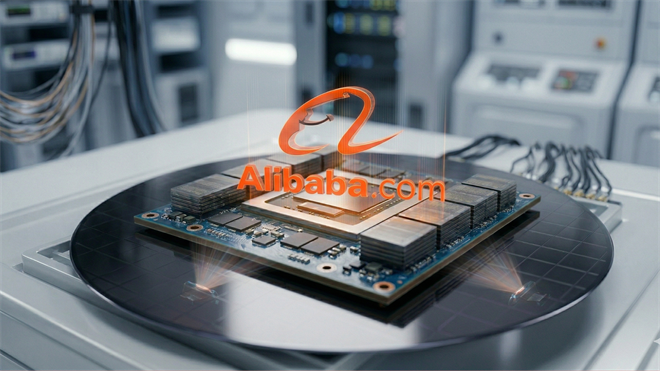
Key Points - Alibaba's new proprietary chip is custom-designed for AI, creating a powerful performance and efficiency advantage for its cloud services.
- By developing its own advanced hardware, Alibaba is securing greater control over its technological future and its long-term growth trajectory.
- This strategic investment in custom silicon elevates Alibaba's status, positioning it as a foundational architect of the global AI revolution.
- Special Report: Elon Musk: This Could Turn $100 into $100,000
For Alibaba Group (NYSE: BABA) investors, recent market activity has painted a mixed picture. The stock has been volatile after an earnings report that missed analyst expectations and highlighted pressure on profitability, which has fueled a bearish narrative for some investors. Countering that short-term noise is a powerful, long-term signal of strength: the unveiling of a proprietary artificial intelligence (AI) chip. This development suggests a meaningful strategic shift for Alibaba. The central question for investors is which signal to follow: the headline from Alibaba’s latest earnings report or the strategic move toward technological independence. The Advantage of a Custom Design Alibaba's research division recently announced the XuanTie C950, a server chip that represents a significant technological milestone. For investors, the chip's specifications matter less than what they signal about the company's direction. First, its 5-nanometer process places it at the cutting edge of semiconductor manufacturing, indicating a high level of design capability and putting Alibaba among a small group of firms able to develop such advanced hardware. Second, the chip is built on the RISC-V architecture—an open-source instruction-set architecture for designing processors. This is a strategic choice: by using an open framework, Alibaba avoids licensing fees and reduces exposure to potential restrictions or political pressure tied to Western-controlled architectures. That gives the company greater control over its technological destiny. Finally, the C950 is purpose-built for AI workloads rather than being a general-purpose processor. It is optimized for the complex calculations AI models and cloud platforms require, enabling meaningful vertical integration. Designing the hardware that runs its software and cloud services lets Alibaba achieve efficiency and performance gains that are hard to match with off-the-shelf components. Over time, that integration can translate into cost savings, superior products, and improved margins for its cloud division. From Geopolitical Risk to Strategic Resilience One of the biggest risks for Chinese tech firms has been the threat of U.S. export controls, especially those targeting advanced semiconductors critical for AI development. Such restrictions create uncertainty for companies that rely on foreign suppliers and can weigh on valuations. Alibaba's development of the C950 is a direct response to that challenge. By designing a high-performance chip in-house, Alibaba has created a hedge against supply-chain and geopolitical shocks, helping ensure its Cloud Intelligence and AI initiatives aren't derailed by shifting international policies. For investors, this is an important de-risking of the company. The ability to produce core hardware moves Alibaba from dependency toward self-reliance and signals proactive, long-term management. Mitigating this external threat could make Alibaba more attractive to a wider range of global investors and support a potential valuation re-rating. In short, Alibaba is building a geopolitical moat around one of its most important growth engines. Gaining an Edge in a Crowded Field Technological independence is not only defensive; it can be a strong offensive advantage in the competitive AI and cloud markets. The C950 gives Alibaba an edge against both domestic and international rivals. In China, the cloud market is fiercely contested by players such as Tencent (OTCMKTS: TCEHY) Cloud and Baidu (NASDAQ: BIDU) AI Cloud. While competitors also invest heavily in AI, Alibaba's ability to tightly integrate proprietary software with proprietary hardware can create long-term performance and cost advantages that are difficult to replicate—advantages that can help win larger enterprise contracts and grow market share. On the global stage, this move aligns Alibaba with U.S. tech leaders like Amazon (NASDAQ: AMZN) and Alphabet's (NASDAQ: GOOGL) Google, which have long used custom silicon to optimize their cloud infrastructures. Developing its own chip signals Alibaba is aiming to be more than a participant in the AI revolution—it is positioning itself as a foundational architect of the technology stack. The Price of Progress and the Promise of Payoff Alibaba's most recent earnings showed a 67% year-over-year decline in non-GAAP net income, a sharply negative headline that understandably worried investors. But that figure must be viewed in context: it reflects heavy, deliberate investments in an AI-first strategy, including capital-intensive semiconductor development. Markets that focus on quarterly results can misprice companies undergoing deep strategic transformation. The cost of innovation is high, but the payoff is beginning to emerge. The standout metric in the same report was 36% year-over-year revenue growth in the Cloud Intelligence Group—the first clear sign that Alibaba's AI investments are driving top-line expansion in a key future business segment. Analysts, while lowering near-term expectations because of elevated spending, still appear to recognize the long-term potential. The consensus 12-month price target for Alibaba’s stock remains around $188, suggesting institutional investors see meaningful upside once these strategic investments mature. Seeing the Value Beyond the Volatility Recent market attention on short-term margin pressure and e-commerce competition has created a disconnect between Alibaba's share price and its long-term strategic value. The XuanTie C950 is more than a product launch; it is a cornerstone of a more resilient foundation for Alibaba's future. This pivot toward technological self-sufficiency strengthens the investment thesis: it reduces geopolitical risk, builds a durable competitive advantage, and supports the rationale for the company's current financial strategy. For investors with a multi-quarter or multi-year horizon, the current valuation may present a compelling opportunity. Alibaba appears to be at an inflection point, with major AI and cloud investments starting to transform the business from the inside out. | 




No comments:
Post a Comment