Hello – Today, we’re inviting you to take a free look at MarketBeat’s proprietary, up-to-the-minute list of 20 stocks that Wall Street’s top-rated analysts hate. These aren’t mild downgrades or lukewarm opinions.
These are true Strong Sell stocks. Some of them may look fine on the surface. A few even have what appear to be solid fundamentals. But when analysts issue a rare Sell rating, it’s usually because something beneath the surface is deeply wrong. Sell-side analysts may not nail every Buy call… but when they raise red flags, they’re almost always worth listening to. If any of these stocks are lurking around in your portfolio, you may seriously want to consider dumping them.
Click here to see the list now. Stay one step ahead, Matthew Paulson
Founder & CEO, MarketBeat
P.S. Access to 20 Stocks to Sell Now is completely free. Don’t miss your chance to review these timely, high-conviction warnings before the market reacts.
Additional Reading from MarketBeat What's in a Name? Shoe Carnival Plans Rebrand as 2026 Guidance Resets ExpectationsBy Chris Markoch. First Published: 3/27/2026. 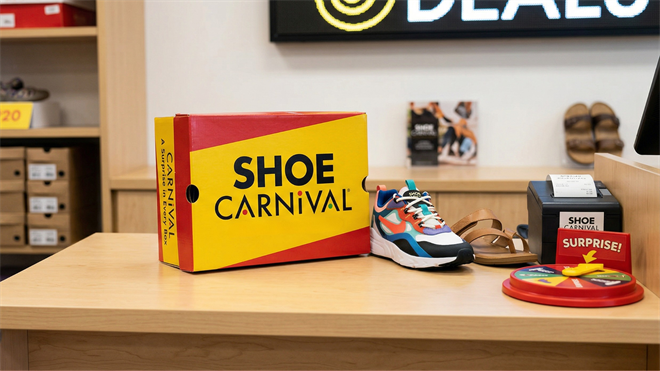
Key Points - Shoe Carnival stock dropped after weak 2026 guidance overshadowed mixed Q4 results, including declining EPS and flat revenue expectations.
- The company’s shift to the higher-end Shoe Station concept is driving growth, but will slow in 2026 as management refines its strategy.
- Despite near-term concerns, SCVL offers a debt-free balance sheet, rising dividend, and a low valuation near five-year lows.
- Special Report: The Biggest IPO Ever: Claim Your Stake Today
Shoe Carnival Inc. (NASDAQ: SCVL) stock fell nearly 10% despite delivering solid — if mixed — results in its Q4 2025 earnings report. The company met earnings expectations with 33 cents per share, but revenue slightly missed forecasts, and both figures declined versus the prior year. The bigger concern was guidance for fiscal 2026. Management forecast adjusted earnings per share (EPS) of $1.40 to $1.60, below analyst expectations. The midpoint ($1.50) is roughly 20% below the $1.90 EPS recorded in fiscal 2025. The revenue outlook was similarly cautious: the company expects net sales to be between a 1% decline and a 1% increase year-over-year. Management also expects profit margins to fall by roughly 260 basis points to about 34%, citing higher tariff-related costs and increased promotional activity. In an earnings season that has sharply divided retail stocks, Shoe Carnival's results made investors question the roughly 6.5% run-up in SCVL shares in the week before the report. The stock's post-earnings drop is a reminder that timing can be as important as the numbers themselves. Shoe Carnival's results weren't disastrous, but the report landed on a day when geopolitical tensions returned to the forefront. Shoe Carnival Branding Taps the Brakes What's in a name? For Shoe Carnival, quite a lot. The retailer is continuing to rebrand many stores as Shoe Station. At the end of the fiscal year, Shoe Station locations accounted for 34% (144) of the company's 426 stores, up from 10% at the start of the year. This is more than a cosmetic rebranding; it represents a strategic repositioning. Last November the board agreed to change the company's corporate name to Shoe Station Inc., pending shareholder approval in June. Shoe Carnival was traditionally aimed at lower-income, urban customers, but it had been losing ground to competitors. That shortfall was partly rooted in the company's DNA — it was built around an in-store, "carnival-like" atmosphere that is less in demand today. The pivot to Shoe Station reflects a recognition that serving value-oriented, lower-income shoppers profitably has become more difficult. The explosive growth of e-commerce has given lower-income consumers many options, especially when price is the primary consideration. Shoe Station stores target higher-income households that prefer an upgraded in-store experience and brand-focused assortments. The transition is showing results: Shoe Station locations generated net sales of $236.7 million in fiscal 2025, representing roughly 21% of total revenue and delivering 2.7% organic growth year-over-year. Why Management Is Taking a More Measured Approach Despite the Shoe Station concept's promise, management said it will slow the rebranding effort in 2026, citing significant variability in store-level performance. The company says it needs more data to: - Identify which consumer demographics respond best to the Shoe Station format
- Determine which marketing channels most effectively drive new-customer acquisition
- Refine product assortments in rebadged stores to improve in-store conversion
Debt-Free Balance Sheet Supports Long-Term Case There are legitimate reasons for investor skepticism, reflected in the stock's weak performance. But there are also reasons a patient investor might hold on. First, the company remains debt-free — a rarity for a retailer with a market cap near $400 million. Shoe Carnival has carried no long-term debt for 21 years. Second, on March 3 the company raised its dividend by 33%. The 17-cent-per-share dividend will be paid on April 20 to shareholders of record on April 8. This marks the 14th consecutive year of dividend increases for Shoe Carnival. Investors should also note the stock's low valuation — roughly 7x forward earnings — which, paired with dividend growth and a debt-free balance sheet, can be attractive. That said, stocks can be inexpensive for a reason, and SCVL trades near five-year lows. Finally, this remains a cyclical, retail-sensitive trade. With short interest above 18%, many investors may prefer to wait for a clear bullish reversal before stepping in. 
| 






No comments:
Post a Comment