Dear Reader,
THIS is the #1 stock to BUY for 2026.
It's a bold new recommendation from one of the boldest men to ever rule Wall Street.
His award-winning stock-rating system has pinpointed 8 of the top 10 stocks of the year every year for nearly a decade. (An 80% hit rate.)
His last recommendations shot up 100% and 160%.
And now he says this single ticker (not NVDA, TSLA, or any of the Mag 7) could double your money or MORE in the next 12 months.
It's all part of his shocking new market prediction for 2026.
I just sat down with him and got all the details, along with his top stock for the year ahead.
To hear it for yourself 100% free, click here.
Regards,
Kelly Brown
Host, Chaikin Analytics
These Insider Trades Look Like Clear Signals—Until You Read the Fine Print
Author: Leo Miller. Originally Published: 3/24/2026.

Key Points
- Broadcom insider selling looks large in dollar terms, but the March transactions cited in filings are described as automatic “sell-to-cover” trades tied to RSU tax withholding.
- AppLovin insider selling picked up during the stock’s pullback, but much of it appears consistent with planned or routine activity, and the CEO still retains a sizable equity stake.
- Coupang’s recent disclosed buying by director Neil Mehta via Greenoaks-linked vehicles stands out as a more discretionary move, coming after the company’s widely reported data-incident overhang.
- Special Report: Elon Musk already made me a "wealthy man"
Insider trading can look like a flashing buy-or-sell signal, but the story is more nuanced in three market leaders.
Big sales of Broadcom (NASDAQ: AVGO) and AppLovin (NASDAQ: APP) largely reflect routine mechanics like tax-withholding and pre-set plans, while a sizable Coupang (NYSE: CPNG) purchase stands out as a deliberate vote of confidence.
Ticker Revealed: Pre-IPO Access to "Next Elon Musk" Company (Ad)
We've found The Next Elon Musk… and what we believe to be the next Tesla.
It's already racked up $26 billion in government contracts.
Peter Thiel just bet $1 Billion on it.
👉 Unlock the ticker now and get it completely free.While the implications of these moves may seem obvious at first, insider trades are often not what they seem, requiring careful analysis. The key is separating automatic or scheduled transactions from genuinely discretionary moves that may carry more informational weight.
Broadcom Insider Selling Tops $88 Million: Red Flag or Business as Usual?
Semiconductor lynchpin Broadcom is the world’s leader in custom-designed artificial intelligence (AI) processors.
But recently—and notably—the company has seen significant insider selling. So far in March, $88.3 million in Broadcom stock has changed hands, part of roughly $123 million in insider sales since the start of the first quarter.
Those transactions come from four individuals, including two who hold particularly important roles at Broadcom. Chief Financial Officer and Chief Accounting Officer Kirsten Spears sold approximately $19 million, and President of Broadcom’s Semiconductor Solutions Group Charlie Kawwas sold approximately $21 million. This follows about $250 million in shares sold in Q4 2025.
The headline number can look unsettling, especially given the stock’s recent volatility. But the key detail is why the shares were sold.
All of Broadcom’s insider sales in March “were sold through automatic transactions to cover withholding taxes due upon vesting of restricted stock units (RSUs),” per the Form 4 SEC filing.
RSUs are stock-based compensation that converts into shares when the award vests. Because vesting is generally treated as taxable income, insiders are required to pay taxes on it. Companies often use a “sell-to-cover” process that automatically sells a portion of the newly vested shares to satisfy withholding obligations. In other words, these sales are not discretionary by nature and are not a bearish signal for AVGO.
AppLovin: Insider Selling Picks Up as the Stock Pulls Back
AppLovin has become a dominant player in the mobile game advertising and user-acquisition space, helping drive its market capitalization to nearly $150 billion.
There are numerous reasons why the stock has fallen nearly 40% from its 52-week high, including the ongoing software sell-off that began at the start of the year.
There were no insider sales in AppLovin during the first two months of the year, but that changed quickly as Q1 progressed. So far in March, insiders have sold roughly $160 million in AppLovin shares.
Most of these sales are of limited informational value because they were executed under 10b5-1 plans. Under those plans, insiders set up trading arrangements in advance, which reduces the likelihood that the resulting sales reflect new, negative private information.
But CEO Adam Foroughi's $42 million sale did not occur under a 10b5-1 plan.
While it is never encouraging to see a company’s CEO sell shares, it is important to consider the scale. After the recent sales, Foroughi's direct ownership declined from about 2.55 million shares to 2.43 million shares—a drop of less than 5%. Given that modest reduction, AppLovin's recent insider sales are not especially worrisome.
Coupang: Institutional Insider Increases Position as Shares Fall
On the other side, insiders are buying shares of e-commerce retailer Coupang.
Coupang has established itself as the largest player in the South Korean e-commerce industry, with a market capitalization of roughly $35 billion.
However, the stock has struggled and is down nearly 44% from its 52-week high, including a loss of more than 19% in 2026.
A large data breach has been a significant headwind for the stock, exposing the personal information of 33.7 million users—the largest breach in South Korean history. The incident has weighed on Coupang’s growth: revenues from its Product Commerce segment rose a conservative 12% year-over-year in the latest quarter, down from 18% the prior quarter, which the company attributes to reduced customer activity after the breach.
Amid that weakness, Neil Mehta—a director and member of Coupang's board—disclosed a purchase of approximately $137 million in CPNG shares via his investment firm Greenoaks Capital Partners LLC, increasing his position by about 11%.
Because the buying was executed through Greenoaks-managed funds, it reflects institutional accumulation, which is typically viewed as a more constructive signal than routine insider selling.
What These Trades Might (and Might Not) Say
Broadcom’s and AppLovin’s insider selling may look bearish at first glance, but context matters: sales tied to RSU tax withholding or pre-set plans often say more about compensation and scheduling than about executives’ views on the business. That means they don’t automatically validate the stocks' recent pullbacks.
Coupang’s disclosure is the clearer “signal” candidate because it reflects added exposure during weakness through Greenoaks-managed funds. Even so, it doesn’t guarantee a near-term bottom; it suggests the buyer may view the breach fallout as more temporary than the market is pricing in and that the buyer likely has a longer time horizon.
Why PayPal's Rally Faded—And What Could Restart It
Authored by Sam Quirke. Posted: 3/16/2026.
Key Points
- PayPal shares popped last month after takeover speculation sparked renewed investor interest, but the rally is already losing momentum.
- The stock remains near multi-year lows and trades at one of its lowest valuations ever, suggesting there could be meaningful upside if sentiment shifts.
- However, for PayPal to maintain a rally, the company will need to impress investors with its next earnings report and prove its long-term relevance in digital payments.
- Special Report: Elon Musk already made me a "wealthy man"
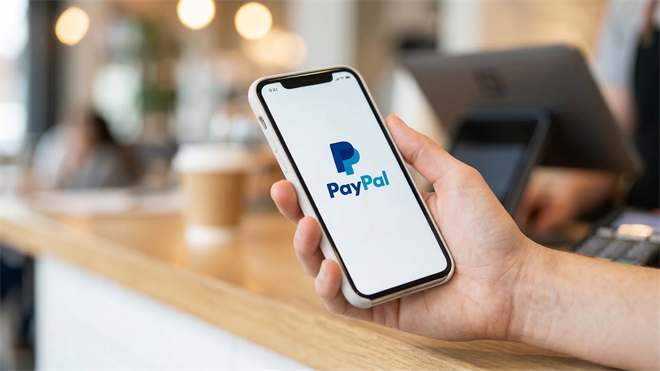
PayPal Holdings Inc. (NASDAQ: PYPL) appeared to be staging a long-awaited comeback at the end of February. After months of relentless selling that pushed the stock back to 2017 levels, shares surged following rumors that payments giant Stripe was exploring an acquisition.
The speculation was enough to ignite a powerful rally, with PayPal shares popping as much as 25% from their multi-year lows. Once it became clear that the takeover talk had no substance, much of that enthusiasm quickly faded: shares retraced about 10% in mid-March and look poised to slide back toward their February lows. For the rally to regain momentum, the company will need to execute on several fronts—let's take a closer look at what that entails.
Its Next Earnings Report Will Be Key
Have $500? Invest in Elon's AI Masterplan (Ad)
What if you could claim a stake in what's set to be the biggest IPO ever… starting with just $500?
Everyone is talking about Elon Musk's SpaceX IPO.
Click here to get the details and I'll show you how to claim your stake…One of the biggest catalysts for PayPal's next move will be its next earnings report in early May. After a difficult start to the year, the company needs to show investors that its growth story is not permanently stalled.
The bar for success may be low. Last month, PayPal reported results that fell well short of expectations, disappointing investors who had hoped the company was beginning to regain momentum. Revenue and earnings both lagged analyst forecasts, reinforcing concerns that the payments giant is struggling to keep pace with an increasingly competitive fintech landscape. Management also issued cautious guidance for the year ahead, further dampening enthusiasm.
Investors interpreted the outlook as a sign that PayPal is continuing to lose market share in areas where it once held undisputed dominance. If PayPal hopes to reignite its rally, May's report will need to show that growth is stabilizing and that management has a credible plan to regain competitive footing.
PayPal Must Prove It Is Not Yesterday's Story
Beyond any single earnings report, PayPal faces a broader perception challenge. The company was once viewed as a dominant gateway for e-commerce, but the rapid evolution of digital payments has created a far more competitive landscape.
Merchants and consumers now have more payment options than ever. Mobile wallets, alternative payment providers and integrated checkout solutions have all expanded rapidly, forcing PayPal to work harder to maintain its share of transactions. This shift is particularly visible in PayPal's branded checkout business, historically one of the company's most profitable products, which has seen growth slow significantly versus prior years.
That slowdown matters because branded checkout carries higher margins than PayPal's unbranded processing services. When growth in that segment weakens, it puts pressure on overall profitability and raises questions about the company's long-term positioning. Adding to the uncertainty is a recently reported class action lawsuit alleging PayPal misled investors about the growth potential of its payment platforms — an issue that could further dent investor confidence.
To stabilize its share price and reignite a rally, PayPal must convince investors it remains a core player in the evolving digital payments ecosystem rather than a legacy platform losing ground to newer competitors.
Valuation Suggests the Stock May Be Too Cheap
The good news for prospective investors is that, despite the headwinds, PayPal's current valuation suggests the market is already pricing in substantial pessimism.
With the stock trading around $45, PayPal's price-to-earnings ratio is roughly 8 — historically quite low for PYPL. Such a depressed valuation typically implies investors expect little meaningful growth in the years ahead and that a downside scenario is largely priced in.
Even some cautious analysts still see upside from current levels. In March, both Bank of America and KGI Securities rated the stock Neutral or equivalent, but their refreshed price targets of $48 and $55, respectively, remain well above the current share price.
The Next Move Will Depend on Execution
Ultimately, PayPal's next move will depend on whether the company can convince investors its turnaround has traction. The brief rally sparked by takeover rumors demonstrated how quickly the stock can move when sentiment shifts, but relying on speculation is not a sustainable foundation for a long-term recovery.
Instead, PayPal must show through execution and consistent results that its business remains relevant in an increasingly crowded landscape. Improved growth metrics, stronger margins and a clearer strategic direction could help restore investor confidence. If management delivers those signals in the coming weeks and months, the rebound that briefly took shape last month could develop into a more durable rally.
This email communication is a sponsored email from Chaikin Analytics, a third-party advertiser of MarketBeat. Why did I get this email message?.
This ad is sent on behalf of Chaikin Analytics, 201 King Of Prussia Rd., Suite 650, Radnor, PA 19087. If you would like to optout from receiving offers from Chaikin Analytics please click here.
If you need help with your newsletter, please contact MarketBeat's U.S. based support team at contact@marketbeat.com.
If you would no longer like to receive promotional emails from MarketBeat advertisers, you can unsubscribe or manage your mailing preferences here.
© 2006-2026 MarketBeat Media, LLC.
345 N Reid Place #620, Sioux Falls, S.D. 57103. USA..




No comments:
Post a Comment