U.S. Strike on Iran: What Operation Epic Fury Means for Markets VIEW IN BROWSER 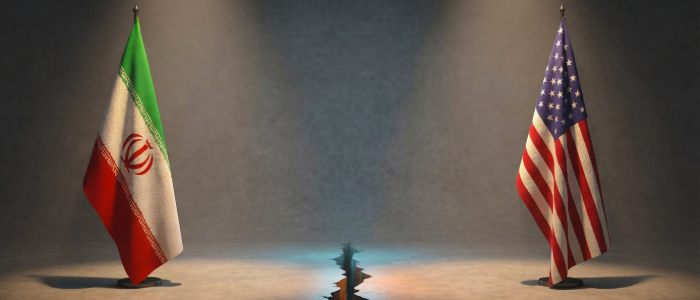
By now you've seen the headlines. On Saturday, Feb. 28, 2026, the United States and Israel launched a new military campaign against Iran: Operation Epic Fury. Now Iran’s Supreme Leader, Ayatollah Ali Khamenei is dead. Gulf states are intercepting Iranian missiles. Take a breath… We’ve been carefully tracking this situation since the first explosions were reported over Tehran. Here’s our assessment after 72 hours of rapid-fire geopolitical analysis. Markets, so far, are signaling restraint rather than panic. Equities remain stable, volatility is elevated but controlled, and energy markets have not priced in a sustained supply shock. That suggests investors see escalation risk as real, but not existential. From our vantage point, this episode does not automatically derail the broader equity rally or the AI-led capital cycle… provided the conflict does not expand beyond its current theater. In fact, select AI and defense-linked equities have outperformed in early trading, reflecting expectations of sustained investment in automation, cybersecurity, and military AI systems. That said, we’re still inside the first 72 hours of a fluid situation. There's a lot to unpack here, so let’s dive right in. What Happened In the U.S. Strike On Iran – And How It Compares to Previous Conflicts The United States' and Israel’s coordinated military operation struck targets across Tehran and other Iranian cities. The scope was stunning: a large joint package of Israeli aircraft and U.S. long-range strike assets, including B-2s, plus fighters and one-way attack drones. In the first 24 hours alone, U.S. officials say the campaign struck more than 1,000 targets. The strategic result was equally stunning. Supreme Leader Ali Khamenei – the 86-year-old theocratic overlord who had ruled Iran for 36 years – was killed in the opening strikes. So were the commander of the Islamic Revolutionary Guard Corps (IRGC), the defense minister, the armed forces chief of staff, the Supreme National Security Council secretary, alongside multiple senior figures across Iran’s security leadership – in a single opening wave. This has no modern precedent. We’ve seen decapitation strikes before but typically against single high-value targets, not a sweeping leadership hit. What just happened was the simultaneous removal of the entire top layer of a sovereign nation-state’s military and political leadership. It’s audacious, historically unprecedented, and – depending on what follows – either a masterstroke or a catastrophic miscalculation. How does this compare to previous U.S. Middle East conflicts? It is not Iraq in 2003. There aren’t 150,000 troops on the ground. There is no stated intention to occupy Iran. President Trump’s explicit framing – a “four-week process” designed to destroy Iran’s military capacity and create the conditions for the Iranian people to reshape their own government – is a fundamentally different doctrine than the Bush-era nation-building venture that consumed a decade, $2 trillion, and ended with… well, ISIS. It is not the Gulf War in 1991. That was a coalition of 35 nations responding to clear-cut territorial invasion, with broad international legitimacy and congressional authorization. Operation Epic Fury is a U.S.-Israel operation with virtually no international support. The European Union called for “maximum restraint.” Oman expressed “dismay.” And even within the U.S., only 1 in 4 Americans approve per early polling. The political staying power of an unpopular, congressionally unauthorized war has hard structural limits. It most closely resembles what we saw in June 2025 – also a U.S.-Israel joint strike targeting Iranian nuclear facilities and military infrastructure – which lasted 12 days, produced an oil spike, and ended with a ceasefire that has largely held since. Markets sold off briefly at its onset, then recovered fully when it became clear the conflict was limited. The June 2025 playbook is what the smart money is running right now. The critical difference this time is scale and stated ambition. June 2025 targeted the nuclear program. February 2026 targets the regime itself. That escalation in objective is what makes this genuinely more dangerous and uncertain. Operation Epic Fury: Three Likely Outcomes – And the Market Impact After tracking military developments, political signaling, market pricing, and prediction market data, here is our current read on the situation. We see three potential pathways forward. Fortunately, the best one – Path A – is the most likely. Path A: Managed Transition/Negotiated Resolution This is the scenario the market is most clearly pricing. Trump confirmed on Sunday that Iranian officials are already talking. “They want to talk, and I have agreed to talk,” he said. The surviving Iranian leadership, led by acting head of state President Masoud Pezeshkian (who ran for office on a platform of Western engagement), reached out for negotiations within 48 hours of Khamenei’s death. While prediction markets are uncertain and gameable, it’s worth noting that the odds at Polymarket currently favor a ceasefire by late April. The strategic template here is the Jan. 3 capture of Venezuelan President Nicolás Maduro: maximum military pressure applied until the adversary’s rational self-interest calculus flips, then a deal is met, all parties declare victory, and everyone goes home. The administration is running the same play at a greater scale in Iran. The central risk: The Strait of Hormuz has remained contested – with intermittent disruption and heightened war-risk conditions. As of this writing, Iran’s Islamic Revolutionary Guard Corps has effectively closed the Strait of Hormuz, telling vessels they will not be permitted to pass. Reopening Hormuz is a prerequisite for a ‘Path A’ outcome. The strait is a critical global oil chokepoint, carrying roughly one-fifth of all seaborne oil and natural gas flows from the Persian Gulf to world markets; even a temporary disruption can send energy prices sharply higher and ripple through inflation and growth forecasts. We’ll continue monitoring developments here closely. Investment implications: The “nothing burger” scenario for the U.S. economy. Assuming the Strait of Hormuz is reopened shortly, we’ll likely see the brief oil spike fade. Markets will recover recent losses within days to weeks. The AI bull market – interrupted but not impaired – will resume with full force. The lasting structural effect is a rerating of defense AI, cybersecurity, and AI energy infrastructure names that benefit regardless of how the conflict resolves. Path B: Revolutionary Guard Hardliner Consolidation/Prolonged Conflict Iran’s Islamic Republic regime was specifically designed to survive decapitation. Its overlapping institutional architecture was built after 1979 precisely so no single strike could topple it. Before Operation Epic Fury launched, the CIA assessed that Khamenei’s death would most likely produce Revolutionary Guard hardliner consolidation rather than regime collapse. That assessment hasn’t been invalidated; it’s been complicated. Iran could simultaneously agree to talks with America and Israel while activating Hezbollah in Lebanon, striking U.S. tankers in the Persian Gulf, and using the mourning period to rally nationalist sentiment. Investment implications: The prolonged conflict scenario. Oil at $100 to $140 per barrel, European gas structurally elevated, and Hezbollah opening a full northern front, stretching U.S. military resources across two theaters. The AI trade bifurcates sharply: - Defense AI – Palantir (PLTR), Booz Allen (BAH) – and cybersecurity AI – CrowdStrike (CRWD), Palo Alto (PANW) – surge.
- Commercial AI infrastructure faces pressure due to the risk of stagflation.
We end up with a meaningful, sustained sector rotation away from growth and toward energy and defense – painful, but not a market collapse. Path C: State Collapse/Failed State This is the scenario nobody has fully priced. The simultaneous killing of Iran’s entire top military command doesn’t just decapitate the regime; it may prevent clean succession. Multiple IRGC factions, clerical factions, and opposition movements could compete for power simultaneously, with no single actor strong enough to impose order. The result: geopolitical chaos, ungoverned nuclear materials, autonomous proxy networks, and regional powers scrambling to fill the vacuum. Investment implications: A genuine nightmare for nearly every asset class except gold (which targets $6,000/ounce-plus), hard assets, and domestic defense. This is the scenario where oil heads to $150 to $200 per barrel, inflation reheats, the Federal Reserve hikes interest rates, and a genuine U.S. recession emerges. The AI trade doesn't die – it transforms entirely into a national security story – but the timeline extends by years, and the path forward is extraordinarily painful. Fortunately, this is the least probable of the three likeliest outcomes. | Recommended Link | | | | Legendary fund manager Louis Navellier – a man Forbes calls “the king of quants” – is going “ALL-IN” on this game-changing AI technology. He says, “This is the culmination of everything you’ve been reading about AI for the last 60 years.” Get the details… |  | | How Oil, Gas, and Stocks Reacted to the U.S. Strike On Iran The mild price action yesterday was not investor complacency but calibration. On Monday, March 1, stocks initially sold off on the open – then clawed back a meaningful portion of the move as investors treated the conflict as limited rather than systemic. That is not “World War III” price action – because the market doesn’t think this is World War III. It is pricing Path A at roughly 55% to 65% probability. Prediction markets with half a billion dollars in real money on the line confirm this read. Goldman Sachs’ (GS) chief strategist put the key question correctly: The stock market’s reaction will hinge “less on headline risk and more on the durability of any energy shock.” A limited conflict that doesn’t permanently impair Hormuz transit is not a structural market threat. June 2025 showed that. The market is correctly treating it as the base case until evidence changes. Our assessment is largely in agreement with current market pricing. As of now, the mild reaction is appropriate, not naive. However, there is one important development worth flagging: While stock markets are calm, European natural gas prices have surged 50% after Qatar halted liquefied natural gas (LNG) production following Iranian attacks on its facilities – a magnitude of energy disruption that most investors are underweighting. Watch energy markets, not just the S&P 500, for the real-time risk barometer. What to Watch: Green Lights and Red Flags On the positive side of the ledger, here’s what we are watching for that would indicate we are heading toward a peaceful, diplomatic resolution to this conflict: - Pezeshkian or senior Iranian officials making any public language gesturing toward negotiation, even obliquely.
- China announcing diplomatic mediation, as Beijing’s oil supply depends on the Strait of Hormuz, and they have the most leverage of any external actor to broker a deal.
- Documented Revolutionary Guard defections, even a handful of senior commanders seeking immunity.
- The Hormuz remaining functionally open for tanker traffic.
- A second confirmed round of back-channel talks through Oman or another mediator.
Progress on any of these fronts would be a positive development for the stock market. Meanwhile, on the flip side of this coin, here are the potential red flags we’re watching that could derail our thesis: - Physical Hormuz closure lasting more than 72 hours – the oil market nuclear option and the single most important variable to monitor daily.
- Confirmed serious damage to a U.S. vessel – especially a carrier or large-deck platform. (Iran will claim big hits; confirmation is what matters.)
- Hezbollah escalating to a full-scale rocket campaign from Lebanon.
- Pezeshkian being sidelined by a named IRGC hardliner.
- Oil moving sustainably above $100 per barrel.
None of these have yet occurred, but they are the signposts on the road to Path B or Path C, and they warrant daily monitoring. AI in Operation Epic Fury: How the U.S. Strike On Iran Was Powered by Tech Now, here’s a crucial detail that’s been buried beneath the chaotic headlines of the past few days. Reporting over the past few days indicates U.S. Central Command leaned on Anthropic’s Claude during Operation Epic Fury as an intelligence and decision-support tool – helping analysts sift signals faster, spot patterns, and pressure-test operational scenarios in real time. The precise scope of Claude’s role hasn’t been fully laid out publicly, but the strategic signal is unmistakable: Frontier AI is being operationalized inside the U.S. national security stack. The irony abounds: On Friday afternoon, Trump ordered federal agencies to phase out Anthropic. Then, the military reportedly leaned on Claude in the biggest operation of the year. Washington can’t even keep its own AI story straight. But set the political theater aside, and look to the strategic signal. Artificial intelligence has just demonstrated that it is not merely a corporate productivity tool. It is a national security weapon – and a decisive one. The same technology helping your marketing team write copy and your developers ship code faster was just used to process petabytes of satellite imagery and signals intelligence to locate one of the most heavily guarded humans on Earth. The “AI agentic inflection point” we’ve been writing about for months just went public in the most dramatic fashion imaginable. AI isn’t coming to national security. It’s already there, deeply integrated It’s so embedded that even a presidential phase-out order with a six-month timeline won’t unwind it overnight – and it’s about to attract an enormous new wave of government funding that has nothing to do with corporate capex cycles. The defense-AI convergence has just been validated in real time. Palantir, Booz Allen, and the AI infrastructure companies supplying compute and models for military applications are not speculative plays. They are embedded in the operational backbone of the world’s most powerful military. Our Bottom Line: The Game Plan Doesn’t Change The global chessboard has changed significantly. A 36-year theocratic regime has been decapitated. The Middle East order is in genuine flux. The world’s most important oil shipping lane is threatened. But from the perspective of the U.S. stock market? Not much has changed yet, and most likely, it won’t. The doomsday scenarios – $100-plus oil, more inflation, delayed rate cuts, a prolonged armed conflict, a genuine U.S. recession – remain low-probability possibilities. Of course, those risks are real, as we’ve outlined above. But they are not the base case, and managing a portfolio entirely around tail risks is how you miss every bull market. Our core bull thesis for 2026 has not changed. It has been reinforced. We entered this year pounding the table on our “Acquisition Americana” bull thesis. We told folks to own oil and gas, defense names, and hard assets (gold, silver, and platinum) as America ditched its “global police” positioning in favor of a new imperialist era. Hopefully, many people listened. Those trades have been on fire since January 1 – and they just received further validation. But more importantly, our central conviction – the AI bull market – has just received its most unexpected and most powerful validation yet. The same GPU clusters, foundational models, and AI infrastructure buildout we’ve been invested in for 18 months just played a starring role in the most consequential military operation in a generation. The AI trade was already inevitable. It just became undeniable. Any war will pass. But the AI Revolution won’t. Stay focused where it matters. What we just witnessed wasn’t just military innovation. It was the public debut of AI as a sovereign capability. And when the company most synonymous with that capability – OpenAI – enters public markets this year, investors won’t be buying an app. They’ll be buying the backbone of a new technological order. The biggest gains in every platform shift go to investors who position themselves before Wall Street fully wakes up. I've identified a way to gain exposure ahead of OpenAI’s IPO – before the headlines, before the S&P inclusion, before the frenzy. If you’re going to stay focused where it matters, this is where to start. Sincerely, | 








No comments:
Post a Comment