Hello, You are now subscribed to TickerReport, where we work around-the-clock to bring you the latest market-moving news. What to expect: Your first newsletter arrives tomorrow with the stories, earnings updates, and data releases that are actually moving stocks. We publish multiple times daily so you stay informed as news breaks. Want to ensure you see every update? Move this email to your primary folder. Discover the Latest Market Insights Now Best regards, The TickerReport Team
This Month's Featured Article The Head Fake: Buying the Chinese Stocks Post-Ruling DipAuthored by Jeffrey Neal Johnson. Published: 2/28/2026. 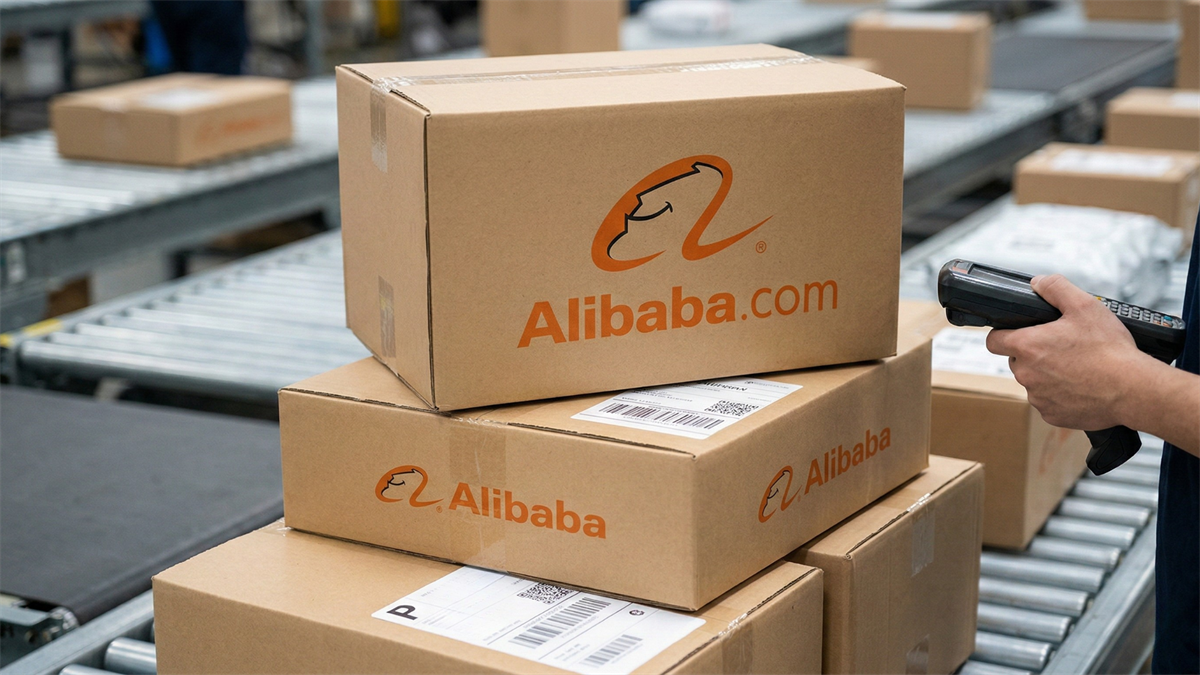
Key Takeaways - Alibaba Group is transforming into a cloud utility provider with the launch of its new massive artificial intelligence model to compete globally.
- PDD Holdings is actively adapting its business model by shifting toward local fulfillment networks to improve delivery speeds and ensure sustainability.
- The recent Supreme Court decision regarding tariffs establishes a critical legal floor that removes extreme regulatory threats and stabilizes the sector.
Markets rarely move in straight lines, and the reaction to the Supreme Court's recent ruling on tariffs is a clear example of investor psychology at work. On Feb. 20, 2026, the high court declared the IEEPA-based tariffs unlawful, triggering an immediate rally across the e-commerce sector. That optimism, however, faded quickly as headlines shifted to a potential Plan B — a proposed 15% global tariff — leaving many investors on the sidelines, wary of catching a falling knife. Current market data suggests that hesitation is a head fake. Fear of a counter-move is obscuring an improved long-term outlook for major players like Alibaba Group (NYSE: BABA) and PDD Holdings (NASDAQ: PDD). Political rhetoric remains heated, but the legal landscape has shifted toward greater stability. For investors willing to look past daily volatility, the pullback offers a compelling entry point into two companies trading at historically discounted valuations. Why The Bark Is Worse Than The Bite The Supreme Court's Feb. 20 decision is significant. By striking down the use of the International Emergency Economic Powers Act (IEEPA) to establish broad tariffs, the court effectively removed the worst-case scenario: sudden, arbitrary duties of 60% or more on Chinese goods. That course of action is now legally difficult to execute without Congressional approval. That brings us to the specter of a Plan B: a proposed 15% global tariff. While no retailer welcomes higher levies, a flat 15% rate is a known quantity. Global commerce routinely contends with currency swings that exceed 15%, and companies can model for this, adjust pricing and optimize supply chains. For large retailers with significant economies of scale, predictability is often more valuable than the lowest possible rate. The removal of tail risk — the threat of business-ending sanctions overnight — creates a legal floor for the sector. The market is currently pricing in the political noise around Plan B while underappreciating the structural safety net the Supreme Court installed. Today's volatility is the market recalibrating to a more predictable set of rules. Alibaba: The AI Giant Wakes Up Alibaba Group’s stock is trading near $145, and despite the negative headlines there are signs of strong institutional support (see institutional ownership). The company is approaching a major catalyst: its fiscal Q3 2026 earnings report, scheduled for March 5, 2026. While the market frets over trade politics, Alibaba is quietly reshaping its business. On Feb. 16, 2026, Alibaba Cloud launched Qwen 3.5, a trillion-parameter AI model. This is more than a technical milestone; it positions Alibaba as a direct competitor to U.S. tech giants in the race for AI infrastructure. The company is transitioning from being primarily an online retailer to becoming a cloud utility for the Asian market. Investors should focus on these metrics: - Valuation: Alibaba trades at a trailing price-to-earnings ratio (P/E) of about 21.05 and a forward P/E near 19.38. Compared with U.S. cloud hyperscalers trading at 30x–40x earnings, BABA looks relatively inexpensive.
- Income: The stock pays an annual dividend of $0.95 per share, yielding roughly 0.62%. With a payout ratio of around 13%, the dividend appears secure and has room to grow.
- Resilience: Despite headlines tied to the so‑called Pentagon List, Alibaba's growth across China and Southeast Asia provides a buffer against U.S.-specific restrictions.
Investors who sell ahead of the March 5 earnings report may be missing the bigger picture. The cloud and AI narrative could take center stage and overshadow legacy retail concerns. PDD Holdings: Priced for Imperfection PDD Holdings offers a different, and riskier, opportunity. PDD's stock is down roughly 6% year-to-date, trading near $106. The shortfall is understandable: PDD's Temu platform relied heavily on the de minimis loophole, which allowed shipments below $800 to enter the U.S. duty-free. With that loophole closed and duties effectively reaching 54% for some goods, Temu's model is being stress-tested. But PDD is adapting. The company is aggressively shifting to a local fulfillment model, storing inventory in U.S. warehouses so Temu can offer faster delivery and avoid cross-border customs delays. That transition raises costs in the near term, but it builds a more sustainable and mature business model over time. The market appears to be pricing PDD as if these challenges are insurmountable, creating a significant disconnect: - Metric to watch: PDD trades at a forward P/E of about 10.44.
- The disconnect: Buying a company growing revenue in the double digits for roughly 10 times earnings offers a substantial margin of safety.
Recent options data for PDD Holdings shows elevated put option volume purchased on Feb. 21. Peak pessimism can be a contrarian buy signal. With earnings estimated for March 19, 2026, the bar for positive surprises is low. Any encouraging news about the U.S. logistics pivot could trigger a sharp repricing. Always Buy The Fear The Alibaba "head fake" is a classic example of markets reacting to political rhetoric rather than corporate fundamentals. The Supreme Court's decision added a layer of legal protection that did not exist a month ago. Meanwhile, Alibaba is advancing a high-tech AI pivot and PDD is re-engineering its logistics network. For investors, the strategy is straightforward: Alibaba is the quality play heading into its March 5 report — a financially solid company with a growing AI tailwind. PDD is the value play — a stock priced for disaster that is actively addressing its problems. Volatility tends to transfer wealth from the impatient to the patient. Current prices appear to offer an attractive risk-reward profile for those willing to look beyond the headlines.
| 





No comments:
Post a Comment