How to Trade a Volatile Stock Market Without Guessing Direction VIEW IN BROWSER 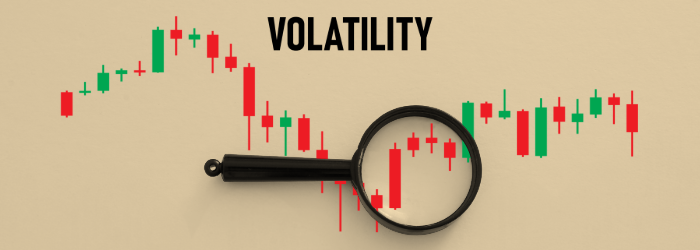
Have you heard about the day Britain went broke? In September 2022, the British government broke its own bond market with one simple budget announcement. Then-Prime Minister Liz Truss’ now-infamous “mini-budget” sent U.K. gilt yields into freefall so violent that the Bank of England was forced to intervene within days or risk a potential collapse of the U.K. pension system. Thirty-year gilt yields spiked more than 1% in three days. Pension funds that had loaded up on liability-driven investment strategies (considered the safest, most boring allocation in institutional finance) were hit with margin calls they couldn’t meet. The financial press dubbed it a “doom loop.” A “systemic threat” is how the Bank of England chose to label it. Most investors called their brokers in a cold sweat and said two words: “sell everything.” But those who looked at the carnage, noting that U.K. gilts had briefly hit unsustainable yields, might have recognized something the panicking crowd couldn’t: mispricing at scale is just opportunity wearing a very ugly mask. The question, as always, was whether anyone had the nerve to step in. That was three years ago. Today, history is offering the same question again. A few weeks ago, swaps markets were confidently pricing in two-plus Fed rate cuts for 2026. Then the Iran conflict started, oil exploded, inflation fears reignited, and U.K. gilt yields surged past the levels seen during the 2022 crisis – hitting highs not seen since 2008. Now oil spikes one day as tensions rise in Tehran again. The next day, Trump sends a Truth Social post about “productive talks” and crude crashes 10%. What’s more… The S&P bleeds 200 points overnight, claws back 60 at the open, then drifts lower by close as institutional money desperately harvests volatility instead of building real positions… Even the so-called safe havens have stopped making sense with gold down 15% from its all-time highs… during an active Middle East conflict. This high volatility, low conviction, headline-sensitive market is less a market and more a hostage negotiation. And most investors are responding exactly the way hostage negotiators are trained not to: with panic, paralysis, and a desperate retreat to cash while they wait for “clarity.” Clarity, however, doesn’t come at the bottom. It comes at the top… after the opportunity has already passed you by. Investors who compound generational wealth don’t wait for the all-clear signal. They recognize something most people still refuse to accept: chaos and opportunity are the same thing, dressed in different clothes. The question isn’t whether this market is dangerous. It obviously is. The question is whether you know which dangers to step over, and which ones to step through. That’s exactly what we’re going to show you today. Turning Market Chaos Into Opportunity 1. Sell Volatility to Generate Income When markets whipsaw with this kind of violence, options premiums get rich. The volatility index (VIX) has been elevated for weeks. That means one thing to a perceptive investor: the market is effectively paying you to be the house. Covered calls on positions you already own. Cash-secured puts on names you’d love to own at lower prices. Iron condors on rangebound assets. These strategies generate yield from the very volatility that is destroying directional investors who insist on picking a side. The discipline: keep your strikes wide, durations short (weekly or monthly, not quarterly), and size conservatively. This regime can produce violent one-directional moves before snapping back. You want to harvest the chop, not get run over by it. 2. Position for De-Escalation Rebounds This is the single most important trade in the current environment, and it flows directly from the regime itself. The U.S.-Iran conflict is the dominant uncertainty. Trump’s track record is to de-escalate whenever markets get stressed enough. We’ve already seen previews of this dynamic – in real time. When Trump floated “productive talks” and delayed further strikes, oil reversed hard and stocks surged, adding trillions in market value almost instantly. Even smaller signals – comments about limiting escalation or nearing objectives – have repeatedly stabilized markets and pulled energy prices lower after spikes. That’s the entire trade: escalation creates the dislocation, but even the hint of de-escalation unwinds it fast. And it all happens in a very tight window. When the de-escalation trade does fully materialize, oil will crash, rate-cut expectations will be revived, and long-duration growth assets – specifically AI infrastructure – will rip. That’s not a prediction so much as a function of how these regimes unwind. When rate-cut expectations snapped back in late 2023 after inflation cooled, long-duration tech and AI infrastructure names surged in a matter of weeks. The same dynamic played out after the regional banking crisis in early 2023, when macro fear gave way to liquidity and growth expectations – and capital rushed straight back into AI leaders. The question isn’t whether that trade happens. The question is whether you’re positioned before the market fully prices it. The AI infrastructure names that have been indiscriminately dumped in the war-risk selloff are precisely the de-escalation trade. The war dip is the entry. Build the position now – while it still feels uncomfortable – not after the resolution is obvious 3. Trade Market Rotations, Don’t Fight Them This regime has revealed a repeating, legible pattern: escalation headlines hit → sell growth, buy defense and energy → de-escalation signals emerge → sell defense and energy, rotate back into growth. That rotation is the trade, once you recognize it for what it is. So the actionable version is simple: - On escalation spikes: add to the AI infrastructure and growth names getting indiscriminately dumped.
- On de-escalation rips: trim the energy and defense names that have overshot.
- Never chase either leg fully: the regime will reverse before you feel comfortable. That’s the point.
The key insight is that the rotation is mechanically driven by a small, trackable set of variables – Strait of Hormuz status, Trump statements, oil price trajectory, and Fed rhetoric. You’re essentially trading geopolitical headlines, which tend to be binary and fleeting. Learn the pattern. Ride it in both directions. | Recommended Link | | | | Louis Navellier, who spent 47 years on Wall Street, says this is the beginning of the largest wealth transfer in American history. He’s identified the 10 companies poised to capture it — and the ones being destroyed by it. Watch His Urgent Briefing. |  | | 4. Reduce Duration Risk In Volatile Markets In an environment where the market has flipped from pricing two rate cuts to pricing rate hikes in three weeks, long-duration assets are structurally disadvantaged. The discount rate is unstable, which means any asset whose value depends heavily on distant future cash flows is inherently mispriced on a daily basis. That’s a lot of mark-to-market pain for very little fundamental reason. The practical implication: - Avoid: high-multiple growth stocks with profits five-plus years out, long-dated Treasuries, dividend-growth names with thin current yields.
- Favor: companies generating significant free cash flow today, short-dated T-bills (you’re being paid 4%-plus to wait), energy producers printing cash at current oil prices.
In this regime, duration is risk – full stop. Don’t let anyone tell you otherwise. 5. Use Cash as a Strategic Advantage Holding cash sounds defensive. It is, in fact, deeply offensive. In a high-volatility regime, cash isn’t hiding – it’s loading the gun. Every violent down day this environment produces is a gift to the investor who has capital ready to deploy. The ones who thrive in chaotic markets are the ones who had dry powder at the ready when everyone else was panic-selling. Target 20- to 30% cash instead of your normal 5- to 10%. The regime guarantees more dislocations are coming. Have the capital to buy them. 6. Focus on Relative Trades, Not Big Bets If you want to express a view without taking full market-level risk, pairs trades are the cleanest option. Strip out the beta. Own the relative trade. A few that make sense structurally right now: - Long AI infrastructure/Short traditional utilities: Private capex winners vs. regulated rate-base losers in the Shadow Grid buildout.
- Long domestic energy producers/Short international refiners: The U.S. is energy self-sufficient. Europe is structurally exposed. That divergence isn’t going away soon.
- Long defense tech/Short legacy defense primes: Drone and autonomy beneficiaries vs. cost-plus contractors with supply-chain exposure.
When the macro direction changes with every headline, owning the relative trade is far more durable than owning the outright directional one. Volatility Is the Opportunity, Not the Risk Here’s the uncomfortable truth about chaotic markets: they are the single greatest wealth-creation environments that exist – for the investors who are mentally prepared to navigate them. The chaos we’re experiencing right now – the gold paradox, the oil whipsaws, the rate-hike-to-cut-to-hike yo-yo, the intraday reversals, the illogical headline-driven volatility – is not a reason to hide. The market is creating mispricings every single day – opportunity in disguise. And the investors who thrive are the ones who stop trying to predict direction and start harvesting the volatility itself: selling premium, trading the rotation, shortening duration, maintaining dry powder, and positioning patiently for the resolution trade before the resolution is obvious. The market mayhem will not last forever. Regimes like this end – usually violently and in one direction – when the dominant uncertainty resolves. In this case, that’s the U.S.-Iran conflict. When we reach a resolution, the market will have one of its sharpest, fastest one-directional moves in recent memory. The investors who were hiding in cash, waiting for clarity, will watch it happen from the sidelines. Those who embraced the chaos, traded the regime, kept their powder dry, and built their de-escalation positions during the dip will already be positioned for the biggest move of the year. When this geopolitical overhang clears – and it will – capital won’t just drift back into the market. It will surge back into growth, into AI, into the companies at the center of this entire cycle. And there may be no company more central to that shift than OpenAI. Because while the market debates oil, rates, and war headlines… the AI buildout hasn’t slowed at all. Capital is still being deployed. The infrastructure is still being built. The next wave is already forming. And when that rotation hits, investors won’t be asking whether to own AI leaders… They’ll be asking which ones they should have owned before the move. That’s exactly what this new presentation breaks down. It walks through how the OpenAI IPO could unfold… Why it may become one of the most important public listings of this cycle… And how to position before that capital rotation becomes obvious. You can watch the full briefing right here. Sincerely, | 








No comments:
Post a Comment