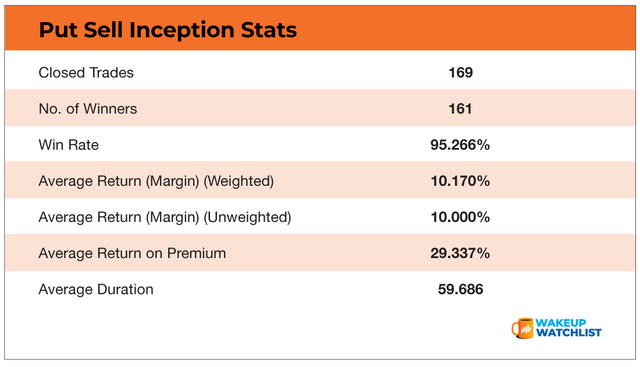
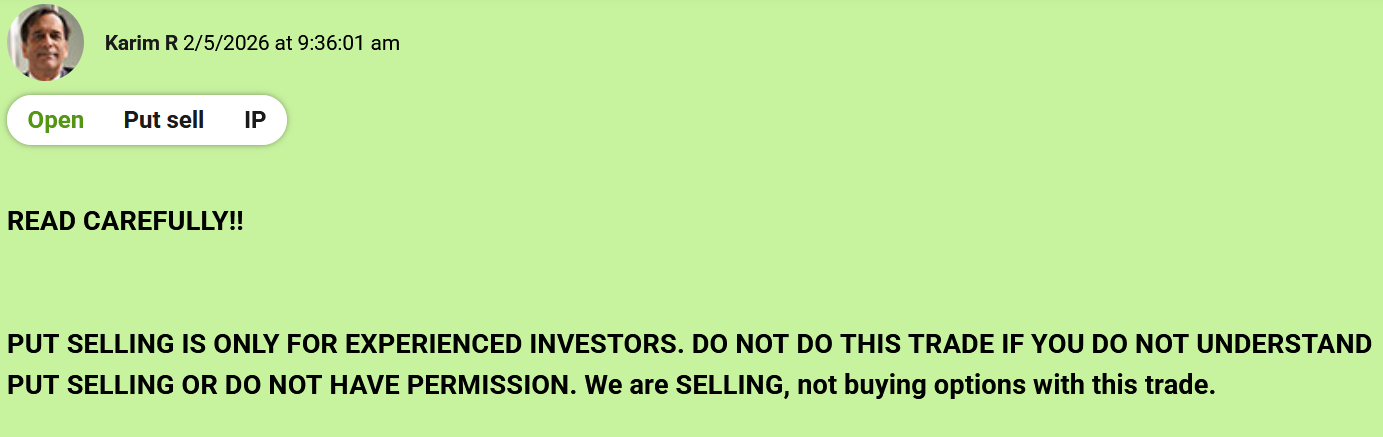
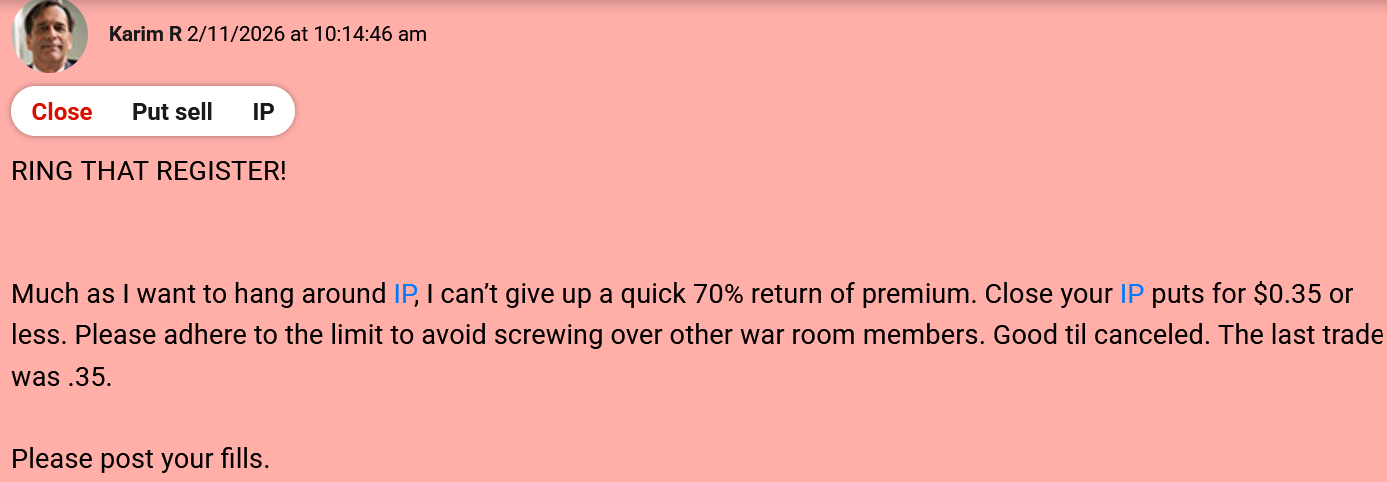
"The number 1 rule of put selling is you want to own the shares at your adjusted cost – otherwise it can be very painful." Karim Rahemtulla, Co-Founder, Monument Traders Alliance If you've been following me for a while, you know "put selling" is one of my bread-and-butter strategies in The War Room. At the risk of bragging a little, you might understand why I love it by looking at my track record. That's a 95% win rate, 29% average return on premium and average hold time of 59 days. Yet despite its powerful potential, most traders think put selling is too risky, too complex or too unpredictable. It can be all those things - if you don't know what you're doing. But when you understand put selling the way I do, you're not gambling. Instead you're finding great companies to trade at discount prices. Here's a recent example of a put sell trade on International Paper (IP). How the Trade Came About Last week, IP had been showing some great discount price action. It also had a few catalysts I liked. First, it announced it will split the company later this year into two divisions - a move that often unlocks shareholder value. Second, it had some very significant insider buying recently. When executives put their own money on the line, I take notice. Given the discount and these two catalysts, I got positioned on a put sell trade, selling to open the April $40 puts. The stock moved quickly into profitable territory, and while I would have been happy owning shares at my strike price, the opportunity to lock in a 70% premium capture in just five days was too good to pass up. That's the power of put selling. Here's a deeper rundown of how it works. Put Selling 101 Options come in two flavors: calls and puts. A call is a bet the stock will rise. A put bet says it will fall. When you sell a put option, you are making a commitment to the buyer of the put that you want to buy the stock at the strike price you sold the put at. You can exit this obligation by buying back the put. But until you do - it is a binding commitment. For taking that obligation, the put buyer give you money (you're the put seller, and anytime you sell anything in the market, you will receive money) immediately. That money is yours to keep no matter what. But if you buy the put back, you will give some of that money back - and what's left over is your profit. If you give back more than you paid for it, you take a loss. | 









No comments:
Post a Comment