| | | | | | After 24 years as a private company, SpaceX is finally going public.
Target date: Mid-June 2026
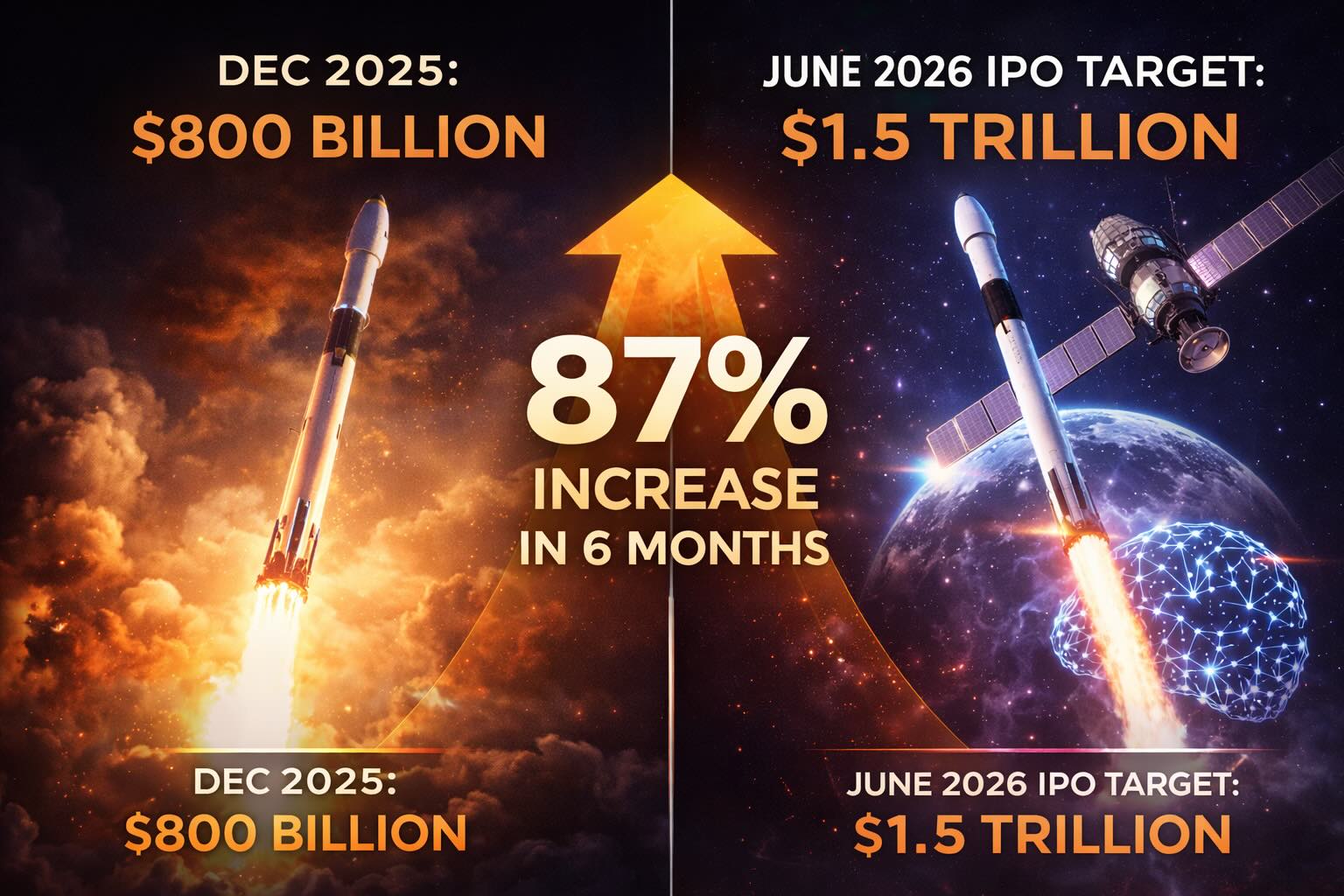
Expected valuation: $1.5 trillion
Amount raising: Up to $50 billion
If it happens at this valuation, it will be the largest IPO in history — surpassing Saudi Aramco's $29 billion offering in 2019.
For the first time ever, retail investors will be able to own shares in the company that dominates commercial space flight, operates the world's largest satellite constellation, and is building the rocket that will take humans to Mars.
Here's what you need to know.
The Business Is Printing Money
SpaceX generated an estimated $8 billion in profit on $15-16 billion in revenue in 2025. That's a 50%+ profit margin — better than most tech companies.
Revenue is growing at over 50% annually and projected to hit $22-24 billion in 2026. The secret? Starlink.
Starlink now has 9.2 million subscribers paying for satellite internet service. That number has doubled every year like clockwork since launch:
Starlink alone generates over $10 billion in annual revenue. It's the most successful satellite internet service in history — and there's no real competition. Amazon's Project Kuiper is years behind. No other company has SpaceX's launch cadence or cost structure.
The xAI Merger: Space Meets AI
Two weeks ago, SpaceX acquired xAI — Elon's artificial intelligence company — in an all-stock deal that values the combined entity at $1.25 trillion.
This isn't just a financial merger. It's a strategic bet on the future of AI infrastructure. Here's Elon's vision: Data centers in space.
SpaceX has already filed with the FCC to launch up to 1 million satellites as part of an "orbital data center" network. The pitch: unlimited solar power, zero real estate costs, and no energy constraints.
xAI builds Grok, the AI assistant integrated into X (formerly Twitter). The Pentagon is already using Grok to analyze military intelligence databases alongside other AI systems.
Combined with SpaceX's launch capabilities and Starlink's global satellite network, this creates a vertically integrated AI infrastructure company unlike anything else in the market.
Yes, there are regulatory questions around xAI's products — Elon's companies always face scrutiny. And yes, some xAI co-founders have left recently, with Elon reorganizing the team to accelerate development. But that's typical for fast-moving startups scaling aggressively.
| | | |
Why Elon's Going Public Now
Elon has always preferred keeping SpaceX private. So why the change?
Capital requirements.
To build the infrastructure for orbital data centers, expand Starlink to 18+ million subscribers, and accelerate Starship development, SpaceX needs massive amounts of capital.
An IPO at this scale could raise $50 billion in one shot — far more than any private funding round could deliver.
Plus, Starship is hitting critical milestones. NASA has awarded SpaceX contracts to land humans on the Moon. The rocket is launching successfully. Development is accelerating.
The timing is perfect.
What Smart Money Is Doing
Baron Capital's Ron Baron — one of SpaceX's largest private investors — says he won't sell a single share. He believes his investment will grow 10x over the next decade.
Cathie Wood's ARK Invest has been buying up every space-related stock they can find in anticipation of the SpaceX IPO creating a rising tide for the entire sector.
Other space stocks have already surged on the news — Rocket Lab, AST SpaceMobile, and Planet Labs are all up as investors position for the space economy opening up to retail.
The Bottom Line
This is your chance to own a piece of: The #1 commercial launch provider (160+ launches in 2025 alone) The world's largest satellite constellation (9,000+ Starlink satellites) The only company building reusable rockets at scale A profitable business growing revenue 50%+ annually The infrastructure for AI in space The risks? Sure. The valuation is aggressive at 60-68x sales. The xAI integration is complex. Execution risk on orbital data centers is real.
But Elon has built two trillion-dollar companies before (Tesla and now SpaceX). He's proven he can execute the impossible.
Four Wall Street banks are lined up. Private investors got in at $800 billion last December. The public offering is targeted for mid-June at $1.5 trillion.
When the prospectus drops, read it carefully. This will be the most scrutinized IPO in history. Good luck out there.
P.S. If you're interested in space stocks ahead of the SpaceX IPO, keep an eye on Rocket Lab (RKLB), AST SpaceMobile (ASTS), and Planet Labs (PL) — all have moved higher on SpaceX IPO excitement. | | | |
Your interaction with our content, in any format, is appreciated. We value your time and the trust you place in our communications. Thank you for being an active member of our community, and we look forward to continued exchanges in the future. Privacy Policy Wall Street Watchdogs ("the Company") values the privacy of visitors to Wall Street Watchdogs site and users of our services. This notice explains how we collect, use, and protect information. Why You're Receiving This Email You're receiving this email because at some point, you opted in to receive updates, news, or information on a specific topic we've previously discussed or shared. Whether it was through a subscription, a form submission, or another form of communication, your information was shared willingly, and we respect your decision to connect with us. Thank you for taking the time to read this email. This message is part of an ongoing conversation between us, and I want to take a moment to ensure you have full transparency about why you received this message, how your information is handled, and what to expect from future emails. If you're wondering about the nature of our correspondence, rest assured that we aim to keep all emails relevant, timely, and from unnecessary clutter. This includes respecting your inbox and refraining from sending irrelevant messages. A Commitment to Non-Intrusive Emails We aim to create a non-intrusive communication experience. This means we won't overwhelm your inbox with excessive messages, and we work hard to ensure our content remains clear and concise. The purpose of this email is to stay connected with you and provide updates or information that we believe is meaningful. If we ever fail to meet these standards, we encourage you to let us know. Feedback, whether positive or constructive, is always appreciated. Your thoughts help us understand how we can do better and improve our communication approach. While we cannot promise every suggestion will be implemented, we will take the time to carefully review and consider your input. Accessibility and Communication If you have any trouble accessing the unsubscribe page, managing preferences, or understanding why you're receiving this email, you can reach out directly to our support team. We aim to provide a response within a reasonable time frame and address your concerns effectively. Our communication is designed to be as inclusive as possible, but we know there's always room for improvement. If you have any feedback on how we can make our emails more accessible or relevant, please don't hesitate to share. Your Privacy is Important We value your trust and take your privacy very seriously. The information you provide is securely stored and never shared, sold, or used outside the purpose for which you provided it. This privacy policy describes how we collects, uses, and protects your information. We collect information you voluntarily provide, such as your name, email address, or phone number. We may also collect technical data from your visit, including browser type, operating system, and your IP address. We use this information to respond to your inquiries, provide access to services, and improve our communications. We do not share your information with unrelated third parties. Some of our services may use third-party tools that store or process data on our behalf. These tools are selected with care and are expected to maintain data responsibly. We do not knowingly collect personal information from children under 13 years of age. If we discover that such information was provided without parental consent, we will delete it promptly. You can request to update or delete your personal information by contacting us. We may update this privacy policy occasionally. Changes will be reflected on the page. Orders with Wall Street Watchdogs are handled using secure processes. If there is a need to update delivery details, someone from our team may contact you. Please note, we do not ask for personal payment information by email. You can enable extra sign-in protection and use strong security to help keep you safe. We regularly review our systems and follow best practices to help protect your information. If you notice anything unusual, it may be helpful to review your settings. Transparency is our priority, and we're happy to address any questions you might have. How to Unsubscribe or Manage Your Preferences We understand that everyone's inbox is different. If you ever find our emails no longer relevant, there's no hard feelings. You can easily manage your email preferences or unsubscribe using the link provided below. By clicking the unsubscribe link, you'll be taken to a page where you can either adjust your communication preferences (such as receiving fewer emails or only on specific topics) or completely remove yourself from our list. The process is straightforward, and any changes will take effect promptly. We don't use tricks or gimmicks to keep you subscribed. Our priority is to ensure that our emails add value to your day, and if they don't, we respect your decision to part ways. Legal Information We comply with all applicable laws and regulations regarding email communication. This includes adhering to laws and maintaining the highest standards for consent-based communication. Your trust matters, and we work diligently to ensure every email you receive meets these requirements. If you need further clarification on our compliance policies or legal obligations, please ask. Transparency and accountability are central to our communication strategy, and we're happy to provide additional details if needed. Contact Information We strive to ensure all communication channels are open and readily available to you. Whether it's a question, comment, or concern, our team is ready to assist. For assistance, please contact our team via email by replying to this email. A Final Note Emails are one of the many ways we stay connected, but we understand they aren't perfect for everyone. If there's another way you'd prefer to communicate or stay updated, let us know. Whether it's through social media, a direct call, or another channel, we're open to finding the most effective way to share information with you. We want to emphasize that our goal is never to disrupt or clutter your inbox. Every email sent is intended to provide value, and we genuinely appreciate your time and attention. This footer was designed to ensure transparency, provide essential information, and give you full control over your communication preferences. We hope it meets your expectations, but if there's anything you'd like to see improved, we're always here to listen. Best regards, Wall Street Watchdogs | | | Your interaction with our content, in any format, is appreciated. We value your time and the trust you place in our communications. Thank you for being an active member of our community, and we look forward to continued exchanges in the future. Privacy Policy Wall Street Watchdogs ("the Company") values the privacy of visitors to Wall Street Watchdogs site and users of our services. This notice explains how we collect, use, and protect information. Why You're Receiving This Email You're receiving this email because at some point, you opted in to receive updates, news, or information on a specific topic we've previously discussed or shared. Whether it was through a subscription, a form submission, or another form of communication, your information was shared willingly, and we respect your decision to connect with us. Thank you for taking the time to read this email. This message is part of an ongoing conversation between us, and I want to take a moment to ensure you have full transparency about why you received this message, how your information is handled, and what to expect from future emails. If you're wondering about the nature of our correspondence, rest assured that we aim to keep all emails relevant, timely, and from unnecessary clutter. This includes respecting your inbox and refraining from sending irrelevant messages. A Commitment to Non-Intrusive Emails We aim to create a non-intrusive communication experience. This means we won't overwhelm your inbox with excessive messages, and we work hard to ensure our content remains clear and concise. The purpose of this email is to stay connected with you and provide updates or information that we believe is meaningful. If we ever fail to meet these standards, we encourage you to let us know. Feedback, whether positive or constructive, is always appreciated. Your thoughts help us understand how we can do better and improve our communication approach. While we cannot promise every suggestion will be implemented, we will take the time to carefully review and consider your input. Accessibility and Communication If you have any trouble accessing the unsubscribe page, managing preferences, or understanding why you're receiving this email, you can reach out directly to our support team. We aim to provide a response within a reasonable time frame and address your concerns effectively. Our communication is designed to be as inclusive as possible, but we know there's always room for improvement. If you have any feedback on how we can make our emails more accessible or relevant, please don't hesitate to share. Your Privacy is Important We value your trust and take your privacy very seriously. The information you provide is securely stored and never shared, sold, or used outside the purpose for which you provided it. This privacy policy describes how we collects, uses, and protects your information. We collect information you voluntarily provide, such as your name, email address, or phone number. We may also collect technical data from your visit, including browser type, operating system, and your IP address. We use this information to respond to your inquiries, provide access to services, and improve our communications. We do not share your information with unrelated third parties. Some of our services may use third-party tools that store or process data on our behalf. These tools are selected with care and are expected to maintain data responsibly. We do not knowingly collect personal information from children under 13 years of age. If we discover that such information was provided without parental consent, we will delete it promptly. You can request to update or delete your personal information by contacting us. We may update this privacy policy occasionally. Changes will be reflected on the page. Orders with Wall Street Watchdogs are handled using secure processes. If there is a need to update delivery details, someone from our team may contact you. Please note, we do not ask for personal payment information by email. You can enable extra sign-in protection and use strong security to help keep you safe. We regularly review our systems and follow best practices to help protect your information. If you notice anything unusual, it may be helpful to review your settings. Transparency is our priority, and we're happy to address any questions you might have. How to Unsubscribe or Manage Your Preferences We understand that everyone's inbox is different. If you ever find our emails no longer relevant, there's no hard feelings. You can easily manage your email preferences or unsubscribe using the link provided below. By clicking the unsubscribe link, you'll be taken to a page where you can either adjust your communication preferences (such as receiving fewer emails or only on specific topics) or completely remove yourself from our list. The process is straightforward, and any changes will take effect promptly. We don't use tricks or gimmicks to keep you subscribed. Our priority is to ensure that our emails add value to your day, and if they don't, we respect your decision to part ways. Legal Information We comply with all applicable laws and regulations regarding email communication. This includes adhering to laws and maintaining the highest standards for consent-based communication. Your trust matters, and we work diligently to ensure every email you receive meets these requirements. If you need further clarification on our compliance policies or legal obligations, please ask. Transparency and accountability are central to our communication strategy, and we're happy to provide additional details if needed. Contact Information We strive to ensure all communication channels are open and readily available to you. Whether it's a question, comment, or concern, our team is ready to assist. For assistance, please contact our team via email by replying to this email. A Final Note Emails are one of the many ways we stay connected, but we understand they aren't perfect for everyone. If there's another way you'd prefer to communicate or stay updated, let us know. Whether it's through social media, a direct call, or another channel, we're open to finding the most effective way to share information with you. We want to emphasize that our goal is never to disrupt or clutter your inbox. Every email sent is intended to provide value, and we genuinely appreciate your time and attention. This footer was designed to ensure transparency, provide essential information, and give you full control over your communication preferences. We hope it meets your expectations, but if there's anything you'd like to see improved, we're always here to listen. Best regards, Wall Street Watchdogs | | | | |





No comments:
Post a Comment