Is Elon Musk Merging SpaceX, Tesla, and xAI? VIEW IN BROWSER 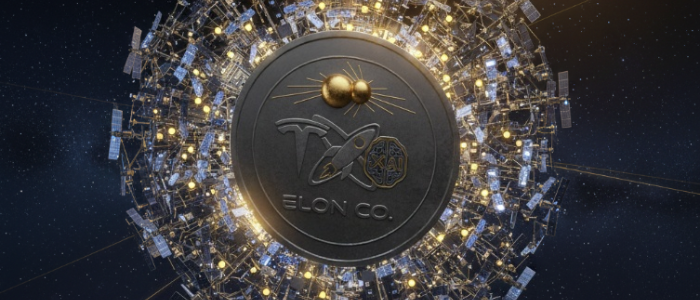
Buckle up, fellow travelers on the information superhighway, because what we’re about to dissect is more than rumor… It’s a tremor on the financial Richter scale that may be so powerful, it could redefine “tech giant” as we know it. Forget the FAANGs, the Magnificent Seven, and whatever other cutesy acronym Wall Street cooks up this quarter. We’re talking about the genesis of something truly audacious: Elon Co. The whispers are turning into shouts – especially after Tesla (TSLA) announced it will sunset the Model S and X to focus on robotics and supercomputers. Now the recent merger talks between SpaceX, xAI, and Tesla are looking more like the ignition sequence for a rocket aimed squarely at the financial cosmos. Allegedly, Musk is targeting a mid-June 2026 consolidation, perfectly timed to align with a planetary conjunction of Jupiter and Venus… Because, of course, when you’re building a trillion-dollar empire, you don’t just consult the SEC; you consult the stars. The theory, once relegated to conspiracists on Reddit forums, now has the gravitas of a Reuters headline: Elon Musk is moving to consolidate his sprawling empire. And if we’re reading our tea leaves (and a few well-placed sources) correctly, this is about more than combining balance sheets. It’s about launching the world’s first Orbital Compute Conglomerate. By fusing his companies, Musk would create a closed-loop system that doesn’t just dominate markets but operates outside of them. It’s a move that would solve the three-body problem of modern tech: the need for unlimited power, unbreakable data, and ultimate physical security. Here is the blueprint for the most powerful entity in human history. The Strategic Case for Elon Musk's Company Consolidation Now, why would Musk, a man who famously juggles more balls than a Cirque du Soleil performer on Red Bull, suddenly decide to combine his most ambitious ventures? Scale, speed, and sovereign AI.
The math is actually straightforward. The “Cash Burn” Conundrum Meets Starlink’s Profitability For years, xAI has been insatiable. Musk’s ‘Colossus’ cluster in Memphis reportedly utilizes 100,000 Nvidia H100s – a hardware bill exceeding $3 billion, not including the hundreds of millions in annual electricity costs. xAI is a capital-hungry beast that needs a billion-dollar allowance just to stay in the race against OpenAI. Tesla, while a cash cow, has its own capital-intensive ventures (Gigafactories, Optimus, etc.). And SpaceX, on the other hand, has just hit profitability with Starlink. The Play: Merge xAI into SpaceX. Use Starlink’s newfound profits and SpaceX’s immense valuation (reportedly targeting $1.5 trillion) to fund the AI beast. Suddenly, xAI’s “burn” becomes a strategic investment under a space-faring behemoth. It’s elegant financial engineering – or perhaps the only viable path forward without another dilutive funding round. Vertical Integration, Elon-Style Musk hates middlemen. He’s built his career on eliminating intermediaries – owning factories, sales channels, and charging networks. This merger is the ultimate expression of that philosophy. - SpaceX + xAI: Space (infrastructure) meets AI (intelligence). AI requires massive compute power. And with Earth-bound infrastructure hitting an ‘energy wall,’ space is the next frontier. To get that massive compute power into space requires rockets, as well as satellites to make them operational. Why pay Amazon Web Services or Google Cloud when you can build your own orbital data centers and control every single byte from launchpad to user?
- X (formerly Twitter) + xAI + SpaceX: Let’s not forget X. Elon acquired it, integrated it into xAI, and now it’s reportedly coming along for the ride. X provides a firehose of real-time human data: the ultimate training ground for chatbot Grok. It’s the eyes and ears of the AI brain, distributed globally by Starlink, processed by orbital supercomputers, and, perhaps someday, powering fleets of Optimus robots. The circle of life, Elon-style.
The “American Technology Co.” and the DOGE Factor This is the most fascinating part. With Elon’s prominent (and sometimes baffling) role in the Department of Government Efficiency (DOGE) and proximity to Trump, his ventures are increasingly intertwined with national interests. A unified “Elon Co.” isn’t just a private enterprise; it becomes a strategic national asset. - Defense & Diplomacy: Imagine a company that controls global satellite internet, a significant portion of U.S. space launch capability, and the world’s most advanced sovereign AI. That’s a geopolitical instrument. Contracts from the DoD, NASA, and other federal agencies would flow like mana from heaven. It makes the company “too big to fail” and incredibly appealing to a government increasingly worried about Chinese technological dominance.
But the consolidation itself isn’t the endgame. The real catalyst lies in what becomes possible once these pieces unite. The Real Prize Behind the Elon Musk Merger The true genius (or madness, depending on your perspective) of this move centers on one idea: Orbital Compute. Here’s where the strategy shifts from ambitious to unprecedented. Picture this: - The Energy Crisis Solved (Mostly): On Earth, AI data centers are ravenous beasts, devouring entire power grids. The North Memphis “Colossus” supercomputer for xAI is already pushing local energy infrastructure to its breaking point. But Low Earth Orbit provides a continuous supply of unfiltered solar energy. Launch specialized Starlink V3 “Compute Nodes” – each one a mini-data center packed with GPUs and equipped with Tesla’s most advanced solar panels and Megapacks – and you have a self-sustaining, off-grid AI factory.
- The Cooling Conundrum Crushed: AI chips generate a lot of heat, which is why terrestrial data centers spend billions on complex, water-intensive cooling systems. In the vacuum of space, radiative cooling is king. You can pack chips tighter and run them hotter, achieving levels of efficiency unheard of on Earth while saving astronomical amounts on HVAC and water. The physics alone could justify the engineering challenge.
- Starlink: The Planetary Brain’s Nervous System: What’s a supercomputer without a network? Starlink’s constellation, with its inter-satellite laser links, isn’t just for internet access anymore. It becomes the low-latency “backbone” for this orbital supercomputer. Imagine thousands of AI-powered satellites, constantly communicating at the speed of light, acting as one giant, distributed brain. This brain can then beam “intelligence” (AI inference, data analysis, Grok’s witty retorts) directly to any point on Earth – your phone, your Tesla, an Optimus robot – with unprecedented speed and reliability.
- Regulatory Bypass & Speed to Market: Building a new data center on Earth is a bureaucratic nightmare. Permits, environmental reviews, community pushback – it takes years. But to do so in space only requires launch approval. This allows “Elon Co.” to scale its compute capacity at the speed of a Starship launch, leaving terrestrial competitors mired in red tape. Speed becomes the moat.
This is all about creating a fundamentally new paradigm for AI infrastructure. Musk, always thinking 10 steps ahead, sees this as his ultimate trump card in the escalating global AI arms race. He’s not just competing; he’s changing the rules of the game entirely. | Recommended Link | | | | Apple, Amazon, Meta, and Microsoft have each created incredible innovations, making investors wealthy along the way. Thanks to his system, Louis Navellier spotted each one of these companies before they became mega-cap household names. Now, his proprietary system is lighting up in a whole new way. It’s pointing to a powerful economic force that’s creating major wealth opportunities… while disrupting careers once considered “secure.” This transformation isn’t just affecting a single industry – it’s fundamentally altering the foundation of our economy. See Louis’ new message that explains how to ensure you’re on the right side of this historic wealth divide. |  | | Elon Musk Merger Stocks to Watch So, what does this mean for investors watching from Earth? If even half of this consolidation materializes, the ripple effects will reshape entire sectors. Tesla Stock Becomes the $3 Trillion Empire Proxy If this reverse merger happens, TSLA is the ultimate winner. You’re no longer just buying an EV company that happens to dabble in AI and robotics. You’re buying the undisputed leader in: - AI: xAI’s Grok and orbital compute.
- Space: SpaceX’s launch, Starlink, and space infrastructure.
- Robotics: Optimus, which will likely be managed by xAI’s intelligence and powered by Tesla’s energy.
- Energy: Tesla Energy becomes the internal utility company for the entire empire, powering everything from orbital data centers to Megachargers. It’s no longer a bet on EVs; it’s a bet on humanity’s future, all under one ticker. The risk-reward profile is extreme in both directions.
NVDA Stock as the Space AI Arms Dealer “Elon Co.” will still need chips – lots of them. And Nvidia’s (NVDA) dominance in AI GPUs makes it an indispensable partner. It’s already invested in xAI, and the demand for “space-grade” H100s (and whatever comes next) will be staggering. Selling to orbital supercomputers opens up a massive new, high-margin vertical for Nvidia, securing its position as the picks-and-shovels play for the AI gold rush, even in space. The SpaceX Adjacency Play for Investors A $1.5 trillion SpaceX IPO and a subsequent Musk mega-merger will inject an unprecedented amount of capital and investor interest into the space sector. Rocket Lab (RKLB) is the clear No. 2 in the launch market and a rapidly growing satellite manufacturer, perfectly positioned to capture the “FOMO” from investors who can’t get direct access to SpaceX. If the space economy explodes, Rocket Lab will be building the critical components and launching the smaller satellites that complement Musk’s grand vision. It’s a reliable sidekick, ready to pick up the overflow work. Redwire (RDW) specializes in advanced space technology, including those crucial roll-out solar arrays (ROSA) for space stations and satellites. If Musk is building a swarm of solar-powered orbital data centers, Redwire’s tech will likely become a fundamental building block, enabling the infrastructure for this new frontier. The Geopolitical Beneficiaries The U.S. government becomes a de facto silent partner here. An American-led, privately run technological leviathan that handles everything from secure communications to advanced AI for defense and intelligence is quite a competitive advantage. As such, we could expect streamlined regulatory processes, massive government contracts, and perhaps even some strategic “encouragement” to keep key technologies within the United States’ sphere of influence. An “American Technology Co.” would be a strategic pillar of national security. Which Tech Giants Face Disruption From Orbital Compute If “Elon Co.” successfully moves significant AI workloads to orbital data centers, bypassing terrestrial grids and massive physical infrastructure, it poses a direct, existential threat to the traditional cloud. Why pay premium prices for ground-based compute when you can get cheaper, faster, and more scalable compute from space? This would represent a paradigm shift for cloud economics, pressuring incumbent providers like AWS, Google Cloud, and Azure. Similarly, if the future of compute is in orbit, what does that mean for the billions invested in physical server farms on Earth? Some will adapt; but many could face obsolescence as the demand shifts skyward. In that scenario, terrestrial data center real estate investment trusts (REITs) – like Equinix (EQIX) and Digital Realty (DLR) – could be mortally wounded. What Investors Need to Know About the Elon Musk Merger The creation of “Elon Co.” is moving from fringe theory to plausible probability. The pieces are falling into place with increasing speed, driven by the strategic imperative of orbital compute. It’s a move that consolidates power, leverages unique technological advantages, and positions one man (and his loyal shareholders) to dominate the next century of technological innovation. Whether you see it as a brilliant masterstroke or a dangerously centralized power grab, the investment implications are undeniable. Yet, while Musk is focused on merging his empire to win the AI race, the U.S. government has quietly launched its own “ignition sequence” – the Genesis Mission. Think of it as the Manhattan Project 2.0. The government has realized that to beat China, they need “Musk-scale” innovation across the board. They are about to dump trillions into six critical sectors: AI, Quantum, Nuclear, Biotech, Semiconductors, and Advanced Manufacturing. And just like the Apollo Program created legendary winners like Boeing (BA) (7,200% gains) and DuPont (DD) (4,800% gains), the Genesis Mission is about to crown a new generation of “national champions.” I’ve identified eight top “Genesis Partner” companies that are positioned to benefit from this public-private surge. These are the companies that will provide the EUV breakthroughs, the AI-powered nuclear licensing, and the wafer-scale chips that the Genesis Mission – and Elon Musk – desperately need. Watch my full briefing now and get the names of those top stocks – before Uncle Sam sends them soaring. Sincerely, |









No comments:
Post a Comment