Friday, November 7, 2025

How to Increase Affordability

Shield

AN OXFORD CLUB PUBLICATION

Loyal reader since December 2024

Liberty Through Wealth

SPONSORED

Wall Street Will Be Blindsided

Everyone thinks Apple's next big thing is AI. Or virtual reality. Or self-driving cars.

They're all wrong.

In the coming days... even hours... Apple could drop a bombshell announcement that blindsides Wall Street - and changes how 1.3 billion iPhone users connect forever.

Alexander Green discovered the evidence buried in Apple Patent #11528076 B1:

Technology already hidden in a billion iPhones. Technology that just needs one thing to work - something a tiny $25 company owns exclusively.

Don't Wait Until After Wall Street Catches On

THE SHORTEST WAY TO A RICH LIFE

What You Can Do - Starting Today - to Increase Affordability

Alexander Green, Chief Investment Strategist, The Oxford Club

Alexander Green

After this week's elections, the new buzz word in political circles is affordability.

Voters want their leaders to make everyday products and services less costly.

It would be a step in the right direction if they simply stopped making them more so.

The truth?

Whether the intentions were noble or not, recent political decisions have made life more expensive for the average American.

Across the board - housing, energy, healthcare, and even groceries - government actions have quietly pushed costs higher.

The root cause is generally regulation, spending, or misguided incentives.

Want to know why homes are so expensive in places like San Francisco, Boston, or Austin?

It's not just demand. It's zoning.

Cities and suburbs have passed restrictive land-use laws - single-family zoning, minimum lot sizes, and bureaucratic permitting processes - that choke the supply of new housing.

When you limit supply in high-demand areas, prices rise. That's just Economics 101.

The result is that families and middle-income workers are priced out.

Many are forced into long commutes or stagnant rental markets, all because local governments effectively outlawed affordability.

With energy, the shift toward renewables was well-intentioned. But it's been poorly executed.

The Biden Administration's crackdowns on domestic oil and gas production, coupled with subsidies that distort energy markets, have narrowed the range of affordable options.

Tax hikes on fuels and pipeline restrictions haven't helped.

What's left? A grid under pressure, higher heating and electricity bills, and increased costs for businesses that get passed down to consumers.

Likewise, the healthcare system has always been complicated. But political dysfunction has made it worse.

Budget standoffs, temporary funding fixes, and a revolving door of rules have created instability - especially in insurance markets.

When Congress can't agree on long-term solutions, premiums rise and coverage shrinks.

Some states have seen annual increases of 15% or more in ACA plan premiums.

And for millions, that means higher deductibles, fewer doctors, and rising out-of-pocket costs - often with no better care.

(Although yesterday's Trump administration announcement of most-favored-nation drug pricing for Americans is definitely a step in the right direction.)

Another example: The pandemic-era stimulus packages.

Yes, they prevented economic collapse.

But they also added trillions in liquidity without a corresponding rise in productivity.

That imbalance triggered inflation. From groceries to used cars, prices jumped.

Combine that with supply chain snarls and tight labor markets - and you have persistent cost increases in everyday life.

The great irony is that the very policies designed to "help" often ended up hurting the people they were meant to protect.

It's a reminder: policy decisions aren't made in a vacuum.

They almost always come with a price tag - one that you and I eventually pay.

The bottom line is this: If you want things to become more affordable, don't count on politicians.

Count on yourself.

SPONSORED

Multimillionaire Trader Reveals His #1 Gold Pick

Wall Street veteran Karim Rahemtulla has identified a stock that offers exposure to more than 1 oz of gold - worth over $2,500 - for less than $20.

Click here to learn more about this game-changing opportunity.

As I explain in my new book The American Dream: Why It's Still Alive... and How to Achieve It - already a #1 bestseller on Amazon - the best way to make things more affordable is to increase your earned income (if you're still working), your investment income and your net worth.

Take earned income, for example. It is generally decided by nine factors:

  • Your educational attainment
  • Your chosen profession
  • Your years of experience
  • Your hours worked
  • Your work ethic
  • Your social skills
  • Your competence and proficiency at what you do
  • Your ability to cooperate with, inspire, and lead your coworkers
  • And your ambition to rise in the organization

Essentially, this means maximizing your education and marketable skills; showing competence, reliability, and integrity at work; and doing whatever you can to rise in the organization. (Or else seek better alternatives elsewhere.)

If you want to earn more, the choice is clear: make yourself indispensable to someone.

Complaining that "capitalism is broken," "the system is rigged," and "life isn't fair" will not increase your income or net worth one iota.

It is, however, guaranteed to make you unhappy.

A study published recently by the National Bureau of Economic Research - using a rich vein of survey data tracking individuals as far back as 1979 - found that the more people work over their lifetimes, the more they earn.

(No surprise there.)

But a major determinant of total lifetime hours worked is not necessity but individual choice.

Some prefer to work more. Some prioritize other activities.

The study found that those who work more earn more because they accumulate more skills during the extra time on the job.

The overlapping effect of more hours and greater skills acquisition account for a hefty share of overall differences in lifetime earnings.

The truth disturbs some, but income inequality is often a matter of choice rather than economic or social forces.

As my older brother - a retired homebuilder - likes to say, everybody talks about inequality of income. But nobody talks about inequality of effort.

Your choices about where to work, how much to spend, how much to save, and where to invest will have a far greater impact on affordability in your household than some politician's promises.

It's only when you take responsibility for your outcomes in life that you take the giant leap from childhood to adulthood.

And start truly living the American Dream.

Good investing,

Alex

P.S. For more information about my new book - The American Dream: Why It's Still Alive... and How to Achieve It - click here.

Leave a Comment
This secret stock is set to bring 50,000 new jobs to America with a deal involving Apple and $10 billion

BUILD AND PROTECT YOUR WEALTH

This Gold Play Has Beaten Gold 10-To-1 for 25 Years - Find Out More.

Community Healthcare Trust: How Safe Is This REIT's 13% Yield?

He Called Apple, Amazon, Netflix, and Nvidia Over 20 Years Ago. Now He Says to Buy AI's "Next Magnificent Seven" Stocks.

Seasonal Stocks Made Us $98/Share: Here's How We Timed It Perfect

SPONSORED

Investment Expert Warns:
"Don't Make the Same Mistake Tesla Skeptics Made in 2010"

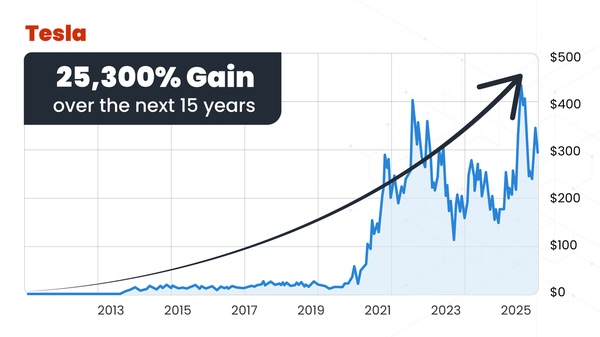
In 2010, critics called Tesla "just a niche company." Those who ignored the skeptics and bought Tesla stock saw gains of over 25,300% over the next 15 years...

Turning a $5,000 investment into $1.26 million.

Tesla chart
 

Today, the same pattern is repeating with the robotaxi revolution. And legendary investor Marc Lichtenfeld details which companies will be the biggest winners next.

Get positioned before the big moves happen

No comments:

Page List

Blog Archive

Search This Blog

GSA Auctions Industrial Machinery Update

You are subscribed to Industrial Machinery for GSA Auctions. This information has recently ...