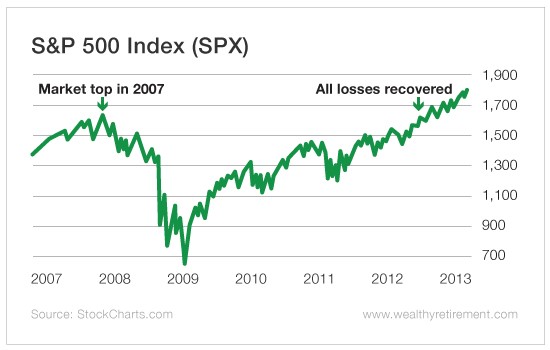
| "If the market is cut in half three years from now, could you take it on the chin?" That's the question I asked my cousin Dave a few years ago when he requested investment advice. He wanted to know about different asset allocation strategies that were all heavily weighted toward stocks. Dave is investing for years down the road, but he's a worrier. I can talk all day long about how markets go up over the long term... or how you would have made money 93% of the time over rolling 10-year periods since 1937... or how the only time you wouldn't have made money over 10 years was if you sold during the depths of the Great Depression or Great Recession. But none of that matters when your portfolio is down 30% because you're in the middle of a bear market a few years after you've invested. (Note: I'm not calling for a bear market in the near future. I don't have a crystal ball. I'm simply pointing out that bear markets happen and that one probably will occur at some point.) So I talked to Dave about investing in Perpetual Dividend Raisers (stocks that raise their dividends every year), index funds, and actively managed mutual funds. I discussed the pros and cons of each, including managing the money himself versus turning it over to an advisor. I encouraged Dave and his wife to have an honest conversation about what they would do if the market headed south. Otherwise, the fact that the S&P 500 has a 10-year average total return of 140% over the past 40 years will be meaningless, as they may not be able to handle the volatility. If they are invested in the market without the proper risk tolerance and the market slides, they will no doubt sell into weakness, probably near the bottom like so many other investors. | 











No comments:
Post a Comment