| Highlights 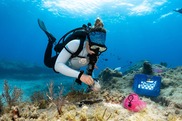 Healthy coral reefs are vital to the survival of thousands of marine species and provide $6.3 billion in local sales and 71,000 jobs annually. But rising ocean temperatures are pushing these ecosystems to the brink. That's why NOAA is investing in cutting-edge technology to create more heat-resilient corals. At the heart of this effort is Mission: Iconic Reefs, an ambitious long-term initiative to boost coral cover from just 2 percent to 25 percent across seven key sites in the Florida Keys National Marine Sanctuary. | 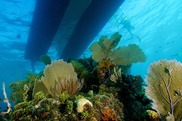 In the Florida Keys, restoring coral reefs isn't just an environmental priority—it's a strategy to safeguard ocean ecosystems and sustain a tourism economy worth billions. Healthy coral reefs make the Florida Keys' economy tick. By restoring degraded reefs within the Florida Keys National Marine Sanctuary, NOAA and partners help support almost 20,000 local jobs tied to tourism, fishing, and ocean recreation. | 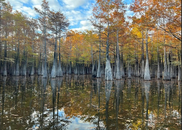 On July 29, the natural resource Trustees for the Ciba-Geigy case released a Final Restoration Plan Amendment / Environmental Assessment that provides an update on completed restoration activities, a Consistency Evaluation regarding proposed site-specific restoration projects that were evaluated in the 2017 Final RP/PEA and an evaluation of a new proposed restoration action: feral swine management on state-owned lands–including land that was acquired by the state as a result of the settlement. These actions will restore habitat and natural resources injured as a result of contaminants released at the site. The Trustees and BASF (formerly Ciba-Geigy Corp.) reached a settlement in 2013 that provided $3.2 million for the restoration of injured natural resources within the Mobile Bay Watershed. | 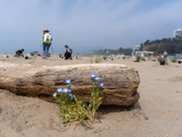 Ten years after the Refugio Beach oil spill, NOAA and its partners are celebrating a decade of restoration progress along the Southern California coastline. Through the Natural Resource Damage Assessment process, a $22.3 million settlement was secured to fund projects that have helped heal marine ecosystems, rebuild fisheries, and reconnect communities. Key restoration efforts include outplanting over 5,000 red abalone to help restore kelp forest ecosystems, restoring eelgrass beds, and planting native beach dune vegetation. Additionally, projects have focused on expanding public access to the coast through interpretive signs, educational programs, and improved accessibility. | | | 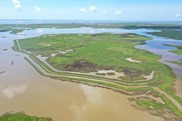 On July 22, 2025, The Texas Trustee Implementation Group for the Deepwater Horizon oil spill released their Final Restoration Plan/Environmental Assessment #3: Restoration of Wetlands, Coastal and Nearshore Habitats. The plan identifies six projects for implementation with a total budget of up to $36 million. These projects are intended to restore and conserve wetlands and coastal habitats by using suitable material dredged from nearby dredging projects to create vegetated wetland habitat. The projects aim to restore vital coastal ecosystems while making effective use of dredged material and anticipate restoring up to 1,855 acres of intertidal marsh. | 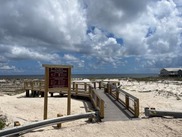 A long-anticipated restoration project is now complete at Bon Secour National Wildlife Refuge in Alabama. With the recent opening of the Mobile Street boardwalk and parking area, residents and visitors alike are once again able to enjoy safe, accessible entry to the refuge's dynamic coastal habitats–marking a major milestone for the Gulf Coast community. Funded by the Alabama Trustee Implementation Group using Deepwater Horizon Natural Resource Damage Assessment settlement funds, the project supports a key restoration objective: providing and enhancing recreational opportunities for the public following the 2010 oil spill. | 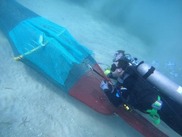 The Open Ocean Trustee Implementation Group fr the Deepwater Horizon oil spill recently completed a project addressing juvenile sea turtle bycatch in the Gulf of America otter trawl shrimp fishery. In partnership with the fishery, the project team developed and tested modified turtle excluder devices (TEDs). They found that a reduction in bar spacing on the TED grid successfully excludes small turtles and maintains shrimp catch. | | | | |








No comments:
Post a Comment