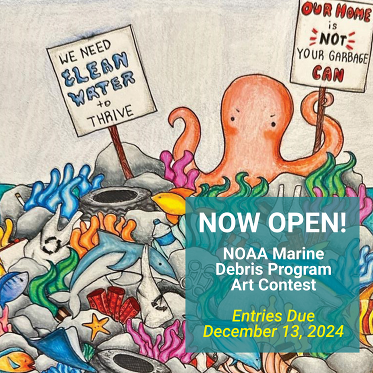
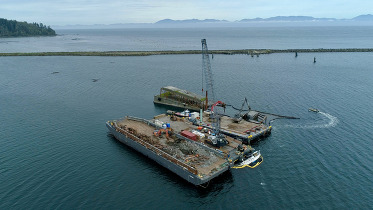
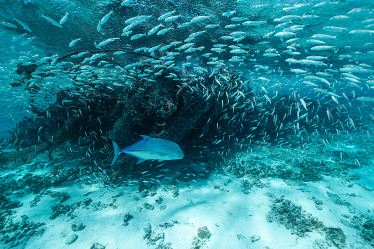
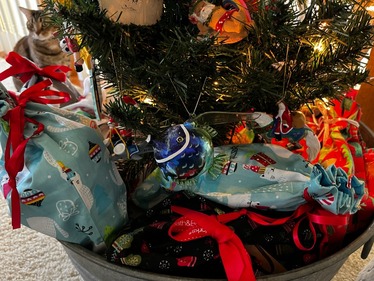
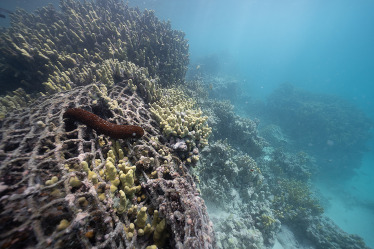
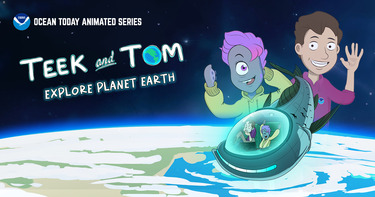
| Artwork by Sahini K. (Grade 6, Florida), winner of the annual NOAA Marine Debris Program Art Contest. There is still time to submit artwork for this year's NOAA Marine Debris Program Art Contest! Students in grades K-8 from the United States and U.S. territories can submit their artwork now through December 13th. Enter today and you could see your artwork featured in our 2026 Marine Debris Calendar! So get crafty, get creative, and help us raise awareness about marine debris. Learn More The removal of the old Interstate-90 floating bridge that has been in Neah Bay, Washington since the 1990s (Photo Credit: Howard Shack of Toolbox Pictures). We are proud to collaborate with multiple tribal partners in efforts to remove marine debris from our waterways and support communities that work to reduce the impacts of marine debris on our shores. Through our grant programs, regional action plans, and community-building efforts, the NOAA Marine Debris Program strives to bring together the many groups that work tirelessly to protect our shorelines and ocean. We highlighted some active and recently completed projects that partner with or are led by native communities. Learn more about each of the projects, the impacts of marine debris on native communities, and native leadership in coastal restoration. Learn More Sign up to receive updates from our new science newsletter, SciScoop (Photo Credit: NOAA). Looking to keep up with research activities of the NOAA Marine Debris Program? Check out our new science newsletter, SciScoop! This newsletter features activities and project highlights from the NOAA Marine Debris Program team, including final results from funded research and recent publications, and participation in various workshops and conferences. Sign up to get the scoop Derelict fishing gear covering a coral reef structure in the Papahānaumokuākea Marine National Monument (Photo Credit: Papahānaumokuākea Marine Debris Project). Help us "reel in the problem" and tackle abandoned, lost, or otherwise discarded fishing gear at our next webinar: From Gear to Ghost: Reeling in the Problem on December 10, 2024 at 3:00 PM Eastern Time. This TIPS webinar will feature presentations from various organizations that engage in abandoned, lost, or otherwise discarded fishing gear mitigation efforts. Presenters will speak about prevention, removal, and research initiatives aimed to "reel in the problem" of this type of marine debris. Register for the upcoming webinar and catch up on previous recordings on our website. Learn More Presents wrapped in pillowcases and ribbon underneath a Christmas tree (Photo Credit: NOAA). 'Tis the season of giving! Gift wrapping, shipping packaging, and gifts themselves often result in large sums of waste that can end up in our oceans and Great Lakes. This holiday season, the NOAA Marine Debris Program has thought of everyone on your list for a debris-free gift exchange. We hope that these ideas spark creativity for the friends and family you're shopping for this year! Many of these gift ideas can be personalized without creating marine debris and tailored to anyone special in your life. As you make your list, and check it twice, this Debris-Free Gift Guide will make your holidays greener! Learn More Derelict fishing gear covering a coral reef structure in the Papahānaumokuākea Marine National Monument (Photo Credit: Papahānaumokuākea Marine Debris Project). You don't need to live near coral reefs to impact them. When your trash becomes marine debris, it can travel great distances and threaten corals in Florida, the Caribbean, and the Pacific Islands. Derelict fishing gear, abandoned derelict vessels, common trash, and microplastics have the potential to travel through the ocean on currents and destroy coral reefs. You can help protect coral reefs by working to reduce waste in your daily life! Learn More Watch the new NOAA animated series, Teek and Tom Explore Planet Earth (Photo Credit: NOAA). A new NOAA series will help students explore the Earth's climate! Join intrepid student explorer Teek from planet Queloz and NOAA scientist Tom Di Liberto as they explore how the ocean influences weather and climate on Earth, and the technologies scientists use to gather information about our planet. This dynamic five-part animated series is accessible and entertaining for kids and science enthusiasts of all ages. Each episode is supplemented by two educator-ready standards-aligned lessons for students in the fourth through sixth grades. The lessons support the videos in telling a cohesive story about key Earth systems and how those systems impact each other. Through the exploration of NOAA data, visualizations, and other content, students will learn how the ocean-weather-climate connection makes the planet tick. Learn More | 










No comments:
Post a Comment