Friday, August 18, 2023

Science Times: What wildfire smoke means for birds.

The vulnerability of birds to wildfire smoke, plus debates over the Audubon name

Welcome to a special birding edition of the Science Times newsletter, which will land in your inbox every Friday through September.

The Maui wildfires are an ongoing human tragedy. At least 111 people have died, more than 1,000 people are unaccounted for, and many have been displaced from their homes.

But such fires also put animals at risk. Wildlife, livestock and pets often perish in fires. Flames can destroy critical habitats for endangered species and set back conservation efforts. (The Hawaii fires threatened the Maui Bird Conservation Center, which is home to some of the world's most endangered birds.) And all creatures that breathe air are susceptible to smoke.

"Birds are especially vulnerable, because they have an incredibly efficient respiratory system, which is designed to deliver enough oxygen to power flight," said Olivia Sanderfoot, an ecologist at the University of California, Los Angeles, who studies how smoke affects birds and other wildlife. The avian respiratory system is especially adept at drawing oxygen out of the air, but if there are pollutants wafting around, birds take those up readily, too.

Precisely how smoke affects birds is still a nascent field of research, with many unanswered questions. But studies have shown that smoke can damage birds' lungs and make them more vulnerable to respiratory infections. And the fine particulate matter that is present in smoke — and causes well-documented health problems in humans — can also accumulate in birds' airways. "We know that air pollution, and smoke specifically, causes respiratory distress and makes it more difficult for birds to breathe," Dr. Sanderfoot said.

Plumes of smoke may also disrupt the journeys of migrating birds, many of which are under threat. In 2020, tule geese, which summer in Alaska, began their fall migrations in the middle of a record wildfire season on the West Coast. The geese needed more than double the usual time to arrive at their traditional Oregon stopover site, and their flight paths were nearly 500 miles longer, scientists found.

ADVERTISEMENT

Ad

"We're beginning to see that birds have to make hard choices when they come across thick smoke," said Andrew Stillman, an ecologist at the Cornell Lab of Ornithology who studies how major fires affect birds.

Birds can sit and wait for the smoke to clear, which can leave them stranded for days in unfamiliar territory and delay their migration. They can fly around the smoke, making detours that extend their journeys and use up precious energy reserves. Or they can continue to fly through, gulping down smoke as they go. "Either way, the migrating birds are worse off when they finally arrive," Dr. Stillman said. "And not everybody survives that perilous journey."

ADVERTISEMENT

Ad

Dr. Sanderfoot is exploring how smoke alters bird behavior and how those responses vary according to species and circumstance. (Some birds of prey seem to be attracted to fires, perhaps because fleeing or injured small animals make for an easy dinner.) Which species are most vulnerable to wildfires? Do birds with larger home ranges find escape easier than do those with smaller territories? Do birds that live in fire-prone areas respond differently than those inhabiting places where wildfires are a newer threat? Do responses vary at different times of year?

"And all of this work is geared toward answering questions that I hear over and over from birders in our community," Dr. Sanderfoot said. "Folks want to know what's happening to birds when it's smoky."

She is also enlisting amateur bird watchers to help her answer these questions. One new effort, called Project Phoenix, is now seeking California residents who are willing to spend 10 minutes a week observing their local birds through the fire season. Dr. Sanderfoot hopes to learn how birds alter their habitat use in response to smoke, and whether providing bird feeders and baths "could help them thrive as smoke persists on the landscape," she said. "I'm hoping to put that all together and really help us learn, from a policy standpoint, what we can do to help birds as we see more and more smoke."

BIRDS IN THE NEWS

Article Image

Nina Riggio for The New York Times

THE SATURDAY PROFILE

To Stop an Extinction, He's Flying High, Followed by His Beloved Birds

Using an ultralight aircraft, Johannes Fritz once taught endangered ibises a migration path over the Alps. Because of climate change, he is now showing them a much longer route to a winter's refuge.

By Denise Hruby

Article Image

San Diego Zoo Wildlife Alliance

See How They Held Off Flames at a Haven for Hawaii's Endangered Birds

A conservationist and a neighbor defended the center, part of an effort to save the state's native birds from extinction, until firefighters arrived.

By Catrin Einhorn

Article Image

Go Nakamura for The New York Times

'Miracles Occurred That Night': A Mad Scramble to Save Maui Pets

After a fire destroyed the seaside town of Lahaina, the fate of beloved animals became a wrenching concern.

By Ernesto Londoño

Article Image

Michelle V. Agins/The New York Times

How Christian Cooper, the Central Park Birder, Spends His Sundays

The author and host of "Extraordinary Birder" enjoys a meditative moment, complete with lute music, among the native plants in his rooftop garden.

By Tammy LaGorce

Article Image

Caio Fantini

TRILOBITES

Clue to Pterosaur Origins Found in Fossil of Flightless 'Rabbit Reptile'

A Brazilian team's finding helps fill in the fossil record to explain how the flightless reptiles evolved in the dinosaur era.

By Kate Golembiewski

ADVERTISEMENT

Ad

Reader comments: Diversity inside Audubon

Readers responded to The Times's story about the battle within the Audubon Society over James Audubon's ties to slavery. The organization is among many caught between a desire to appeal to a younger, more diverse generation and concerns that some changes the group was considering went too far.

It's quite fascinating to me, as an older white male who donates to conservation organizations, that so many commenters are appalled at the idea of changing the name and want to focus on the important work that Audubon does rather than consider a name change. Why can't Audubon continue its important work and change its name at the same time?

— nhtimes, Boston

No social justice is being served by changing the name of the Audubon Society. Audubon created the ornithological movement in this country nearly single-handedly. His name is synonymous with it and his name now transcends him as a person. And the reason his name is on the society is for his scientific and artistic contributions to birding.

— Jeff, U.S.

Wouldn't Avian Society be a more descriptive name, especially for newcomers and younger joiners? Eventually, the name Audubon would fade from memory.

— R. Thomas Berner, Bellefonte, Pa.

News and insights for a warming world.

Sign up for the Climate Forward newsletter, for Times subscribers only.

News and insights for a warming world.

Get it in your inbox

Need help? Review our newsletter help page or contact us for assistance.

You received this email because you signed up for Science Times from The New York Times.

To stop receiving Science Times, unsubscribe. To opt out of other promotional emails from The Times, including those regarding The Athletic, manage your email settings. To opt out of updates and offers sent from The Athletic, submit a request.

Subscribe to The Times

Connect with us on:

facebooktwitter

Change Your EmailPrivacy PolicyContact UsCalifornia Notices

LiveIntent LogoAdChoices Logo

The New York Times Company. 620 Eighth Avenue New York, NY 10018

U.S. Department of Justice Attorney Vacancies Update

U.S. Department of Justice


You are subscribed to Attorney Vacancies for U.S. Department of Justice. This information has recently been updated, and is now available.

08/18/2023 11:10 AM EDT

USAO District of Kansas
Kansas City, Topeka, or Wichita, Kansas
Wichita, Kansas
Announcement #: 23-KS-12097009-AUSA-09
Application Deadline: September 8, 2023

Achieving and maintaining eLitigation proficiency among attorneys and staff is a top priority of the Department of Justice and the United States Attorney's Office. This Assistant United States Attorney (AUSA) will be responsible for building on and overseeing the office's eLitigation operations. This includes advising and/or consulting with the office's eLitigation support staff, civil and criminal case teams, management, and others, such as the Court, Federal Public Defender, law enforcement and client agencies, on substantive electronic litigation (eLitigation) and discovery issues, ensuring discovery processes are defensible, further developing the office's eLitigation policies and protocols, including procedures for processing, reviewing, producing, and managing electronic discovery, coordinating litigation support work, and providing training on litigation technology software tools and applications. This is not a trial AUSA position; it does not involve case handling or routine litigation. The selected candidate is an attorney advisor, who will be fully dedicated to coordinating the office's eLitigation program. The AUSA will be located in the District of Kansas and will be assigned to work in one of our three office locations: Kansas City, Topeka, or Wichita, Kansas based on the applicant's preference.

Responsibilities will increase and assignments will become more complex as your training and experience progress.

08/18/2023 09:44 AM EDT

USAO District of Columbia
United States Attorney's Office for the District of Columbia
Washington, District of Columbia

Application Deadline: October 10, 2023

Responsibilities and Opportunities Offered: The U.S. Attorney's Office in Washington, D.C. has openings for its Special AUSA (SAUSA) detail program starting on October 10, 2023, with other details starting on January 16, 2024, and April 8, 2024.

SEVEN MONTH DETAIL

The first option is a detail that will start on October 10, 2023, and end on May 3, 2024.  The detail begins with the same three-week Basic Training course that our newly-hired AUSAs attend.  The course is an excellent blend of intense academic classes (e.g., evidence, discovery), trial skills, and hands-on experience, including evidence workshops and mock trials that are critiqued by seasoned Assistant United States Attorneys with years of trial experience.  At the conclusion of Basic Training, SAUSAs are assigned to either our Misdemeanor Section or our Domestic Violence Misdemeanor Section in the Superior Court Division.  While in the Superior Court Division, SAUSAs will handle their own caseloads; draft and argue motions; handle plea negotiations; conduct plea hearings; meet with and prepare victims and witnesses; first-chair bench trials; advocate at sentencings; etc.  Most days include court appearances.  There is no difference between a regular AUSA and a SAUSA in terms of duties, responsibilities, and training.  Because the U.S. Attorney's Office also serves as the local prosecutor for the District, we prosecute thousands of cases each year.  Our misdemeanor-level caseloads include simple assaults; threats; possession of prohibited weapons; drug possession; assaults on police officers; theft; destruction of property; hate/bias crimes; child abuse; credit card fraud; etc.  We do not handle traffic; DUI; or juvenile cases. 

Second Portion of Detail:  During the second portion of the detail (January 16, 2024 – May 3, 2024), the SAUSA will be given more advanced litigation opportunities while in their assigned Misdemeanor or DV Section.  Alternatively, with advance agreement between the USAO-DC and the SAUSA and his/her agency, the SAUSA may spend the second portion of the detail in the USAO-DC's criminal Appellate Division, criminal Special Proceedings Division, or Civil Division.  DOJ attorneys are eligible to be considered for an additional six-month detail in the Criminal Division, which requires the approval of the Chief of the Criminal Division and the requisite security clearance.

SHORTENED DETAIL

The second option is a shorter detail (4 months) in the Superior Court Division that will start on October 10, 2023, and end on February 9, 2024. This program begins the same way as the seven-month detail with our Basic Training program followed by assignments to either our Misdemeanor Section or our Domestic Violence Misdemeanor Section.  While SAUSAs in the shortened detail will receive the same training and handle the same types of cases as the SAUSAs in the seven-month detail, the more advanced litigation opportunities are not part of this program.                                                                                                                   

Finally, although we have flexibility in terms of when SAUSAs start, all SAUSAs (and regular AUSAs) go through our Basic Training program before handling cases.  We have classes that begin on October 10, 2023, January 16, 2024, and April 8, 2024.  If a SAUSA starts before a Basic Training class, he or she will assist with case processing/intake; shadow other attorneys; draft motions, etc. until the class starts, but the end date of the detail would remain the same.


The Economics Daily

Bureau of Labor Statistics
The latest Economics Daily article is available here: https://www.bls.gov/opub/ted/2023/u-s-import-prices-down-4-4-percent-from-july-2022-to-july-2023.htm. Highlights are below.

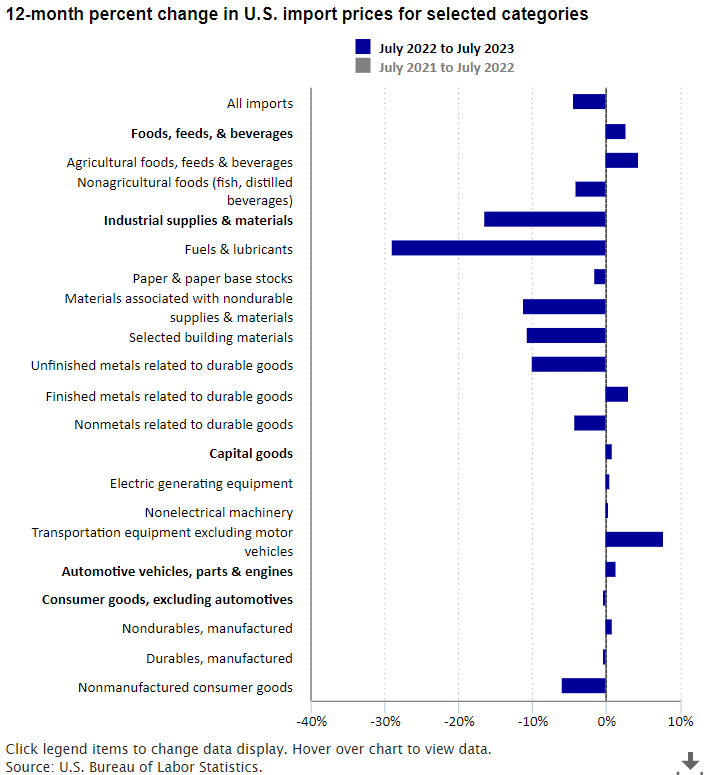
U.S. import prices down 4.4 percent from July 2022 to July 2023

08/18/2023

U.S. import prices declined 4.4 percent from July 2022 to July 2023, after increasing 8.8 percent for the year ended in July 2022. Import prices for industrial supplies and materials had the largest decline (−16.5 percent) over the most recent 12-month period. Partially offsetting import price decreases, prices rose for foods, feeds, and beverages (2.7 percent), capital goods (0.8 percent), and automotive vehicles, parts and engines (1.3 percent).

HTML


Federal News Network's Cyber Leader Exchange 2023 - sign up now!

Transformational Habitat Restoration and Coastal Resilience Grants Announced

$240 million in funding is available for habitat restoration and coastal resilience.

This email was sent to stevenmagallanes520.nims@blogger.com using GovDelivery Communications Cloud, on behalf of: NOAA Fisheries · 1315 East-West Highway · Silver Spring, MD · 20910 GovDelivery logo

DOD Featured Photos

Left
Photos
Water Drop
An Army CH-47 Chinook drops seawater over the perimeter of dry land that surrounds the areas impacte... Photo Details >
Search Operations
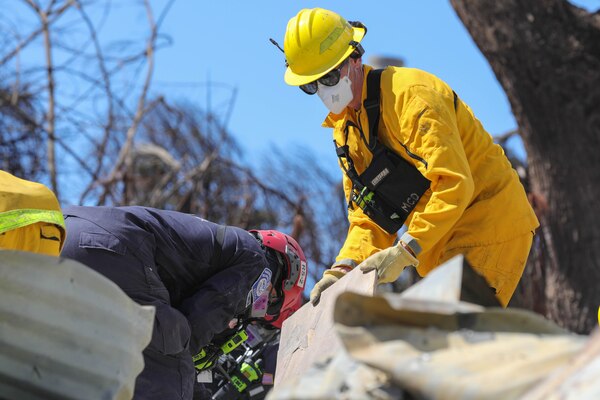
Service members conduct search, rescue and recovery operations in areas damaged by wildfires in Laha... Photo Details >
Mask Distribution
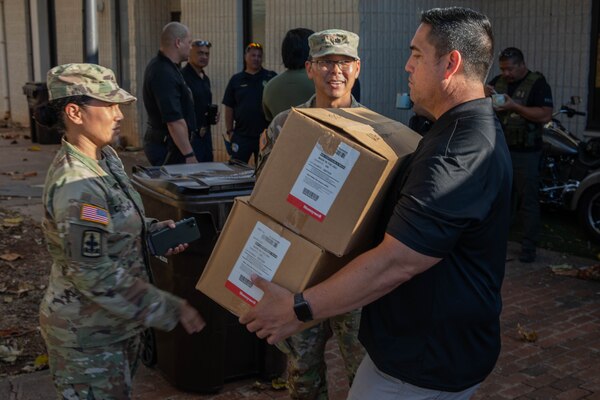
Hawaii Army National Guardsmen distribute N-95 masks to the Lahaina assistant police chief in Lahain... Photo Details >


Right


ABOUT   NEWS   HELP CENTER   PRESS PRODUCTS
Facebook   Twitter   Instagram   Youtube

Unsubscribe | Contact Us


This email was sent to stevenmagallanes520.nims@blogger.com using GovDelivery Communications Cloud on behalf of: U.S. Department of Defense
1400 Defense Pentagon Washington, DC 20301-1400

Page List

Blog Archive

Search This Blog