Is U.S. Diplomacy Dead? The New Era of American Power In 2026 VIEW IN BROWSER 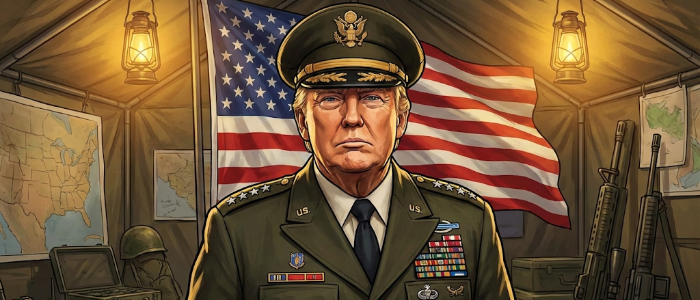
The ball may have dropped in Times Square to ring in 2026. But that wasn’t the image that marked the dawn of this new era. It was Nicolás Maduro being frog-marched onto a Gulfstream V by U.S. special forces in a pre-dawn Caracas raid. And importantly, that was just a pilot episode for what comes next. For the last 50 years, we lived in Pax Americana – a period of relative global peace and stability upheld by the United States. That era died in Caracas, replaced by something far more deliberate. We’ve now entered a new regime: Imperium Americanum. In this new world order, the White House isn't interested in nation-building or winning hearts and minds. It is interested in assets, supply chains, and threat elimination. The Venezuela raid was the ribbon-cutting ceremony for a year of absolute chaos. And in the weeks since, the “asset-first” pattern has only become clearer. The doctrine isn’t subtle. Secure the resource. Neutralize the threat. Control the leverage. And if you understand how the political clock is ticking in the background, you know the president will only pick up the pace. With Mexico and the Arctic in the government’s sights, Uncle Sam is zeroing in on its next targets. Let’s take a look at the reality of this new regime – and the investment playbook for the most aggressive pre-election power sprint in modern U.S. history. The Election Clock Driving U.S. Diplomacy To understand why this shift is happening now – and why it will accelerate – you need to look at the calendar. We’re in the opening act of 2026. In November, the midterms arrive – and they will function as a hard stop on unilateral power. History is brutally consistent: presidents rarely get rewarded at the midterms. They get punished. If the gavel passes to the opposing party in January 2027, this “Imperial Presidency” hits a brick wall. Investigations launch. Funding freezes. The latitude to conduct unilateral raids evaporates. You can already see that wall forming. The administration frames Caracas as a targeted arrest. Critics call it a war-powers end-run. Maduro's legal team is fighting the Treasury over the mechanics of funding a defense. That's what an imperial sprint looks like domestically: maximum action abroad… maximum litigation at home. This means the White House has a closing window to redraw the map. It cannot afford to wait for diplomacy or build coalitions. It must move fast and break things while it still controls the checkbook and the committee chairs. That urgency is fuel for the fire. It keeps volatility elevated. But it also keeps the government spending spigot wide open. So, where does that spending flow? The target list is already taking shape. After Maduro: America’s Next Targets Venezuela was the low-hanging fruit. The oil was there. The narcoterrorism warrant was signed. The refugee crisis created political cover. But the Imperial Playbook has more chapters. Mexico and the Kinetic Border In comments following the Venezuelan raid, President Trump made the message explicit: “We have to do it again. We can do it again, too. Nobody can stop us.” For years, Republicans floated the idea of designating Mexican cartels as Foreign Terrorist Organizations. That is now the logical next step. Once you slap a “terrorist” label on Sinaloa or CJNG, the legal framework changes. You don’t need diplomatic consensus to strike – just a drone and a target package. And the “kinetic border” isn’t hypothetical anymore. Twice now, anti-drone systems were deployed around the El Paso corridor amid concerns about cartel drone activity, causing temporary airspace disruptions. Meanwhile, the State Department announced rewards of up to $10 million for information leading to the arrest or conviction of alleged cartel leaders – alongside indictments that include narcoterrorism and material support charges. This isn’t rhetoric. It’s operational. Greenland and the Resource Grab And the target list doesn’t stop at Latin America. Greenland has become the symbolic centerpiece of the Resource Realism wing of this administration – the faction that views geography as inventory and sovereignty as negotiable. China controls the lion’s share of rare earth processing. Greenland sits atop one of the largest undeveloped deposits of rare earths and uranium in the world. In the old world, we would offer a trade deal. Under Imperium Americanum, we offer a security partnership that comes with leverage. The White House increasingly views the Arctic as the next South China Sea. Notice how the method evolves while the objective stays constant. Early January rhetoric flirted with outright annexation talk, sparking backlash in Denmark and Greenland. By late January, the tone shifted toward an “Arctic security” framework negotiated through NATO channels. One week it’s annexation talk. The next it’s a framework deal. Same objective. Different mask. That’s the point. | Recommended Link | | | | OpenAI is gearing up for a historic IPO, and Silicon Valley insider Luke Lango has found a way for you to invest BEFORE the announcement is even made. You don’t need to file any special paperwork… buy shares from a former employee… have a source on the inside – or jump through any other hurdles. Best of all, all you need is just $10 to get started. |  | | Investing In a High-Tempo U.S. Foreign Policy Environment With the geopolitical landscape redrawn, the question becomes tactical: how do we trade this? Most investors see “war” and buy Lockheed Martin (LMT) or Northrop Grumman (NOC). That’s the wrong play. Lockheed builds the F-35. It costs $100 million and takes years to produce. That’s a Cold War program stock. But this isn’t a Cold War. This is a Shadow War. Raids. Drone strikes. Surveillance. Rapid deployment. We need things that are cheap, disposable, and fast. And increasingly, we need systems that can hunt the hunters – because the other side has drones now, too. You want Operational Tempo stocks: the companies that make the drones that get shot down, the satellites that identify targets, and the software that turns chaos into coordinated action. Drones, Attrition, and the New Air Power If the U.S. strikes cartel labs, it won’t send a piloted aircraft. It will send an attritable drone. Kratos (KTOS) is a leader in high-performance drones designed to be expendable. In a high-tempo environment, these systems get burned through like AA batteries. That’s the difference between program defense stocks and op-tempo stocks. If headlines read “U.S. Drones Strike Cartel Convoy,” legacy primes may move 1%. High-beta drone manufacturers could move 10% to 15%. That’s leverage to action. But drones are only as good as the intelligence guiding them. The Eyes of the Empire: Surveillance as a Core Weapon Imperium Americanum is intelligence-led because, of course, you cannot strike what you cannot see. BlackSky (BKSY) provides real-time, low-latency imagery – tactical intelligence for dynamic operations. Planet Labs (PL) provides persistent, global observation – strategic visibility over oil fields, mining districts, and infrastructure corridors. These companies have been dismissed as unprofitable space tech. But in this regime, they become critical national security infrastructure. The Software Running the Imperial State Once intelligence is gathered, it must be synthesized. If the White House is micromanaging the globe – from Venezuelan crude flows to cartel logistics to Arctic mineral extraction – it needs a command dashboard. Palantir (PLTR) is that dashboard. Palantir is already embedded deep inside the national security state. Its Gotham platform has been used by the U.S. Army for battlefield intelligence. Its software supports ICE, DHS, and multiple defense agencies. And in 2024–25, the company secured multi-year DoD contracts tied to AI-enabled targeting, logistics modeling, and real-time operational planning. When military operations blur into economic enforcement – sanctions, supply chain controls, cross-border targeting – the same data backbone runs all of it. That backbone increasingly looks like Palantir. It is the operating system of Imperium Americanum. Who Profits When the Dust Settles The stocks above capture the machinery of conflict. But there is another layer: the spoils. Maduro’s ouster may have been framed as a narcoterrorism action. But Venezuela’s heavy crude is a strategic prize. And Valero (VLO) refines it. Defense names give you growth from conflict. Refiners give you margins from integration. And the paperwork is already following the policy. In late January and early February, the Treasury's Office of Foreign Assets Control (OFAC) issued updated general licenses clarifying how Venezuelan-origin crude – and the diluents needed to move that heavy oil – could legally transact under U.S. oversight. Venezuela produces heavy sour crude. U.S. Gulf Coast refiners – especially complex operators like Valero – are specifically configured to process that exact grade. When OFAC adjusts the licensing framework, it effectively determines who can buy, ship, insure, and refine those barrels. More legal clarity means more predictable flows. More predictable flows mean tighter supply chains. And tighter supply chains widen refining spreads. That’s how geopolitics turns into barrels – and barrels turn into earnings. Profiting From Power Projection As we move through this pre-midterm window, it’s becoming essential to rewrite your market playbook. The White House is the CIO. There is no free market in 2026; only an aligned market. If a company aligns with strategic priorities – securing resources, neutralizing adversaries, enhancing surveillance – it wins contracts and regulatory tailwinds. If it doesn’t, it faces tariffs and investigations. Volatility is the feature, not the bug. The administration embraces unpredictability. Expect sharp repricing tied to rhetoric and rapid policy shifts. Keep position sizes rational. Keep dry powder ready. And understand this: Morality is not an earnings model. We may disagree with gunboat diplomacy. But the market only cares about liquidity and cash flow. Right now, the U.S. government is injecting both into the business of projecting power. The 2026 Geopolitical Investment Playbook The raid on Caracas was the starting gun. We now face a tightening runway of a White House that feels empowered – and constrained by time. That combination produces maximum action. The U.S. is going shopping. We secured leverage over a country in South America. We’re negotiating leverage in the Arctic. The border is being reframed as a security theater. “Nobody can stop us,” the president said. That’s not just rhetoric. It’s a market signal. Don’t stand in front of it. Position yourself behind it – and fill your basket with the stocks most aligned with this new era of Imperium Americanum. Sincerely, |