Tuesday, July 1, 2025

Your Free Report: Louis Navellier’s Top 5 Stocks for 2025

Welcome to RogerScott

Where we’re dedicated to giving you an edge in the daily markets…


Good day, trader!

I created RogerScott so you could hit the ground running on your trading journey. By following my insights each morning, you’re essentially looking over my shoulder and seeing how I’m positioning my own portfolio.

You’ll hear from me every weekday morning in my “Premarket Must Watch” videos I send around 9 a.m. ET. That means you’ll always know what I believe is driving the market — and the strategies I use to help me take advantage of it.

I’ll also send you at least three FREE trade ideas a week at no cost. It’s just my way of saying thank you for being a loyal RogerScott reader.

Here’s a rundown of everything you get:  
 
MONDAY: My Weekly Insight to the Markets
I’ll send you a video to kick off the week. I’ll outline any announcements, news, or catalysts I’m watching, and exactly which opportunities I expect to unfold in the coming days. Consider this your roadmap for the entire week ahead.
 
TUESDAY: My Weekly Watchlist
I’ll detail the strongest and weakest sectors in the entire market, tell you exactly where I’d put my money, and reveal which sectors and stocks I’d avoid or even short. You’ll get actionable ideas on every market sector using my proprietary momentum indicator.
 
WEDNESDAY: My Top Two Momentum Trades for the Week
Building on the sector analysis from Tuesday, I’ll take it a step further with two actionable stock trade ideas. I’ll identify my favorite stock in the strongest sector and even a short opportunity from the weakest sector. That’s two trades… absolutely free, each week.
 
THURSDAY: My Big Picture Trade for the Week
I’ll combine two of my favorite things, options, and ETFs, to identify upside macro plays. Using options, we can turn momentum analysis of a specific sector, or even an entire country’s stock market, into an actionable trade with double- or triple-digit upside potential. And you’ll get all the details you need to execute these ideas.
 
FRIDAY: Weekly Market Review
We’ll review what we learned and how we can apply it to next week’s plan of action and develop our trade setups. This video is the bow tying up the whole package that’s our week of actionable market commentary. I'll also end with an educational deep dive into the world of algo trading. My goal is to help you become a more disciplined and successful trader each week.
 
Keep an Eye on Your Inbox!

Again, welcome to RogerScott! I hope you’re as excited as I am and that you find value in the materials headed your way. Be prepared to learn a ton of valuable insights from my three decades of doing this! 

To make sure you don’t miss a mailing, please add this email to your address book or allowlist. Here are instructions for some of the most popular email providers:
 
Gmail: https://www.whitelist.guide/gmail/
Yahoo: https://www.whiteisguide/yahoo/
iCloud: https://www.whitelist.guide/icloud/
AOL: https://www.whitelist.guide/aol/
Hotmail / Outlook: https://www.whitelist.guide/outlook/
Spectrum / Charter: https://www.whitelist.guide/charter/

Please know that if you have any questions for me, you can email my team at support@tradingpub.com.

All the best,
   
   
Signature Roger Scott
 
Roger Scott


Face of Defense: A Guardian's Journey Into the Military's Newest Branch

Left
Feature
Face of Defense: A Guardian's Journey Into the Military's Newest Branch
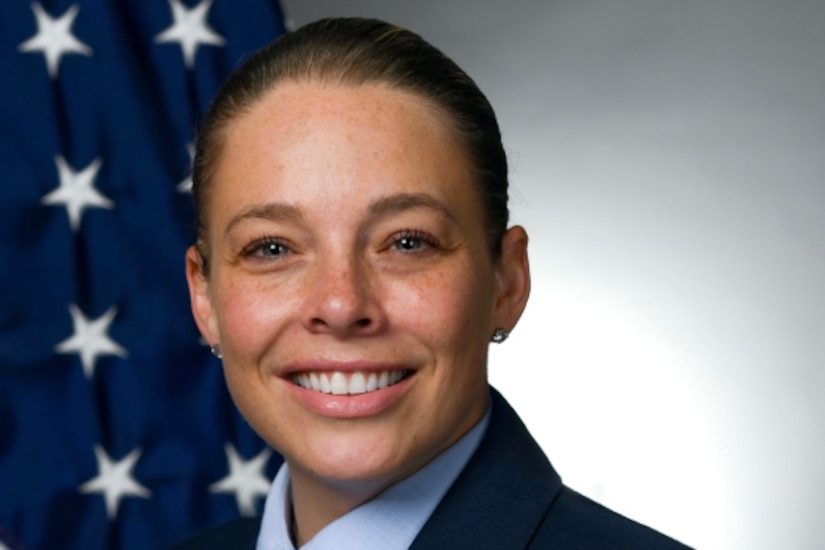
July 1, 2025 | By Bridget Bonnette, National Space Defense Center

Initially unsure about her career path, Space Force Master Sgt. Allison Thodos landed a dream job as a flight chief of a collections team at the National Space Defense Center, working alongside some of the smartest minds in the military.

Tell me about your military journey. When did you join the Air Force? Why? 

I originally joined the Air Force in January 2007. I came into the military as an open general, so I was unsure what I really wanted to do. I was recruited out of bootcamp for the U.S. Air Force Honor Guard in Washington and spent three years working in the National Capital Region as a member of the firing party team. It was a great and fulfilling job that I really enjoyed. However, since honor guard is only a short tour, I ended up cross-training in aerospace medical in 2010 and was able to work all over the hospital, including pediatrics, family medicine, ambulance services and the intensive care unit.  
 
In 2020, I was selected for Air Force recruiting duty and spent almost four years as an enlisted accession recruiter in Illinois. When I heard about the Interservice Transfer program to cross into the Space Force, I jumped at the opportunity and was selected to crossover in 2024.  

At the time I originally joined, I had been out of high school for two years and was still unsure what I wanted to do with my life. I was taking random college courses to see what interested me, and nothing really seemed to fit. I had a friend who was in the military reserve force, and told me all about the great benefits and the camaraderie of the military, so I figured it wouldn't hurt to speak with a recruiter. I ended up really liking everything the Air Force recruiter had to say and thought it would be a great fit for me. 

When did you transfer to the Space Force? Why? Did your job change because of it? 

I officially transferred into the Space Force in June 2023 and switched from being an enlisted recruiter to an intelligence analyst. My job completely changed, and I couldn't be happier. Being the newest branch of the military, the Space Force seemed so intriguing and amazing. I could not wait to be a part of the military branch that was focused on space and taking us into the future. 

Talk about your journey that led you to the National Space Defense Center.  

It has been an incredible journey that has led me to where I am now. When I first enlisted, I never imagined I would be a part of the newest branch of the military and get to work alongside some of the smartest minds in the military. I just wanted to be a part of something new and amazing, and very happy I have gotten that opportunity.  

Describe your position at the NSDC.  

Currently, I am the flight chief of the collections team within the NSDC. I help to oversee all the different collections that take place within the NSDC, as well as help manage the military members within my section. 

Have you always had an interest in space?  

When I was younger, I enjoyed looking through the telescope in my backyard and trying to find certain constellations. Once I got older, I was so unsure as to what I wanted to do, but I was still fascinated by the ever-growing exploration and regions of space. It still amazes me to this day how far we have come with space exploration and our capabilities. 

Why is your job as an intel analyst so important as it pertains to space and its mission sets?  

I believe all the intelligence analysts I work with play a huge role as it pertains to space and its mission sets. All the work and collections that happen through my job are all tied together with other organizations and centers.  

What is the easiest or hardest part of your job today? 

The easiest part of my job is probably the communication and comfortability with my coworkers. Everyone is so knowledgeable and eager to assist others that it makes it a great place to work. The hardest part is possibly trying to keep up with everything that is going on. Things are always ever-changing and moving and happening, so you need to make sure you are constantly on top of your current events and understand the different orbits and just everything that is going on. It's a lot to take in if you are not paying close attention. 

What are your hobbies?  

My husband and I love to travel and be anywhere outdoors. We are both fitness junkies, and we each have degrees in health and science. We have had great opportunities to travel to numerous states and go on some incredible hikes along the way. We have two dogs that we love taking with us on all our adventures. Anything active I enjoy doing. 

What are your goals?  

I hope to continue my Space Force career and learn as much as I can from everyone I work with. I am very fortunate to work alongside some extremely intelligent people, and they are always so willing and eager to teach me things I am still learning about. I am also eligible for promotion to E-8 next year, so being able to pin on the senior master sergeant rank would be a great accomplishment as well. 

What do you like to do when you're not in uniform? 

When I'm not in uniform, I have enjoyed going out and exploring Colorado. There are so many great outdoor activities to do in this area, and the scenery is breathtaking. I enjoy hiking with my dogs, going to the gym, riding my motorcycle, reading and hanging out with my husband and trying out new restaurants in town.

Right


ABOUT   NEWS   HELP CENTER   PRESS PRODUCTS
Facebook   X   Instagram   Youtube

Unsubscribe | Contact Us


This email was sent to stevenmagallanes520.nims@blogger.com using GovDelivery Communications Cloud on behalf of: U.S. Department of Defense
1400 Defense Pentagon Washington, DC 20301-1400

Founding Father Facts, Contributions to Creating Country

Left
Feature
Founding Father Facts, Contributions to Creating Country
July 1, 2025 | By David Vergun

The seven Founding Fathers of the United States who are widely regarded as having made the most significant contributions to securing independence from Great Britain and establishing the U.S. government are John Adams, Benjamin Franklin, Alexander Hamilton, John Jay, Thomas Jefferson, James Madison and George Washington.

Four of those men became president, and all but one had connections to the military.

Washington, the nation's first president, has a rich military background. In 1753, Virginia's governor appointed him to be a surveyor with the rank of major. 

During the French and Indian War, he was promoted to lieutenant colonel. In 1755, Washington and his militia joined British Army Gen. Edward Braddock's troops to expel the French from the Ohio River Valley. Before Braddock died in battle, he praised Washington and his Virginia militia for their courage in saving part of the English forces. 

When the Continental Congress sought a commander for the Colonial Army in 1775, Washington was selected because of his extensive militia service during the French and Indian War. He served as the Army's commander in chief until the end of the Revolutionary War in 1783.

While Washington led the Army in numerous battles, some of the most significant include the Siege of Boston, the Battle of Long Island, the Battle of Kip's Bay, the Battle of Trenton, the Battle of Monmouth and the Siege of Yorktown. 

During the Whiskey Rebellion in the late 18th century, a western Pennsylvania revolt against liquor taxation, Washington rode at the head of a 13,000-member militia to successfully suppress the insurgency. The rebels fled before the troops arrived. To this day, Washington remains the only sitting president to lead troops into battle. 

As commander of the Continental Army, Washington was defending New York City in July 1776 and didn't sign the Declaration of Independence at the time of its adoption July 4, 1776. He received official notification along with a copy of the declaration from John Hancock and ordered it be read out loud to his troops assembled at the parade grounds in lower Manhattan on July 9, 1776. 

Washington and 38 others did sign the Constitution of the United States of America on Sept. 17, 1787, and he presided over the debate of that document.

Adams, the nation's second president, is the only Founding Father who did not have military service. On June 11, 1776, Congress appointed a committee of five, including Adams, to draft the Declaration of Independence, which he and 55 others signed. 

Adams wasn't present for the signing of the Constitution because he was in the Netherlands serving as the U.S. minister to that nation. 

Although Adams wasn't in the military, he was instrumental in establishing the Continental Navy and Marine Corps in 1775. He also served as the head of the Board of War, which procured supplies for the Continental Army.  

Jefferson, the third president, served as a colonel in the Albemarle County militia in Virginia from 1770 until 1779 but did not participate in combat. 

Jefferson was the primary author of the Declaration of Independence. He did not sign the Constitution because he was overseas serving as the U.S. minister to France. 

During Jefferson's presidency, the territory of Louisiana was acquired from France in the Louisiana Purchase. This acquisition nearly doubled the size of the U.S., as it included 828,000 square miles of land in the Mississippi River's drainage basin west of the river. 

Madison, the fourth president, was commissioned as a colonel of the Orange County, Virginia, militia in October 1775 and served until May 1776. Like Jefferson, Madison didn't participate in battle. 

Madison is considered the "Father of the Constitution" because of his pivotal role in drafting it and the Bill of Rights. 

The War of 1812 occurred during his presidency. 

While Franklin is best known for his work as a writer, scientist, inventor, statesman, diplomat, printer, publisher and political philosopher, he also had military service. 

During King George's War, Franklin raised a militia to defend Philadelphia against a possible French naval attack. During the French and Indian War, he led troops in the defense of Philadelphia and also led a militia to Gnadenhütten, Pennsylvania, to build a fort to defend against Native American attacks.

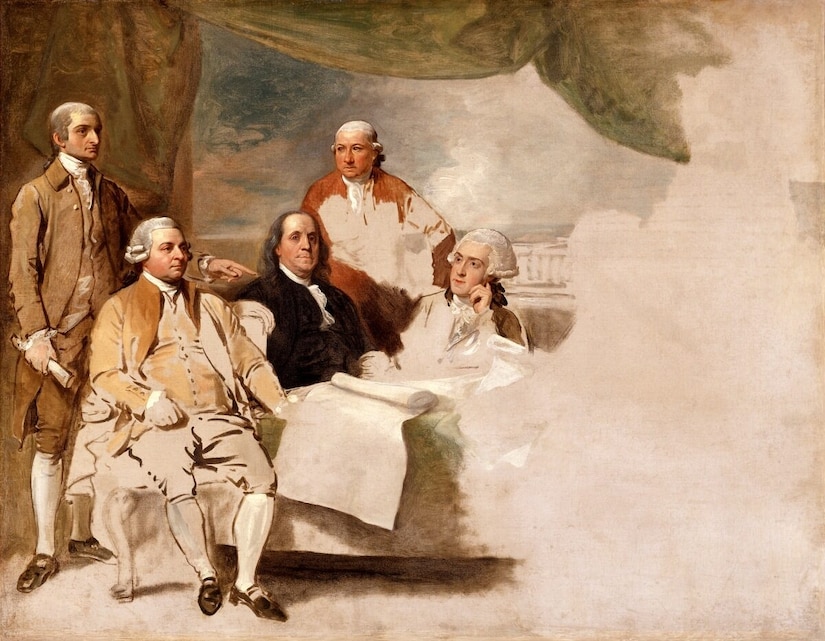
Franklin was one of the drafters and signers of the Declaration of Independence. He's the only person to have signed that document, the Treaty of Paris, which ended the Revolutionary War, and the Constitution. 

Hamilton was commissioned an Army captain, March 14, 1776, and raised a company of artillery troops for the defense of New York City. His company fought in battles around the city and later in the battles of Trenton, Princeton and Yorktown. He was promoted to lieutenant colonel and served as Washington's aide-de-camp. By the time of his discharge from the Army in December 1782, he had been promoted to colonel.

Hamilton's artillery unit, 1st Battalion, 5th Field Artillery Regiment, never disbanded and is currently stationed at Fort Riley, Kansas. Of the Founding Fathers, he and Washington had the most extensive combat experience. 

Jay served as an Army colonel with the 2nd New York Regiment during the Revolutionary War but did participate in battle. He went on to serve as president of the Continental Congress as well as the first chief justice of the United States and later became governor of New York.

In addition to the seven Founding Fathers, others made significant contributions to the nation's founding, including George Mason, Patrick Henry, John Hancock, John Marshall and Samuel Adams. 

The term "Founding Fathers" was popularized by President Warren Harding, who frequently used it in many of his speeches.

Right


ABOUT   NEWS   HELP CENTER   PRESS PRODUCTS
Facebook   X   Instagram   Youtube

Unsubscribe | Contact Us


This email was sent to stevenmagallanes520.nims@blogger.com using GovDelivery Communications Cloud on behalf of: U.S. Department of Defense
1400 Defense Pentagon Washington, DC 20301-1400

This All-Star AI Behemoth Is a Golden Opportunity

I only found 17 prior instances of this rare signal.

Page List

Blog Archive

Search This Blog

10,000 satellites. $1.5 trillion IPO. 7 stocks.

SpaceX is targeting a June IPO at 1.5 trillion - here are seven stocks that may benefit ͏  ͏  ͏  ͏  ͏  ͏  ͏  ͏  ͏  ͏  ͏  ͏  ͏  ͏  ͏  ͏  ͏  ͏...