|
Hello – When central banks, retail investors and industry all clamor for the same metal, prices don’t just rise—they can launch. Our 2026 Gold Forecast: A Perfect Storm for Demand explains why spot gold could break past $4,000 this year and provides guidance on how to position yourself before it happens. Inside, you’ll discover:
Why net-buying by central banks just hit a record first-half total, led by Turkey and India. How rate cuts and a weakening dollar create a powerful tailwind for precious metals. Three practical ways to add gold—from physical bars to high-margin mining stocks paying dividends. Price targets suggest $4,000 per ounce if current trends persist. This concise PDF outlines the catalysts, risks, and tactics so you can decide whether to hold the metal, own the miners, or both. 👉 Download your free Gold Forecast now. No cost. No credit card. Just actionable research before the crowd sees the signal. To your investing edge, Matthew Paulson
Founder & CEO, MarketBeat P.S. Only about 2–5 % of investors own physical gold today. If the other 95% start buying, you’ll want to be in first. Grab the report now while it’s still free.
Exclusive Content
Sky-High Stakes: United and American Merger RumorsReported by Jeffrey Neal Johnson. First Published: 4/15/2026. 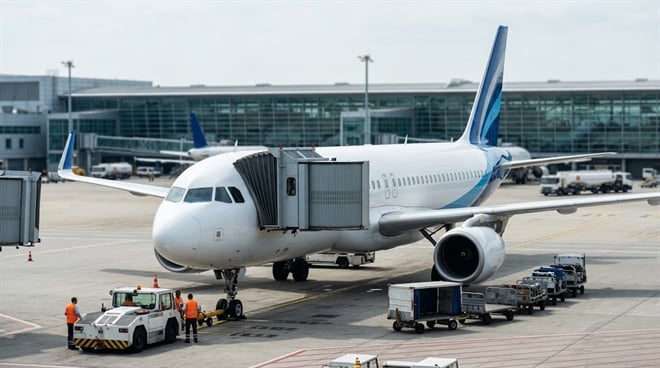
Key Points
- Recent news of potential industry consolidation has driven a significant upward trend in the stock prices of the major domestic passenger carriers.
- A strategic combination between leading airlines would create massive economies of scale and help protect operating margins from future energy price spikes.
- Strong balance sheets and active share buyback programs among the larger carriers indicate a high level of confidence in the long term aviation industry.
- Special Report: The Biggest IPO Ever: Claim Your Stake Today
Chief executives at major legacy airlines are actively pursuing unprecedented consolidation strategies to address global supply-chain disruptions and energy sector instability. Investors looking for the catalyst behind the recent surge in aviation stocks will find it in the latest rumored developments from Washington. Reports say a high-level White House meeting included a proposal from United Airlines (NASDAQ: UAL) CEO Scott Kirby for a potential megamerger between two of the country's largest carriers. The notion of a company being "too big to fail" is reappearing in the transportation industry, as leaders weigh the economic benefits of scale against the intense scrutiny of federal antitrust authorities. Market participants are balancing short-term trading gains from these rumors with longer-term fundamentals. Understanding the macroeconomic pressures and structural differences among these carriers is essential for navigating this evolving environment. Geopolitical Pressures Drive Strategic Shifts
For a moment…
Forget about Trump’s ties to Israel.
Forget about reports of Iran’s nuclear program.
Because my research has led me to believe we’re risking World War 3 with Iran for a completely different reason. Click here to find out what it is.
The main driver of recent margin pressure across the airline industry is the unexpected spike in jet-fuel costs tied to the recent conflict in Iran. Fuel is one of the largest variable expenses for any commercial carrier, so disruptions to supply lines quickly strain airlines' balance sheets. Although reports of a ceasefire and peace talks have helped push oil prices back toward $92 per barrel — keeping them mostly below $100 — many analysts caution this relief may be temporary. Merging operations now could serve as a structural hedge against future energy-price shocks by enabling greater economies of scale. A combined carrier can optimize fleet utilization, negotiate bulk fuel contracts, and eliminate redundant operational costs that weigh on independent airlines during geopolitical crises. Sharing maintenance facilities, streamlining administrative overhead, and consolidating pilot rosters would help a unified airline absorb supply-chain shocks more effectively than standalone operators. A larger fleet also offers critical operational flexibility: airlines can ground older, less fuel-efficient aircraft when prices spike and rely on newer models to maintain key routes. That adaptability is vital in unpredictable global commodity markets. Two Divergent Financial RealitiesAmerican Airlines Group (NASDAQ: AAL) shares recently rose 8% to above $12, while United Airlines Holdings (NASDAQ: UAL) shares rose 2% to over $97 on the news of a potential merger. Despite the shared momentum, the two carriers start from very different financial positions. American Airlines faces significant financial vulnerability. The carrier has a market cap of about $8 billion and a negative book value of $5.65 per share. Adding to the recent price action for American Airlines is the potential for a short squeeze. The stock entered the month with short interest near 26% of its available float. When positive news triggers a sudden price jump, traders betting against the stock may be forced to buy shares to cover their positions, which can accelerate the rally. By contrast, United Airlines appears on firmer ground. The Chicago-based carrier has a market capitalization of roughly $31.6 billion and solid trailing 12-month earnings of $10.22 per share. Institutional ownership exceeds 69%, indicating confidence from major funds. United is also supporting its valuation through an ongoing $1.5 billion share buyback program. That stronger balance sheet gives it the financial stability to potentially absorb a highly leveraged competitor. These divergent metrics explain why a merger appeals differently to each party. For the smaller carrier, consolidation offers an immediate lifeline and a path to restructure debt. For the larger airline, acquiring a major rival could capture market share and remove a direct competitor. Washington Resistance Meets Standalone SuccessA combined United‑American entity would control roughly one-third of the domestic air travel market, a share certain to draw intense scrutiny from the Department of Justice. Regulators have historically blocked major airline consolidations to protect consumer prices and preserve competitive route networks. Federal agencies have intervened to stop much smaller aviation mergers in recent years. To placate antitrust regulators, the airlines might need to propose extensive route divestitures, voluntarily ceding overlapping routes to regional competitors. Another potential defense could invoke national-security arguments, claiming a financially stable mega-carrier better ensures the reliability of domestic transport infrastructure during global crises. For investors seeking sector exposure without M&A or regulatory risk, Delta Air Lines (NYSE: DAL) provides a strong standalone benchmark. Delta shares recently rose nearly 7% to around $71, despite not being directly involved in the merger talk. The Atlanta-based carrier shows that a standalone model can be viable in the current environment. Delta demonstrates consistent profitability without consolidation:
Preparing for the Next Phase of AviationThe emergence of these merger discussions highlights a potential pivot for legacy carriers: prioritizing scale and long-term survivability over independent operations. Upcoming earnings reports should clarify how well these companies are managing internal costs relative to external energy pressures. United Airlines is scheduled to report earnings on April 21, followed by American Airlines on April 23. Investors should weigh the speculative upside of industry consolidation against the steady cash flows of fundamentally sound peers. Regulatory intervention represents a major risk to any merger-driven thesis. If Washington blocks the proposed consolidation, highly leveraged carriers could see sharp stock declines. A renewed geopolitical flare-up could also reverse recent fuel-cost relief. As earnings dates approach and regulatory feedback becomes public, investors may want to add United and American to their watchlists. Those with lower risk tolerance might prefer standalone carriers with established dividends and lower debt burdens before taking a position in this volatile sector. |





Tiada ulasan:
Catat Ulasan