We develop tools and strategies to the best of our ability but no one can guarantee the future. There is always a risk of loss when trading. Past performance is not indicative of future results. What you will see today are some of the best examples from the public trade research service that utilizes this underlying method. From January 2024 through November 2025 the win rate was 86% with a 40.9% average winner and 23.3% average net return of winners and losers over a 1 day average hold time. There were bigger winners, there were smaller winners and there were losers. Trade at your own risk.
Today's editorial pick for you
Two Solid Ways to Trade Growing Cybersecurity Threats from Iran
Posted On Mar 26, 2026 by Ian Cooper
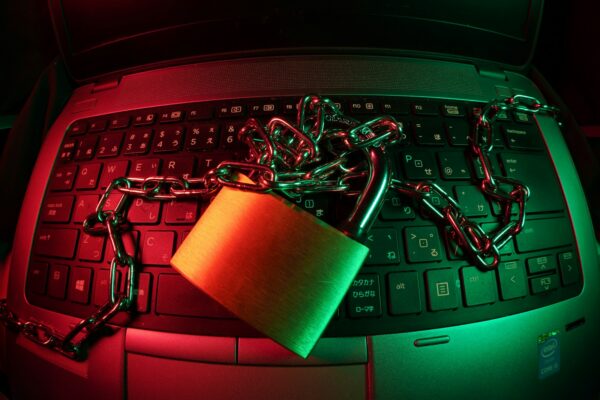
We're sitting ducks. After all these years, we're still not ready for cybersecurity threats from Iran and other state-sponsored cyberattacks. This includes cities, hospitals, and schools. In fact, many companies aren't ready, nor is the U.S. government.
Table of Contents
Most recently, Stryker (NYSE: SYK) was targeted by pro-Iranian hackers in a significant cyberattack. The company confirmed it was dealing with a disruption tied to its Microsoft environment, noting that while there was no indication of ransomware or malware, the attack still impacted global operations. Stryker emphasized that it had business continuity measures in place and was working quickly to assess the full scope and impact of the breach.
Even without ransomware, disruptions like this can be costly and dangerous—especially for a company involved in medical technology.
Critical Infrastructure and Satellites Are the Next Targets
At the same time, concerns are escalating at the national level. According to reporting from CNN, the U.S. intelligence community has issued a wave of private warnings to both government agencies and private-sector organizations. The message is clear: increase vigilance and strengthen defenses against potential cyberattacks linked to Iran.
After all, cyber warfare has increasingly become a preferred tool because it allows adversaries to disrupt critical systems without direct military confrontation.
What's even more alarming is the possibility that these attacks could expand beyond corporate networks. There are growing concerns that Iran could escalate its efforts by targeting U.S. civil infrastructure—systems that millions of people rely on every day.
Experts are also sounding the alarm about space-based vulnerabilities. According to Cybersecurity Insiders, former White House CIO Teresa Payton has warned about the rising risk of attacks on satellites used for global communications. Such a move would represent a major escalation, with potentially far-reaching consequences for everything from internet access to financial transactions and emergency communications.
It's another example of how poorly prepared we are for attacks.
Cybersecurity Spending Is Set to Surge Globally
And, as threats grow more sophisticated and frequent, spending on cybersecurity solutions is expected to rise significantly.
That creates a compelling case for investing in companies at the forefront of digital defense. Industry leaders like CrowdStrike, Palo Alto Networks, and Fortinet are all positioned to benefit from increased demand for advanced security solutions.
BUG ETF Offers Broad Exposure to Cybersecurity Leaders
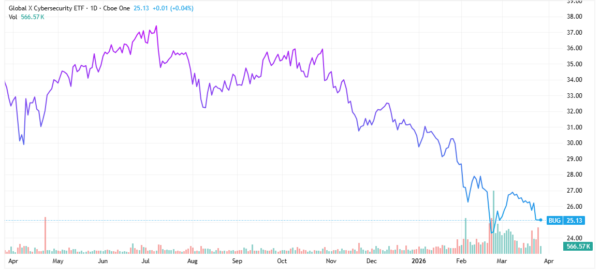
With an expense ratio of 0.51%, the Global X Cybersecurity ETF (NASDAQ: BUG) invests in companies that stand to potentially benefit from the increased adoption of cybersecurity technology, such as those whose principal business is in the development and management of security protocols preventing intrusion and attacks to systems, networks, applications, computers, and mobile devices.
Since the start of the war with Iran, the ETF has run from about $24.15 to $26.63 so far.
IHAK ETF Provides Diversified Cybersecurity and Tech Access
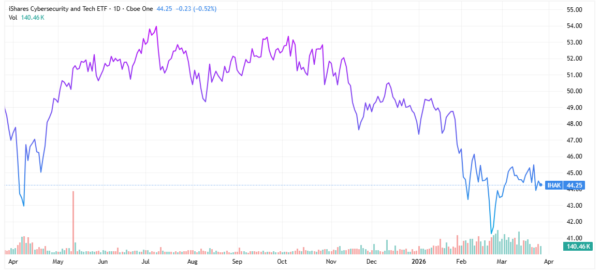
With an expense ratio of 0.47%, the iShares Cybersecurity and Tech ETF (NYSEARCA: IHAK) tracks the investment results of an index composed of developed and emerging market companies involved in cybersecurity and technology, including cybersecurity hardware, software, products, and services.
The fund has 38 holdings with some of the top names being Clear Secure, Akamai Technologies, CACI International, Sentinel One, Fortinet, and Okta.
Since the war with Iran began, the IHAK ETF has run from about $41 to $45.82.
Cybersecurity ETFs Offer a Simple Way to Trade Rising Threats
In a world where cyber threats are becoming more frequent and more dangerous, cybersecurity is no longer optional—it's essential. And as governments and businesses scramble to strengthen their defenses, the companies providing those solutions are likely to see sustained growth. For investors, that makes cybersecurity a smart trade. All of which we can potentially profit from using inexpensive ETFs such as BUG and/or IHAK.
This is a PAID ADVERTISEMENT provided to the subscribers of StockEarnings Free Newsletter. Although we have sent you this email, StockEarnings does not specifically endorse this product nor is it responsible for the content of this advertisement. Furthermore, we make no guarantee or warranty about what is advertised above.
Your privacy is very important to us, if you wish to be excluded from future notices, do not reply to this message. Instead, please click Unsubscribe.
StockEarnings, Inc 33 SE 4th St, Suite 100, Boca Raton, FL 33432 USA W: 877.6.STOCKS StockEarnings.com







No comments:
Post a Comment